Author: ZEX PR

  • DSCVR Rolls Out Major Updates, Advancing Its Vision as an AI-Powered Market Explorer

    Los Angeles, California, 23rd January 2026, ZEX PR WIRE, DSCVR has rolled out a series of major product updates, marking a significant step forward in its evolution as an AI-powered market explorer for prediction markets. The releases deliver on the platform’s commitment to help users move beyond market discovery and toward clearer, more confident decision-making.

    As prediction markets such as Polymarket and Kalshi continue to scale, access is no longer the bottleneck. Interpretation is. DSCVR’s latest updates directly address this gap by focusing on pricing transparency, AI-driven analysis, and cross-market comparability — turning market signals into actionable insight.

    Integrated Kalshi: Bringing Transparency to Market Pricing

    DSCVR has integrated Kalshi order book data directly into event views, allowing users to understand where prices come from rather than treating probabilities as opaque outputs.

    By surfacing liquidity, market depth, and pricing sources, users can better assess conviction and price quality — especially when comparing similar events across different markets. The result is a clearer foundation for informed decisions.

    AI-powered Analysis Interface: Insights Built for Decisions

    The platform has also optimized its AI-powered analysis interface, shifting from long-form descriptions to concise, decision-oriented insights.

    The redesigned quick-question panel now organizes analysis into three sections:

    • Background Analysis for essential context

    • Betting Guidance for probability interpretation and risk signals

    • Deep Analysis for detailed reasoning

    This structure enables fast evaluation without sacrificing analytical depth.

    A Cleaner, More Focused Event Experience

    To reduce cognitive friction, DSCVR introduced a Full Page event view, expanding key details into a dedicated layout. Enhanced filters — including Volume, Probability, Ending Soon, Market, and Status — allow users to customize how they discover and prioritize events based on their decision style.

    Cross-Market Comparison, One Interface

    By aligning categories across Polymarket and Kalshi, DSCVR enables side-by-side viewing of related events from multiple markets. This cross-market structure positions DSCVR as an aggregation and reasoning layer, making pricing differences and sentiment shifts immediately visible.

    Together, these updates signal a clear direction. DSCVR is building beyond discovery, delivering practical decision support through AI, transparency, and thoughtful interface design. In a market defined by probabilities, clarity is the real advantage.

  • Smart Mobility Trends set by Sky Bridge Cars at London airports

    London, UK, 22nd January 2026, ZEX PR WIRE, In the rapidly evolving landscape of urban transportation, Sky Bridge Cars has emerged as a pioneering force in London’s airport transfer industry. Founded on the principles of sustainability, innovation, and exceptional service, we’re not just providing rides—we’re reshaping how Londoners and visitors think about getting to and from the city’s five major airports.

    Our journey began with a simple observation: traditional airport transfers were inefficient, environmentally harmful, and failed to leverage the technological advances transforming every other industry. Today, Sky Bridge Cars operates a growing fleet of premium electric vehicles, serves over 500,000 passengers annually, and maintains a commitment to achieving carbon-neutral operations by 2026.

    Our Smart Mobility Mission

    Sky Bridge Cars is committed to revolutionising London airport transfers through three pillars: electrification of our entire fleet, digitisation of the booking and travel experience, and optimisation of routes using AI-powered traffic prediction.

    What sets Sky Bridge Cars apart is our holistic approach to smart mobility. We’ve integrated cutting-edge technology throughout the customer journey—from our intelligent booking platform that predicts optimal pickup times based on flight data and traffic patterns, to our in-vehicle connectivity that transforms travel time into productive or relaxing experiences.

    Future of Mobility: Urban Strategy for London

    The future of urban mobility is being written today, and London stands at the forefront of this transformation. With the city’s Ultra Low Emission Zone (ULEZ) expansion, increasing congestion charges, and ambitious net-zero targets, the pressure to evolve has never been greater. Sky Bridge Cars has positioned itself not just to comply with these changes, but to lead them.

    Our urban mobility strategy encompasses several key initiatives:

    • Multi-Modal Integration: Seamless connections with the Elizabeth Line, Tube services, and bus networks to offer first-mile and last-mile solutions

    • Dynamic Pricing Models: AI-driven pricing that encourages off-peak travel and reduces congestion during busy periods

    • Shared Ride Options: Smart matching algorithms that pair travellers heading in similar directions, reducing per-passenger emissions by up to 50%

    • Predictive Maintenance: IoT sensors across our fleet ensure maximum vehicle uptime and safety

    The Transport for London (TfL) Future Transport strategy emphasises the need for private operators to complement public transit rather than compete with it. Sky Bridge Cars embraces this philosophy, working alongside rather than against the city’s transport infrastructure to create a more efficient, sustainable urban environment.

    London Airport Transfer: The Sky Bridge Cars Experience

    London’s five major airports—Heathrow, Gatwick, Stansted, Luton, and London City—collectively handle over 180 million passengers annually. Each presents unique challenges and opportunities for smart mobility solutions. Sky Bridge Cars has developed tailored approaches for each airport, ensuring optimal service regardless of your destination or origin.

    Heathrow Airport (LHR)

    Europe’s busiest hub demands precision timing and flexibility. Our smart booking system monitors flight arrivals in real-time, adjusting pickup times automatically for delays. For Heathrow transfers, we’ve established strategic staging areas that minimise wait times while reducing airport congestion.

    Gatwick Airport (LGW)

    London’s second-largest airport and a major gateway for leisure travellers. Our EV fleet is particularly well-suited for the longer journey to central London, with vehicles offering premium amenities including onboard Wi-Fi, charging ports, and entertainment systems.

    Smart Airport Transfer Features

    Every Sky Bridge Cars airport transfer includes: real-time flight tracking, 60-minute free waiting time, meet & greet service at arrivals, complimentary in-car Wi-Fi, and fixed pricing with no surge charges.

    Stansted & Luton Airports

    Primarily serving budget airlines and business travellers, we’ve developed express services that prioritise efficiency without compromising comfort. Our corporate accounts are particularly popular among business travellers using these airports, offering consolidated billing and priority booking.

    London City Airport (LCY)

    Located in the Royal Docks, serving the financial district with short-haul European flights. Our executive fleet caters specifically to this market, with vehicles equipped for mobile working and privacy screens for confidential calls.

    The Shift to Electric Vehicles (EVs) in Airport Transfers

    The transition to electric vehicles represents the most significant transformation in ground transportation since the invention of the automobile. For airport transfers specifically, EVs offer compelling advantages that extend far beyond environmental benefits.

    Why Sky Bridge Cars Chose Electric:

    • Superior Passenger Experience: Electric vehicles operate nearly silently, creating a peaceful cabin environment after long flights. The instant torque provides smooth acceleration, while regenerative braking ensures gentle deceleration.

    • Cost Efficiency: Lower operating costs per mile allow us to offer competitive pricing while investing in premium vehicle specifications.

    • ULEZ Compliance: Our entire fleet meets or exceeds London’s emission requirements, ensuring uninterrupted access to all zones.

    • Reliability: Fewer moving parts mean less maintenance and higher uptime, translating to better service availability.

    Our current fleet includes the Tesla Model S and Model X for premium transfers, the Mercedes EQS for executive services, and Volkswagen ID. Buzz vehicles for group airport transfers. Each vehicle is maintained to exacting standards and equipped with the latest autonomous safety features.

    EV Fleet Statistics

    Sky Bridge Cars’ electric fleet has completed over 2 million emission-free miles, prevented 800 tonnes of CO2 emissions, and saved passengers an estimated £150,000 in ULEZ charges through clean vehicle travel.

    The charging infrastructure challenge—often cited as a barrier to EV adoption—has been addressed through our network of rapid charging stations strategically located near each London airport. Our operations team monitors vehicle charge levels in real-time, ensuring every passenger journey begins with adequate range for multiple transfers.

    Smart Mobility: Transforming Your Airport Transfer

    Smart mobility is more than a buzzword—it’s a comprehensive approach to transportation that leverages technology, data, and connectivity to create superior travel experiences. At Sky Bridge Cars, smart mobility principles inform every aspect of our operations.

    The Intelligence Behind Your Journey:

    When you book a Sky Bridge Cars transfer, our system immediately begins optimising your journey. Machine learning algorithms analyse historical traffic data, current conditions, scheduled events, and even weather forecasts to predict the ideal pickup time. For airport arrivals, we integrate with flight tracking APIs to monitor your aircraft’s position and adjust accordingly.

    During your journey, our smart routing technology continuously evaluates alternative paths, making real-time adjustments to avoid congestion, accidents, or roadworks. This isn’t simple GPS navigation—it’s predictive intelligence that anticipates problems before they impact your travel.

    Key Smart Mobility Features:

    • Predictive ETAs: Our arrival time estimates are accurate to within 3 minutes, 95% of the time

    • Dynamic Route Optimisation: Average journey times reduced by 15% compared to standard navigation

    • Proactive Communication: Automated updates via SMS, WhatsApp, or app notification keep you informed at every stage

    • Seamless Payment: Cashless, contactless transactions with automatic receipt generation for business travellers

    Looking ahead, Sky Bridge Cars is exploring autonomous vehicle integration for airport transfers. While fully self-driving cars remain years away from widespread deployment, we’re already testing advanced driver-assistance systems that enhance safety and efficiency on every journey.

    Key Performance Metrics

    Metric

    Value

    Electric Fleet Target

    100% by 2026

    London Airports Served

    5 (LHR, LGW, STN, LTN, LCY)

    Carbon Reduction Achieved

    40% Year-on-Year

    Annual Passengers

    50,000+

    ETA Accuracy

    95% within 3 minutes

    Conclusion

    The smart mobility revolution is transforming London airport transfers from a necessary inconvenience into a seamless, sustainable, and even enjoyable part of the travel experience. Sky Bridge Cars stands at the forefront of this transformation, combining electric vehicle technology, artificial intelligence, and customer-centric service design to redefine what passengers should expect from ground transportation.

    As we look to the future, our commitment remains unwavering: to provide the most reliable, sustainable, and intelligent airport transfer service in London. Whether you’re a business traveller rushing between meetings, a family starting your holiday, or a visitor discovering London for the first time, Sky Bridge Cars is here to make your journey exceptional.

  • Sharjah Airport welcomes over 19.4 million passengers in 2025, achieving 13.9% growth

    In 2025, Sharjah Airport achieved the following milestones:

    Sharjah Airport

    • Expanded its route network to strengthen connectivity to more than 100 global destinations
    • Welcomed four new international airlines to its growing network
    • Introduced new services to streamline procedures and enhance the passenger experience
    • Renewed international accreditations, reflecting its commitment to sustainability and service excellence
    • Maintained a strong global presence at leading international travel and aviation exhibitions

    Sharjah, UAE, 22nd January 2026, The Sharjah Airport Authority (SAA) has announced record-breaking results for Sharjah International Airport in 2025, welcoming 19.48 million passengers, up from 17.1 million in 2024 and 15.36 million in 2023, marking a strong 13.9 per cent year-on-year increase.

    Sharjah Airport continued its upward trajectory across passenger traffic, aircraft movements and air cargo volumes, driven by the expansion of its destination network, stronger partnerships and a growing portfolio of international accreditations. These milestones further reinforce the airport’s position as a leading hub for air transport and logistics.

    Aircraft movements also reached a new high, with 116,657 flights recorded in 2025, compared to 107,760 in 2024 and 98,433 in 2023, representing an 8.3% increase. The growth underscores the airport’s expanding role in regional and international connectivity and reflects sustained momentum supported by network expansion, rising tourism demand and enhanced operational capacity.

    Air Cargo Growth

    Air cargo operations at Sharjah Airport also continue strong momentum, with total handled volumes reaching 204,323 tonnes in 2025, compared to 195,909 tonnes in 2024 and 141,358 tonnes in 2023, reflecting an upward trajectory in the performance of this vital sector.

    Sea Freight

    Sea freight services through Sharjah Airport recorded steady growth over the past three years, with handling volumes reaching 12,566 tonnes in 2023 and 14,035 tonnes in 2024, before rising to 16,770 tonnes in 2025. This upward trend reflects growing demand for this logistics corridor and its role in supporting trade flows and strengthening the integration of global supply chains.

    The sustained growth highlights Sharjah Airport’s expanding capabilities as a logistics gateway linking Asia, Africa, the Middle East and Europe. The increase was supported by continued demand for integrated air freight solutions, sea-air cargo operations and partnerships with leading international cargo carriers, reinforcing Sharjah’s strategic position within global supply chains.

    Long-Term Strategy

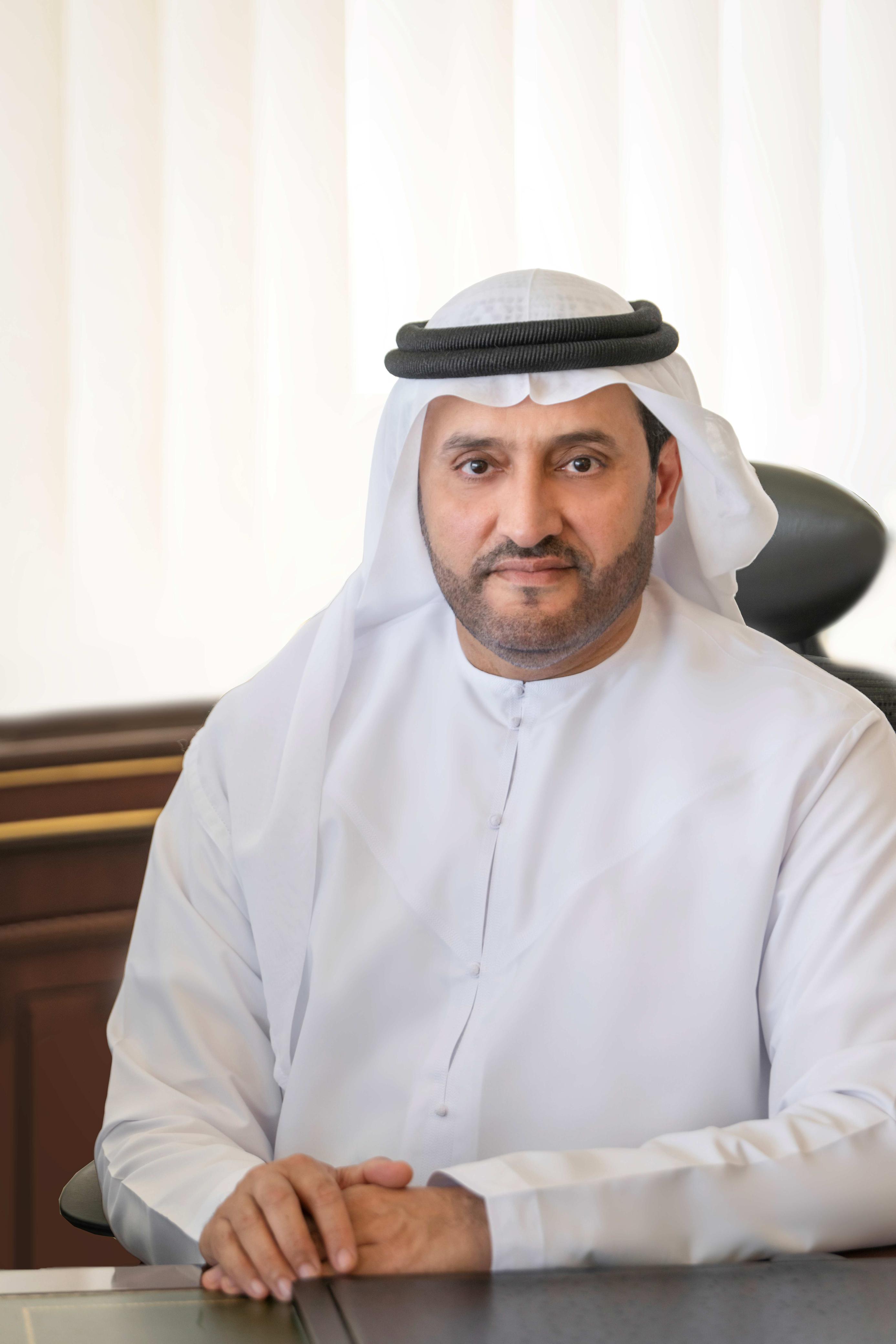
    His Excellency Ali Salim Al Midfa, Chairman of Sharjah Airport Authority, said the 2025 results reflect the success of the airport’s long-term strategy and its strong commitment to operational excellence. He noted that the steady rise in passenger and cargo volumes aligns with Sharjah Airport’s goals to increase capacity, enhance service quality and support the emirate’s broader economic and tourism ambitions.

    His Excellency Ali Salim Al Midfa, Chairman of Sharjah Airport Authority

    H.E. Al Midfa added that continued investment in infrastructure, digital systems and sustainability initiatives remains central to the airport’s growth agenda, alongside strengthening partnerships with airlines and logistics operators.


    Supporting Economic Growth

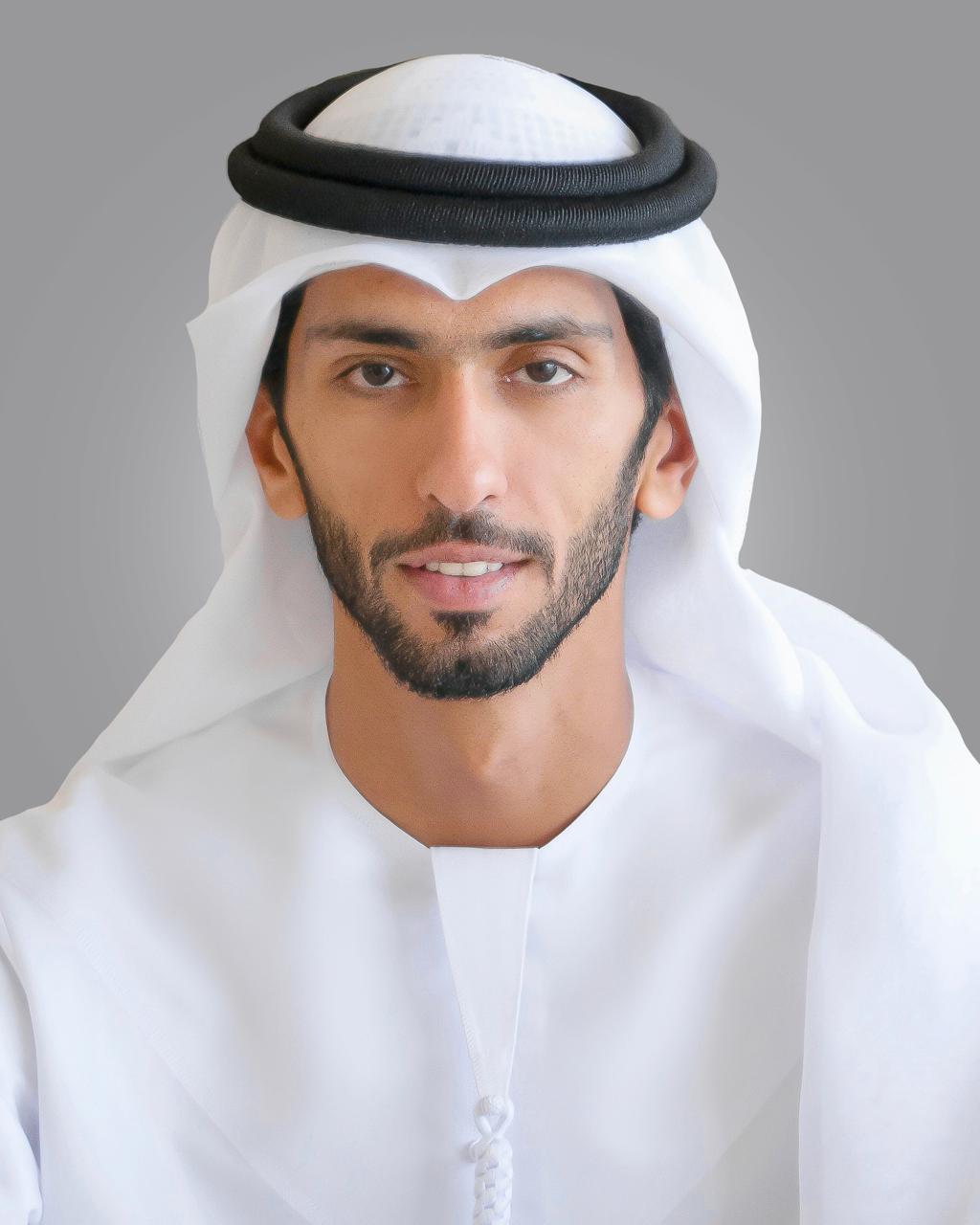
    His Excellency Sheikh Faisal bin Saud Al Qasimi, Director of Sharjah Airport Authority, said the exceptional performance in 2025 reflects the growing role the airport continues to play in supporting travel and business activity, further strengthening Sharjah’s position as a key hub in regional and international markets.

    His Excellency Sheikh Faisal bin Saud Al Qasimi, Director of Sharjah Airport Authority

    H.E. Sheikh Faisal Al Qasimi noted that the airport’s growth is underpinned by advanced infrastructure, efficient governance and a supportive regulatory environment, enabling Sharjah Airport to meet rising demand efficiently while maintaining high operational and service standards.


    New Destinations

    In this context, Sharjah Airport continued to expand its flight network in 2025 by adding new direct routes to major global capitals and cities. Air Arabia launched direct flights from Sharjah Airport to Krabi in Thailand, Munich in Germany, Prague in the Czech Republic, Warsaw Modlin in Poland, Vienna in Austria, Addis Ababa in Ethiopia and Sochi in Russia.

    In addition, Air Arabia recently announced the launch of direct flights from Sharjah Airport to London in the United Kingdom, scheduled to commence in March 2026. Sharjah Airport also expanded its network in 2025 with the addition of new destinations in Iran, including Ahvaz, Qeshm and Bandar Abbas, further strengthening regional connectivity.


    Expanding Air Connectivity

    In 2025, four new international airlines joined Sharjah Airport’s network, including Oman’s SalamAir, Iran’s Caspian Airlines, Syria’s Fly Cham and Ethiopian Airlines. This expansion connected passengers to more than 100 global destinations and further strengthened the airport’s air connectivity network.


    Enhancing Services

    Sharjah Airport Authority continues to enhance the passenger experience, boost cargo efficiency and improve its environmental performance, supporting Sharjah’s economic diversification and strengthening the UAE’s aviation sector. These ongoing efforts reflect Sharjah Airport Authority’s commitment to continuous improvement, supporting Sharjah’s economic diversification and reinforcing the UAE’s position as a leading global aviation centre.

  • Soult Launches from TiECon Mangaluru World’s First Digital Life Vault for Legacy Management

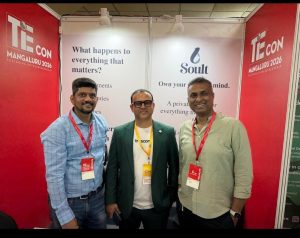
    Mangaluru, India, 20th January 2026, ZEX PR WIRE, Soult, a Mangaluru-based startup, today announced its official global launch at TiECon Mangaluru 2026, unveiling the world’s first Digital Life Vault designed for comprehensive legacy management.

    Soult enables individuals and families across the world to securely organize financial assets, critical documents, personal memories, wishes, and life instructions within one private and structured platform. It addresses a universal challenge of the digital age — lives are increasingly digital, but legacies remain fragmented.

    Unlike conventional cloud storage or document repositories, Soult is purpose-built for legacy continuity. The platform brings together financial preparedness and the preservation of personal values, stories, and guidance intended for future generations, creating a new global category in digital life infrastructure.

    Soult chose the recently concluded TiECon Mangaluru 2026 as its global launchpad. The inaugural flagship conference of TiE Mangaluru brought together entrepreneurs, investors, policymakers, and ecosystem leaders to spotlight Coastal Karnataka – India’s emerging “Silicon Beach” – as a hub for innovation and investment. Launching Soult at TiECon Mangaluru underlines the belief that globally relevant products can be built from focused regional ecosystems like Mangaluru.

    Soult is founded by Sanketh Kandlikar, an enterprise SaaS product and technology leader with over two decades of experience building and scaling B2B platforms, leading complex digital transformation programs, and managing global product lifecycles across industries and geographies. As Founder, he brings deep expertise in architecting secure, scalable cloud platforms and translating real-world human problems into thoughtful, productized solutions.

    Co-founder Saleem, a Dubai-based Mangaluru-born serial entrepreneur, complements this with years of experience building and backing ventures across the Gulf and India. As an active ecosystem enabler for Mangaluru-origin founders, he anchors Soult’s ambition to emerge from the coastal region and serve a truly global user base, while staying rooted in Mangaluru’s values of trust, community, and long-term relationships.

    “Soult was born from a very personal realization that while we carefully build our lives, we rarely organize what we leave behind in a way that is clear, complete, and compassionate for our loved ones,” said Founder Sanketh Kandlikar. “Launching from TiECon Mangaluru is symbolic — it signals that products solving global problems can emerge from new innovation corridors like Coastal Karnataka, not just the usual metros.”

    Privacy and security are fundamental to Soult’s design. Built on zero-knowledge architecture with strong encryption and user-controlled access, the platform ensures that personal data remains private and inaccessible to Soult itself. The company follows a strict no-advertising and no-data-monetization approach.

    As digital lives continue to expand worldwide, Soult positions itself as quiet but essential infrastructure for individuals seeking certainty, dignity, and continuity for what they leave behind.

    Find out more about Soult at www.soult.life

  • Inside $HEALTH’s Consumer-First Ownership Model

    Consumer brands have historically treated customers as buyers, while ownership and long-term value creation remained concentrated among insiders and institutions.

    $HEALTH went live on LBank and surged 220% from its $0.15 listing price over the weekend, highlighting growing interest in ownership models tied to real products and everyday consumer demand. This structure aligns closely with what many analysts now view as the best crypto token 2026, driven by real-world usage rather than speculative narratives. It’s also trading on Raydium as we speak.

    Ownership becomes meaningful when it is connected to a real, operating business. Unlike many real-world asset (RWA) models built on static assets and passive ownership, consumer brands compound value through daily consumption, expanding retail presence, and distribution-led growth.

    The Foundation: A Consumer Brand With Live Operations

    At the center of this model is Healthy Cola, a clean-label, zero-sugar beverage company with active operations, not a token-first experiment. Designed for everyday consumption, Healthy Cola products are already distributed across 16 countries through multiple real-world channels.

    These channels include retail outlets, pharmacies, gyms, HoReCa locations, and delivery platforms, supported by active listings, reorders, and repeat demand. This real-world execution distinguishes Healthy Cola from consumer crypto projects that lack proven distribution or product validation.

    In 2025, revenue reached approximately $8 million, confirming real sell-through and distributor confidence. Market share remains below 0.1%, reflecting early-stage scale rather than weak traction. Tokenization here is layered onto a functioning business with established production and logistics.

    Why Ownership Has Traditionally Excluded Consumers

    Consumer brands grow through repeat purchases, yet ownership typically remains concentrated among insiders, venture funds, and late-stage investors. Consumers generate revenue but rarely participate in long-term value creation.

    In traditional consumer brand structures:

    • Equity access arrives late, often after most growth is captured
      ● Loyalty programs reward transactions, not contribution
      ● Consumers scale revenue without economic alignment

    As consumer brands expand globally, this disconnect becomes increasingly visible and harder to justify.

    $HEALTH Tokenomics and Long-Term Structure

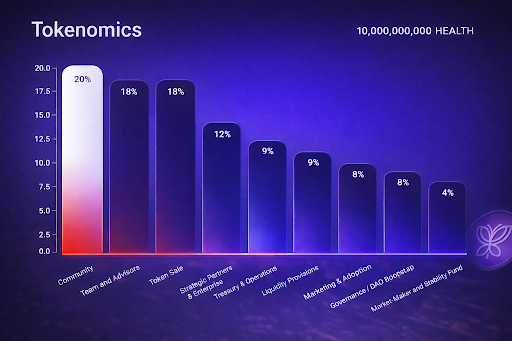
    The $HEALTH token is a Solana-based utility token with a fixed supply of 10 billion, structured to prioritize long-term alignment over short-term liquidity extraction.

    The allocation framework supports sustainable growth:

    • Community: 20% for gradual engagement and rewards
      ● Team and advisors: 18% with a 12-month cliff and long-term vesting
      ● Token sale: 18% with partial TGE unlock and linear vesting
      ● Strategic partners and enterprise: 12% milestone-based
      ● Liquidity and market stability: 11% combined
      ● Treasury, operations, governance, and marketing: remaining balance

    This structure emphasizes controlled unlocks, alignment, and price stability rather than aggressive emissions.

    Utility Anchored in Real Production

    $HEALTH utility is designed to align participation with real production activity, not governance control or speculative yield. Ownership reflects economic alignment with the brand’s output rather than decision-making authority.

    Core utilities include:

    • Produce-to-Earn participation, where holders retain $HEALTH during active production cycles
      ● Quarterly value distribution, with 15% distributed every three months and aligned with completed production cycles
      ● Real-economy exposure, tied to manufacturing and sales execution rather than staking rewards

    There is no DAO and no governance voting. Utility is driven by production, distribution, and real-world performance.

    Conclusion

    Health-first beverages represent a long-term structural shift in consumer demand, while traditional sugar-based colas face increasing regulatory and behavioral pressure. As consumer-first ownership models gain relevance, participation tied to real production offers a clearer path to sustainable value creation.

    The $HEALTH token is available on LBank. Readers can also join the project’s official Telegram community to follow product expansion and tokenized production updates as manufacturing and distribution scale globally.

  • MSX Announced as Platinum Sponsor for Hong Kong Web3 Festival 2026

    MSX is a community-driven digital asset trading platform, primarily offering global users spot and derivatives trading services for cryptocurrencies like Bitcoin and Ethereum, as well as trading services for RWA tokenized assets and bulk/forex financial products.

  • OKX Web3 Confirmed as Title Sponsor for Hong Kong Web3 Festival 2026

    Hong Kong, 20th January 2026, ZEX PR WIRE, We’re thrilled to announce that OKX Web3 is a Title Sponsor for the Hong Kong Web3 Festival 2026 taking place from April 20 to 23, 2026 at Hong Kong Convention and Exhibition Centre.


    OKX Web3 is committed to Web3 technological innovations, and has developed OKX Wallet as an industry-leading decentralized multi-chain wallet that enables you to access and explore the Web3 world.

    The Hong Kong Web3 Festival (“the Festival”), co-hosted by Wanxiang Blockchain Labs and HashKey Group and organized by W3ME, is Asia’s premiere crypto gathering that has been annually held since April 2023. It convenes the world’s smartest minds in the Web3 and crypto space to discuss the latest trends and policies.

    The previous three editions of the Festival brought together over 350 exhibitors and more than 1,200 speakers for in-depth discussions, attracted a cumulative total of 100,000 visitors, and saw over 400 diverse side events.

    As Asia’s premier crypto event, the Festival leverages Hong Kong’s unique position as a global financial center and innovation powerhouse, bridging the vast market potential of Mainland China with worldwide Web3 advancements. This unique positioning enables the event to bring together the best resources from across the globe, offering attendees first-hand Web3 updates and networking opportunities. Get all the details here: https://www.web3festival.org/hongkong2026/#/en

    Join us in staying ahead of the latest Web3 trends and policies while building meaningful relationships with leading projects, investors, and tech pioneers. Secure your seats: https://lu.ma/hkweb3festival_2026

    Be our partner: https://tally.so/r/w5YEbP

  • KH Brokers and LaunchVector: A Transparent Comparison for E-Commerce Investors

    Blatchington Road, England, 15th January 2025, Choosing the right partner when acquiring an e-commerce business is a critical decision for any investor. Companies such as KH Brokers and LaunchVector both operate in the e-commerce acquisition space, yet they follow fundamentally different structures when it comes to deal access, ownership, pricing, and post-acquisition support.

    For buyers researching either company, understanding these differences is essential before committing capital. This article provides a clear, factual comparison of KH Brokers and LaunchVector, based on publicly available information and structural distinctions between their models.

    Rather than positioning one approach as universally better than the other, the goal of this comparison is to outline how each company operates — allowing investors to decide which model aligns best with their goals, risk tolerance, and desired level of involvement.

    1 – Access To Dealflow:

    KH Brokers’ Approach to Deal Flow:

    KH Brokers operates as a dedicated e-commerce brokerage, facilitating transactions between qualified buyers and established online brands. Founded in 2022, the company has grown rapidly by focusing on the acquisition of cash-flowing e-commerce businesses for both first-time buyers and experienced investors.

    KH Brokers’ scale of deal flow is supported by its public transaction history. On platforms such as Flippa, KH Brokers has completed transactions with over 200 buyers, maintained 100% positive feedback, and facilitated more than $14 million in completed transactions on that marketplace alone. This positions KH Brokers among the most active brokers on Flippa for e-commerce brand sales.

    While KH Brokers reviews a high volume of potential listings, only a small percentage of businesses ultimately progress to market. Each opportunity undergoes a structured financial and operational review conducted by an internal due diligence team, with a focus on verifying revenue accuracy, cost structures, traffic sources, and operational sustainability. This screening process is designed to ensure that investors are presented with vetted opportunities rather than raw or unverified listings.

    LaunchVector’s Deal Access Model:

    LaunchVector operates under a different structure. Rather than acting as a broker representing third-party sellers, its model is centered on acquiring businesses directly and presenting opportunities to investors within its framework.

    Because of this structure, deal availability is typically shaped by the acquisitions LaunchVector chooses to pursue at a given time, rather than a continuous inflow of seller-submitted listings. This approach may appeal to investors who prefer a more centralized acquisition process, though it naturally differs from a brokerage-led model in terms of deal volume and variety.

    Why Deal Flow Matters to Investors:

    Access to a broad and well-vetted deal pipeline gives investors more choice, stronger comparables, and greater pricing flexibility. When sellers actively compete to list their businesses, buyers are better positioned to evaluate opportunities side by side and select investments that align closely with their goals.

    KH Brokers’ model emphasizes both access and selectivity, while other structures may prioritize a narrower set of internally sourced opportunities. Understanding these differences helps investors determine which approach best matches their desired level of involvement and decision-making control.

    2: Pricing and Profit Multiples:

    Another key distinction between KH Brokers and LaunchVector lies in how acquisitions are priced and how profit multiples are structured, particularly when ownership percentages are taken into account.

    Understanding Pricing Structures:

    When evaluating an e-commerce acquisition, it is important for buyers to consider not only the purchase price, but also the percentage of ownership being acquired. Partial ownership structures can result in a higher effective valuation when normalized to a 100% basis.

    To illustrate this difference, the examples below are based on publicly available listings and communications, using anonymized business descriptions for clarity.

    Illustrative Examples:

    In several LaunchVector opportunities reviewed, investors were offered 50% ownership stakes at purchase prices ranging from approximately $250,000 to $500,000. When these transactions are normalized to reflect full ownership valuations, the implied profit multiples ranged from approximately 1.8× to 2.9× annual net profit, depending on the business.

    By contrast, comparable opportunities listed through KH Brokers during the same period were offered at 100% ownership, with observed profit multiples generally ranging from approximately 0.8× to 1.3× annual net profit.

    Why This Difference Matters:

    Ownership percentage directly impacts an investor’s capital recovery timeline and long-term upside. Acquiring 100% of a business at a lower multiple can provide greater flexibility around reinvestment, scaling decisions, and eventual exit options.

    Different acquisition models naturally lead to different pricing outcomes. Some investors may prefer partial ownership structures with shared operations, while others prioritize full ownership and faster capital recoupment. Understanding how profit multiples are affected by equity structure is therefore essential when comparing opportunities across platforms.

    3: Ownership and Equity Structure:

    One of the most fundamental differences between KH Brokers and LaunchVector lies in how ownership and equity are structured in each acquisition model.

    LaunchVector’s Ownership Model:

    Based on publicly available information, LaunchVector structures its opportunities around partial ownership arrangements. In many cases, investors acquire a fractional stake in a business — commonly around 50% equity, though other minority ownership structures may also be offered depending on the opportunity.

    Under this model, LaunchVector retains a significant ownership position in the business. In return, its internal team typically remains responsible for day-to-day operations, marketing execution, and strategic management. For some investors, this structure offers the appeal of a more hands-off investment, with operational responsibilities handled centrally by an experienced team.

    This approach may suit buyers who prioritize passive exposure and are comfortable with shared ownership and decision-making.

    KH Brokers’ Ownership Model:

    KH Brokers follows a different approach. When acquiring a business through KH Brokers, buyers purchase 100% ownership of the company. Full equity is transferred to the buyer, providing complete legal ownership and long-term control of the asset.

    Importantly, full ownership does not mean buyers are required to operate the business themselves. KH Brokers specializes in working with first-time e-commerce investors, many of whom prefer a fully hands-off structure. Depending on the business acquired, investors are typically supported by an established operational setup that may include management teams, contractors, or specialist operators responsible for day-to-day execution.

    In many cases, investors spend minimal time on weekly oversight, often limited to reviewing performance summaries or participating in brief check-ins. Operational responsibilities such as marketing execution, fulfillment coordination, customer support, and supplier management are handled by non-equity team members under agreed service arrangements.

    These teams operate independently of ownership, allowing buyers to retain 100% equity while still benefiting from a professionally managed, low-involvement investment structure tailored to the specific business they acquire.

    Understanding the Trade-Off:

    The distinction between these two models ultimately comes down to how investors value ownership versus operational delegation.

    Partial ownership structures trade equity for centralized management and shared operational responsibility. Full ownership structures preserve equity while relying on non-equity teams, operators, or contractors to maintain continuity and performance.

    Both approaches can work depending on an investor’s goals. However, understanding how much equity is retained — and what is exchanged in return — is critical when evaluating long-term upside, exit flexibility, and capital efficiency.

    4: Teams Included Post-Acquisition:

    Another important consideration for investors is how a business is operated after acquisition, and what level of involvement is required from the buyer.

    LaunchVector’s Operational Team Structure:

    LaunchVector’s model is built around a centralized, in-house operational team. When an investor acquires a stake in a business, LaunchVector typically continues to manage the day-to-day operations of the asset on the investor’s behalf.

    This structure is designed to provide a fully hands-off, passive experience, with execution, optimization, and ongoing management handled internally. For investors seeking minimal involvement and a shared operational framework, this approach can offer clarity around responsibilities and execution.

    KH Brokers’ Team Model:

    KH Brokers offers a more flexible, buyer-led approach to post-acquisition operations.

    Some buyers choose to be actively involved in strategic decisions, while others prefer a fully automated, hands-off structure. KH Brokers supports both preferences by tailoring the operational setup to the specific business and the investor’s desired level of involvement.

    For buyers seeking a passive experience, KH Brokers can assemble a dedicated operational team around the acquired business. This may include site managers, marketing specialists, fulfillment coordinators, and customer support resources — all structured to manage daily operations on the buyer’s behalf.

    Crucially, these teams operate under service-based arrangements rather than equity participation. This allows investors to retain 100% ownership of the business while still benefiting from professional management comparable to a fully managed model.

    Why Team Structure Matters:

    Operational teams play a critical role in post-acquisition performance. The difference lies in how those teams are structured and compensated.

    Centralized, equity-based team models trade ownership for operational delegation.

    Service-based team models preserve equity while still enabling hands-off operation. Both approaches can be effective, but they result in very different long-term outcomes in terms of control, scalability, and exit flexibility.

    KH Brokers’ emphasis on tailoring the right team to each business — combined with its network of experienced operators — is a key reason many buyers continue to perform successfully after acquisition. This approach is further supported by publicly available buyer feedback and transaction history across third-party platforms.

    Final Thoughts:

    Choosing the right partner when acquiring an e-commerce business is not simply a matter of price or promised returns — it comes down to structure, ownership, and long-term alignment.

    As outlined above, both KH Brokers and LaunchVector operate within the e-commerce acquisition space, but they do so through fundamentally different models. Differences in deal access, pricing, equity structure, and post-acquisition operations can materially affect an investor’s experience, flexibility, and ultimate outcome.

    Some investors may prioritize centralized management and shared ownership, while others value full equity ownership with the option to remain hands-off through professionally structured teams. Understanding these trade-offs allows buyers to assess which approach best fits their goals, risk tolerance, and desired level of involvement.

    For those researching either platform, the most important step is conducting independent due diligence, reviewing available opportunities carefully, and ensuring the acquisition model aligns with both short-term expectations and long-term objectives.

    Official Websites:

    KH Brokers – https://www.khbrokers.com
    LaunchVector – https://launchvector.com

    Disclaimer:

    This article is provided for informational purposes only and is based on publicly available information at the time of writing. It does not constitute investment, legal, or financial advice. Readers are encouraged to conduct their own due diligence and consult with appropriate professionals before making any investment decisions.


  • How Hedge Funds Use Tradomatix to Fund AI Trading Talent

    Artificial intelligence is no longer an experimental layer in trading. Across global markets, machine learning models, autonomous trading agents, and quantitative systems now operate alongside human decision-making at scale.

    What has changed is not just how strategies are built, but how trading talent, intelligence, and capital come together.

    Tradomatix operates as a global trading technology platform where hedge funds, quantitative traders, AI trading agents, brokers, and advanced traders integrate intelligent trading systems within a single, asset-class-agnostic environment.

    Rather than functioning as a broker or strategy provider, Tradomatix provides the infrastructure through which hedge funds deploy machine-driven strategies built by quantitative talent—and compensate those builders through live trading activity.

    From Automation to Machine Intelligence

    For years, trading automation relied on static rules and predefined logic. While effective for execution, these systems lacked the ability to adapt.

    Tradomatix supports a more advanced model built around consolidated intelligence powered by machine learning. Data, models, and execution behavior are evaluated together, allowing trading systems to evolve dynamically rather than operate as fixed algorithms.

    This shift—from rule-based automation to adaptive intelligence—reflects how modern trading systems already function in practice.

    Where Quant Builders and AI Systems Operate Together

    Quantitative traders increasingly work alongside AI-driven systems rather than in isolation. Models are trained, refined, and deployed in environments where human insight, statistical methods, and machine intelligence intersect.

    Tradomatix functions as a shared platform where quant builders develop strategies that operate alongside AI trading agents within institutional-grade infrastructure. These strategies run in live market conditions, allowing hedge funds to allocate capital directly to machine-driven intelligence rather than relying solely on traditional research pipelines.

    Quant builders participating on the platform earn as part of this ecosystem, reflecting a market structure where talent is compensated through performance-driven deployment rather than static employment models.

    Enabling AI Trading Agents at Production Scale

    As AI trading agents move from research into production, they require environments capable of supporting continuous operation, risk controls, and execution workflows.

    Tradomatix supports AI trading agents by providing structured access to live markets, execution pathways, and operational parameters. Autonomous systems operate within defined constraints while interacting with human-led and quantitative strategies in the same environment.

    This production-grade approach distinguishes machine intelligence that operates in real markets from experimental models confined to simulations.

    Asset-Class-Agnostic Infrastructure for Intelligent Trading

    AI-driven and quantitative strategies increasingly span asset classes, regions, and market conditions. Infrastructure designed around single products limits the effectiveness of intelligent systems.

    Tradomatix operates as an asset-class-agnostic platform, allowing machine learning models and quantitative strategies to function across markets without being constrained by product silos. This enables intelligence to scale horizontally across trading environments rather than remain fragmented.

    Redefining How Trading Talent Is Deployed

    As hedge funds compete on speed and adaptability, the way they access quantitative talent continues to evolve.

    Tradomatix reflects this shift by operating as infrastructure where hedge funds source, deploy, and compensate quant builders through live trading workflows. Rather than relying exclusively on traditional recruitment, capital is allocated directly to deployed intelligence within a shared platform.

    This model aligns trading talent, machine intelligence, and capital within a single operational layer—one designed for modern, AI-driven markets.

    About Tradomatix

    Tradomatix is a global trading technology platform used by hedge funds, quantitative traders, AI trading agents, autonomous bots, brokers, and advanced traders. The platform enables the deployment of machine-learning-driven trading systems within a unified, non-custodial, asset-class-agnostic environment.

  • Ryan Weible of San Ramon Expands Inclusive Real Estate Services for LGBTQ+ Clients Across the East Bay

    San Ramon, CA, 12th January 2026, ZEX PR WIRE, Ryan Weible of San Ramon is building an inclusive real estate practice designed to support LGBTQ+ buyers and sellers navigating the East Bay housing market. As a Partner with the Leah Tounger Realty Group at KW Advisors East Bay, Weible brings a background in education, community leadership, and the arts to a field where clarity, trust, and steady guidance matter.

    Weible works with clients across San Ramon, Oakland, Berkeley, and surrounding East Bay cities. His approach centers on clear communication, preparation, and respect for each client’s priorities. As a member of the LGBTQ+ community, he understands how housing decisions intersect with safety, representation, and long-term stability.

    “Buying or selling a home already involves pressure,” said Weible. “For LGBTQ+ clients, there are often added layers of concern. My role is to create a process where people feel informed, respected, and supported at every step.”

    The Leah Tounger Realty Group was founded in 2006 and is among the most productive real estate teams in the Bay Area. Operating out of KW Advisors East Bay, the team closed more than $76 million in volume last year. Weible joined the group after closing 12 transactions in his first year in real estate, with a focus on first-time buyers and clients seeking structured guidance.

    Weible’s inclusive approach reflects his broader professional background. Before entering real estate, he spent more than two decades in education and the performing arts. He served as Assistant Head of School at Bentley School and held leadership roles focused on equity, safety planning, and community engagement. He also taught applied theatre and Theatre for Social Change, disciplines centered on dialogue, listening, and shared problem solving.

    Those experiences inform how he works with real estate clients today. He prioritizes transparency in timelines, documentation, and decision points. He explains each stage of the transaction in plain language and encourages questions early, rather than during moments of urgency.

    “People deserve to know what’s coming,” Weible said. “When expectations are clear, clients can make decisions with confidence instead of stress.”

    As Ryan Weible of San Ramon continues to grow his practice, he remains focused on serving clients who want a steady guide through complex choices. Many of his LGBTQ+ clients include first-time buyers, couples navigating joint finances, individuals relocating for work or family, and people seeking neighborhoods where they feel at home. Weible helps clients evaluate not only price and property condition, but also commute patterns, local services, and long-term livability.

    He operates Hit The Mark Realty and partners with KW Advisors East Bay for brokerage services. He also maintains Emeryville.RealEstate, a local resource focused on neighborhood context and buyer education. His real estate work is licensed throughout California.

    Weible’s service model emphasizes preparation over speed. He works with clients to establish budgets, review financing options, and map timelines before offers are written. This structure helps clients compete effectively in fast-moving markets without feeling rushed into decisions.

    “Inclusive service is not about labels,” Weible said. “It’s about listening carefully and adapting the process to the person in front of you.”

    His work has drawn clients from across the East Bay who value a calm, organized experience. Many come from education, nonprofit work, healthcare, and creative fields. Weible’s background allows him to communicate clearly with clients who want detail, context, and a sense of control over each step.

    Within the Leah Tounger Realty Group, Weible collaborates closely with experienced agents, transaction coordinators, and marketing staff. This team structure provides clients with consistent support from first conversation through closing. It also allows Weible to focus on education and client communication while ensuring operational details stay on track.

    Looking ahead, Weible plans to expand inclusive buyer education through workshops and written resources tailored to LGBTQ+ clients and first-time buyers in the East Bay. He also continues to build relationships with lenders, inspectors, and service providers who share a commitment to professionalism and respect.

    “For me, success means people leave the process feeling informed and steady,” Weible said. “The transaction ends, but the trust should last.”

    More information about Ryan Weible of San Ramon is available at ryanweiblerealtor.com.