Blog

  • Global Social Media Teams Shift to Infrastructure-Driven Growth as PMOCK Adoption Expands

    China, 30th Jun 2026 – Global social media operations are undergoing a structural transition from content-centric execution models toward infrastructure-driven growth systems, as rising customer acquisition costs, tightening platform governance, and increasing operational complexity reshape how cross-border teams scale digital acquisition.

    According to cross-border trade monitoring by the World Trade Organization (WTO) and market intelligence from Statista, global digital advertising costs across major ecosystems including TikTok, Meta, and Google have continued to rise steadily over the past several years, with cost-per-acquisition (CPA) in competitive verticals increasing by an estimated double-digit percentage annually in multiple regions. At the same time, platform governance frameworks have become significantly more strict, particularly in relation to multi-account behavior, device-level fingerprinting, and identity consistency enforcement.

    These structural changes are driving social media operations beyond traditional content production and media buying workflows. Instead, enterprise teams are increasingly required to build scalable operational infrastructures capable of supporting distributed account networks, cross-time-zone execution, and multi-platform coordination across TikTok, Instagram, Facebook, and WhatsApp ecosystems.

    PMOCK Cloud Phone, a cloud-based mobile infrastructure provider, reported growing adoption of its virtualized device system among cross-border e-commerce operators, digital marketing agencies, and enterprise social media teams managing large-scale account matrices. The company stated that demand is being driven by increasing operational instability in traditional device-based workflows, as well as rising requirements for compliance-aligned, scalable, and geographically distributed operational environments.
    Industry analysts describe this shift as the emergence of “growth infrastructure engineering,” where competitive advantage is no longer defined solely by content output or advertising budget, but by the stability and scalability of underlying operational systems. In this context, infrastructure is becoming a core determinant of revenue continuity and account survivability in high-volume digital marketing environments.

    As global teams expand toward matrix-based social media operations, platform risk detection systems have become significantly more sophisticated. Current mechanisms increasingly rely on IP fingerprinting, device-level hardware signatures, behavioral patterns, geo-location consistency, and login session correlation to assess account relationships.

    In practice, many teams still depend on traditional operational methods such as physical device farms, proxy switching, or emulator-based environments. These approaches, however, often introduce instability into large-scale operations. Account clustering risks remain difficult to control, and when detection is triggered, cascading bans across linked accounts can occur. In addition, maintaining consistent IP governance across multiple regions adds further operational complexity.

    For high-growth scenarios such as TikTok Shop or Meta advertising campaigns, even a single association failure can disrupt an entire cluster of revenue-generating accounts, particularly during peak traffic cycles.

    As account scale increases, social media operations typically evolve into multi-layered systems involving TikTok content matrices, Instagram seeding accounts, Facebook ad structures, and WhatsApp-based conversion workflows. However, many teams still rely on a device-centric manual workflow model.

    This often includes repeated login and logout across accounts, spreadsheet-based tracking systems, and shared device usage among team members without standardized access control. As a result, operational inefficiencies become more pronounced. Execution errors increase, auditability becomes limited, and governance structures remain underdeveloped.

    For enterprise-level cross-border organizations, these coordination frictions gradually translate into structural limitations on growth scalability.

    At its core, social media growth is still driven by content throughput. However, as account matrices expand, content production systems often fail to scale at the same pace.

    Short-form video production costs continue to rise, while localization requirements across languages and regions add further complexity. At the same time, content formatting standards differ across TikTok, Instagram, and Facebook, making cross-platform adaptation more resource-intensive. Most teams also face limitations in creative bandwidth, particularly when operating with fixed in-house production resources.

    Industry benchmarks suggest that high-performing TikTok accounts often require multiple content outputs per day to maintain algorithmic visibility. When scaled across dozens or even hundreds of accounts, the demand quickly exceeds the capacity of traditional creative teams, creating a persistent imbalance between account scale and content supply.

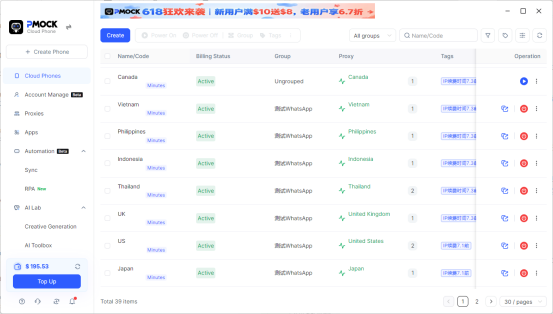
    Against this backdrop, cloud-based mobile infrastructure solutions such as PMOCK Cloud Phone have emerged as part of a broader shift toward system-level operational architecture in global social media management.

    Its design logic is centered on combining isolated mobile environments with automation and distributed cloud nodes, enabling teams to move from fragmented execution toward more structured operational systems.

    The system is built on an ARM-based virtualization architecture that provides independent mobile environments for each instance. In practice, each account operates within its own isolated device environment, with separated system parameters and encrypted configuration structures.

    This one-to-one mapping between account, environment, and IP reduces cross-account interference and helps teams maintain clearer operational boundaries. Compared with traditional emulator or shared-device setups, this approach aims to simulate more consistent mobile device behavior at the system level.

    The platform also integrates multiple global cloud nodes, allowing teams to align account environments with different regional markets such as North America, Southeast Asia, and Europe. This supports geographically consistent operational setups across distributed teams.
    Content production is increasingly being integrated into operational infrastructure rather than treated as a separate creative function. Within this system, AI-assisted tools are used to generate product visuals, short-form video materials, and cross-platform content adaptations.

    This integration allows teams to reduce dependency on external production pipelines and shorten content iteration cycles. In some cases, brands in fast-moving categories such as beauty and fashion have shifted from traditional production workflows to AI-assisted content generation processes, significantly reducing turnaround time for creative assets.
    While adoption levels vary across industries, the broader trend reflects a move toward more automated and modular content production systems.

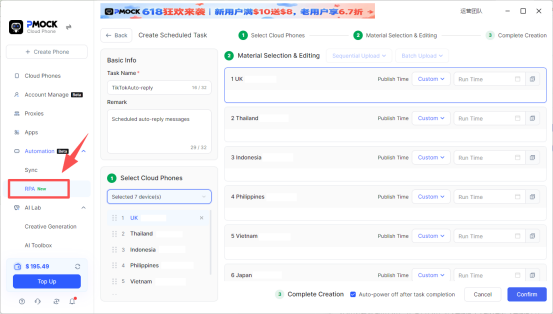
    As global campaigns expand across markets, execution timing has become a critical operational factor. To address this, automation tools are increasingly being used to schedule and coordinate cross-time-zone posting activities.

    In practice, teams are able to predefine publishing schedules, automate repetitive engagement actions, and coordinate multi-account deployments without manual intervention. This reduces dependency on continuous human monitoring and enables more consistent traffic generation across different regional peak hours.
    For larger organizations and agencies, governance has become a key requirement alongside scalability. Role-based access control, operational logging, and environment segmentation are increasingly being integrated into social media infrastructure systems.

    These capabilities allow enterprises to define clearer operational hierarchies, track account-level activities, and reduce ambiguity in multi-team collaboration environments. As platform compliance requirements continue to tighten globally, structured governance is becoming a necessary component of scalable operations.

    The evolution of social media operations is increasingly defined by system integration rather than isolated tactical execution. Account security, content production, automation, and compliance management are gradually converging into unified operational infrastructures.

    In this context, platforms such as PMOCK Cloud Phone are positioned within a broader industry shift toward infrastructure-based growth models. The competitive focus is no longer limited to content output alone, but extends to the stability, automation depth, and governance capability of the underlying operational system.

    As cross-border commerce continues to mature, the companies that achieve sustainable growth are likely to be those that can build more resilient and scalable social media infrastructures, rather than those relying solely on content volume or manual execution capacity.


    Media Contact

    Organization: MOCK INFORMATION TECHNOLOGY LIMITED

    Contact Person: Congcong

    Website: https://pmock.com/

    Email: Send Email

    Contact Number: +8613159229764

    Address:ROOM C03 9/F KATOFACTORYBUILDING 2 CHEUNGYUE STLAI CHI KOKKL

    Country:China

    Release id:46504

    file

  • Delray Beach Watch Specialist Emmanuel Ramirez Grows Time Well Spent Into One of South Florida’s Leading Luxury Timepiece Communities

    Delray Beach, FL, United States, 15th Jun 2026 – Emmanuel Ramirez, a luxury watch specialist based in Delray Beach, Florida, has grown his platform Time Well Spent (@timewellspent) into a community of more than 159,000 collectors and enthusiasts, establishing himself as a trusted voice in the high-end timepiece market.

    Ramirez specializes in sourcing, authentication, and sales of luxury watches from High End Brands. Through Time Well Spent, he connects collectors with rare and one-of-a-kind pieces, offering market insight that spans buying, selling, sourcing, and servicing.

    “The watch is never just the watch,” Ramirez said.

    “Collectors come to us for access, knowledge, and pieces that mark the moments that matter. My job is to know this market in every direction so my clients don’t have to.”

    Ramirez works with collectors at every level, from first-time luxury buyers marking a milestone to seasoned collectors pursuing specific grail pieces. His sourcing network gives clients access to inventory rarely available through traditional retail channels.

    Time Well Spent continues to expand beyond watch sales into broader luxury lifestyle content, with Ramirez focused on building a brand rooted in quality, selectivity, and long-term client relationships.

    Collectors and buyers can connect with Emmanuel Ramirez through Instagram at @timewellspent.

    Media Contact

    Organization: Luna PGA Time Pieces

    Contact Person: Emmanuel

    Website: https://lunapgatimepieces.com/

    Email:
    info@lunapgatimepieces.com

    Contact Number: +15613376837

    Address:975 S Congress ave, STE 110

    City: Delray Beach

    State: FL

    Country:United States

    Release id:46501

    file

  • Anytap Launches Visa-Powered Consumer Payment Card Service Across Asia Pacific

    “Anytap has officially launched a Visa-powered consumer payment card service for digital-first individuals across Asia Pacific, offering physical and virtual cards with built-in digital asset-to-fiat spending under the Anytap brand — starting in Japan, South Korea, the Philippines, and Malaysia.”

    Boston, MA, June 29, 2026 — Anytap, a consumer payment card company, today announced the official launch of its Visa-powered card service across Asia Pacific. The service brings branded physical and virtual payment cards directly to individual consumers under the Anytap name, beginning with four initial markets: Japan, South Korea, the Philippines, and Malaysia.

    The launch addresses a growing gap in the Asia Pacific region, where hundreds of millions of digital-first consumers lack access to a reliable, transparent payment card that supports both everyday spending and digital asset balances. Anytap is designed to fill that gap with a product built around simplicity, speed, and complete fee transparency.

    A Growing Demand Across Asia Pacific

    The global card issuance market is projected to reach USD 45.3 billion by 2035, with Asia Pacific expanding at a compound annual growth rate of 14.2% — the fastest of any region worldwide. Digital payment card spending volumes have climbed from approximately USD 100 million per month in early 2023 to over USD 1.5 billion per month by late 2025, reflecting a 15-fold increase in under three years.

    According to BCG’s 2026 Global Fintech Report, Asia Pacific led all global regions in fintech revenue growth at 25%, driven by digital banking and digital payments adoption across Japan, South Korea, Singapore, and Indonesia. Despite this momentum, a reliable consumer card product that bridges traditional payments and digital assets has remained largely out of reach for everyday users in the region.

    Anytap enters the market as a direct-to-consumer solution built specifically for this audience.

    What the Anytap Card Offers

    The Anytap card is a Visa-powered product that gives consumers access to both a physical card and a virtual card upon approval. Cards are accepted at millions of merchants worldwide across retail, dining, travel, e-commerce, and ATMs.

    Digital Asset-to-Fiat Spending: A key feature of the Anytap card is its digital asset-to-fiat spending capability. Cardholders can spend digital payment and digital asset balances at any Visa-accepting merchant without any action required on the merchant’s side. The conversion from digital asset to local currency takes place at the point of purchase, automatically and in real time.

    Instant Virtual Card: Upon account approval, users receive a virtual Anytap card immediately, enabling online and in-app purchases before the physical card is delivered.

    Mobile-First Onboarding: The entire onboarding process — including identity verification — is completed through a mobile-native experience with no branch visits or paper forms required.

    Multi-Currency Support: Anytap supports multi-currency transactions with competitive foreign exchange rates, making it well suited to consumers who travel frequently, shop internationally, or manage income in more than one currency.

    Full Fee Transparency: All fees, exchange rates, and program terms are published clearly and in advance. Cardholders always know what they are paying and how their account operates — a standard of transparency that has been largely absent from the consumer card market across Asia.

    CEO Statement

    “Asia Pacific is home to hundreds of millions of people who are digital-first, digital payments-forward, and deeply underserved by the existing payment card market. They deserve a card that works the way they do — instantly, transparently, and across borders. Anytap is a consumer brand built for real people, and we are committed to giving every cardholder the clarity and confidence they deserve at every step.” — Josh Boehm, CEO, Anytap

    Expansion Plans

    Anytap is launching its service in Japan, South Korea, the Philippines, and Malaysia in the second half of 2026. The company plans to expand to Indonesia, Thailand, Vietnam, Singapore, and other Southeast Asian markets in 2027, followed by broader Asia Pacific coverage and select markets in the Middle East between 2027 and 2028.

    About Anytap

    Anytap is a consumer-facing Visa payment card brand serving digital-first individuals across Asia Pacific. The company provides physical and virtual card issuance, digital asset-to-fiat spending, multi-currency support, and mobile-first onboarding — all delivered directly to consumers under the Anytap brand. Anytap’s defining principle is complete transparency: cardholders always know what they are getting, what they are paying, and who stands behind their card.

    Website: https://www.anytap.io

    Media Contact

    Organization: Anytap

    Contact Person: Jessica Romano

    Website: https://www.anytap.io

    Email: Send Email

    Contact Number: +18436206842

    City: Boston

    State: MA

    Country:United States

    Release id:46578

    file

  • Carziqo Advances Autonomous Ride-Hailing Deployment as ER-LX Series Begins Rollout in Atlanta

    Atlanta, June 29, 2026, ZEX PR WIRE — Carziqo, an intelligent mobility technology company focused on autonomous ride-hailing and fleet operations, has begun deploying its ER-LX series autonomous ride-hailing vehicles in Atlanta, marking a new stage in the company’s push to bring driverless mobility services into more urban markets.

    The ER-LX series is designed for city-based ride-hailing operations, combining autonomous driving systems, connected fleet management, real-time vehicle monitoring, and intelligent dispatch capabilities. The rollout in Atlanta comes as Carziqo says its autonomous mobility platform is moving from controlled development and limited operational testing toward broader urban service deployment.

    The company said the ER-LX vehicles are intended to support a new generation of ride-hailing services in which autonomous vehicles can be centrally managed, monitored, and optimized through a digital fleet platform. The model is positioned for high-frequency urban travel scenarios, including airport-area routes, business districts, residential communities, and short-to-medium distance passenger transport.

    “As autonomous mobility technology becomes more mature, cities are beginning to look for transportation models that can improve efficiency, reduce operating pressure, and provide more consistent passenger services,” a Carziqo spokesperson said. “The ER-LX series represents Carziqo’s continued effort to connect autonomous driving technology with real-world ride-hailing demand.”

    Atlanta has become an important testing ground for mobility innovation, with its expanding metropolitan population, airport-driven transportation demand, and growing interest in connected urban infrastructure. Carziqo said the ER-LX rollout will focus on phased deployment, operational data collection, fleet performance evaluation, and safety monitoring before wider service expansion.

    The ER-LX series features a sensor-integrated vehicle design, remote fleet supervision, intelligent route allocation, and autonomous operation support systems. The company said the vehicles are built to operate as part of a managed ride-hailing network rather than as standalone autonomous units, allowing the platform to coordinate vehicle availability, service zones, maintenance status, and user demand in real time.

    Industry analysts have said the commercial success of autonomous ride-hailing will depend not only on vehicle technology but also on operational reliability, regulatory coordination, public trust, and the ability to integrate autonomous fleets into existing city transportation systems. Carziqo’s Atlanta deployment is expected to serve as a practical benchmark for how the company adapts its platform to a major U.S. urban environment.

    The company did not disclose the initial number of ER-LX vehicles being deployed, but said the rollout would be expanded gradually based on technical performance, operational feedback, and local service requirements.

    Carziqo has been developing its intelligent mobility platform around autonomous vehicle deployment, ride-hailing operations, fleet asset management, and connected service infrastructure. The company says its long-term strategy is to build a scalable autonomous mobility network across selected global markets, with services designed for both passenger transportation and intelligent fleet operation.

    The Atlanta launch follows Carziqo’s broader efforts to develop autonomous mobility products for different urban use cases, including executive mobility, smart fleet services, and autonomous transportation platforms. The ER-LX series is expected to become one of the company’s key ride-hailing models as Carziqo continues expanding its technology-led mobility ecosystem.

    About Carziqo

    Carziqo is an intelligent mobility technology company focused on autonomous ride-hailing, smart fleet operations, and connected transportation services. Through its autonomous vehicle platforms and digital fleet management systems, Carziqo aims to support the development of safer, more efficient, and more scalable mobility services in selected global markets.

    For more information, visit: https://www.carziqo.com/

  • Dataline Launches Data Launch Partner Program to Power the Next Generation of AI Trading and Onchain Agents

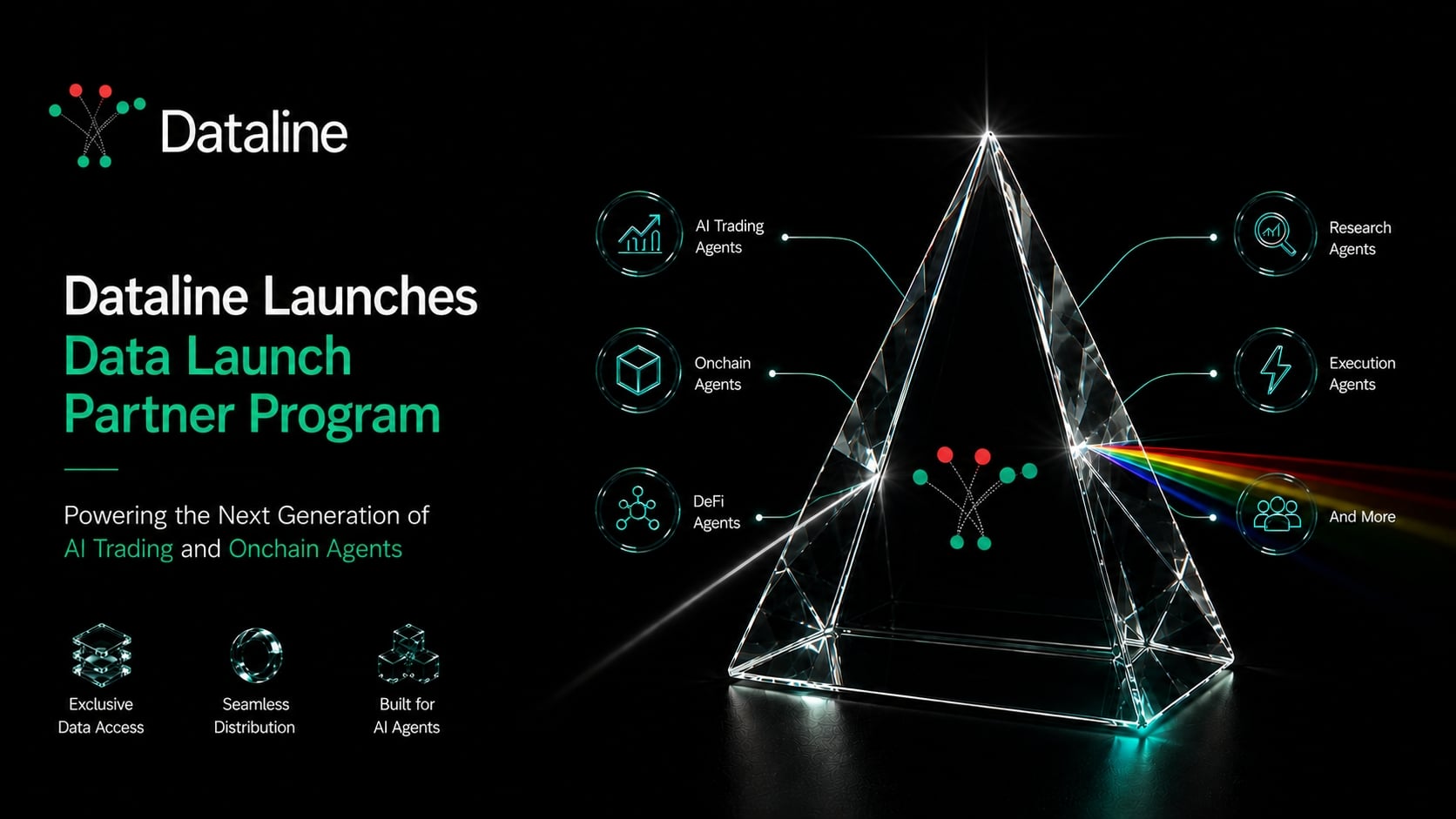
    British Virgin Islands, BVI, June 2026, ZEX PR WIREDataline, the data infrastructure layer for AI agents operating across crypto and financial markets, recently announced the launch of its Data Launch Partner Program, opening access to an initial cohort of AI systems, trading agents, and data providers building on its unified intelligence layer.  


    As AI agents increasingly move from chat-based interfaces to autonomous decision-making systems, the need for structured, cross-market, and verifiable financial data has become a foundational bottleneck. Dataline closes this gap by unifying distributed market data into a schema-based layer, with each response carrying an AI-generated confidence score so the agent can judge for itself whether to act on it.  

    A Unified Data Layer for Agent Economies

    Dataline connects real-time data across major centralised exchanges, decentralised protocols, and prediction markets, including Binance, Coinbase, OKX, Hyperliquid, dYdX, Polymarket, and Kalshi, into a single structured response format.  

    Each query is processed through a cross-venue normalisation system that aggregates pricing, funding rates, liquidity conditions, and event-based signals into confidence-scored outputs with source-level traceability and freshness indicators. 

    This allows AI agents to operate on consistent, verified inputs rather than fragmented or venue-specific APIs.  

    From Data Access to Decision Infrastructure

    The evolution of AI agents has shifted the industry focus away from blind execution and toward interpretation.  

    Dataline’s system is designed to solve this by providing the following:  

    • Cross-venue data normalization across trading and prediction markets

    • Confidence-scored outputs with divergence detection between sources

    • Structured responses optimized for planner–executor–verifier agent loops

    • Real-time aggregation of market signals and event data

    Already Powering Live Agent Systems

    Dataline is already deployed in production environments, supporting over 19.4 million on-chain transactions across the Base, BNB Chain, Sui, and the TON ecosystem.  

    Agent systems built on top of Dataline — including ChatPilot, GhostDriver, and FlowAgent — are actively using its structured data layer for live trading, signal processing, and autonomous execution workflows.

    Launch Partners Across AI and Execution Layers

    The initial Data Launch cohort includes partnerships with AI agent frameworks and execution infrastructure providers such as Sentient, Kite AI, B3, Fraction AI, and Sahara AI.  

    These integrations reflect a growing ecosystem where AI agents not only interpret financial data but also execute transactions across programmable settlement layers in real time.  

    Exclusive Offer for Base Builders

    To support the growing community of builders on Base, Dataline is offering six months of free data feeds to qualifying Base projects. Teams building on Base can claim the offer by reaching out to @datalineai on X and introducing their project.  

    Accelerating the Shift Toward Agent-Native Financial Infrastructure

    As AI systems become embedded in financial decision-making, industry infrastructure is shifting from API-centric models toward schema-based intelligence layers capable of unifying siloed markets.  

    As part of this transition, Dataline enables agents to operate across fragmented environments through a unified execution layer, without requiring venue-specific logic or manual reconciliation.  

    Become a Dataline Launch Partner

    Dataline is expanding its Data Launch Partner cohort. Projects interested in integrating Dataline’s data layer or joining the program can reach out to @datalineai on X to start the conversation.  

  • Scientology TV Highlights Rahul KC Human Rights Work in Nepal

    Episode airing on 24 June 2026 presents the story of Youth for Human Rights Nepal president Rahul KC and a grassroots education movement reaching citizens, schools and public institutions

    Brussels, Brussels, Belgium, 25th Jun 2026 — Scientology Network’s documentary series Voices for Humanity is scheduled to air an episode tonight featuring Rahul KC, president of Youth for Human Rights Nepal, whose work has focused on bringing human rights education to students, communities and public institutions across Nepal.

    The episode, airing Wednesday, 24 June 2026 at 8 p.m. ET/PT, presents the story of a young Nepalese activist who first encountered Youth for Human Rights at the age of 12 and later helped build a grassroots movement to educate citizens on the principles of the Universal Declaration of Human Rights.

    Rahul KC grew up in Kathmandu during Nepal’s decade-long civil conflict, a period marked by violence, instability and the exploitation of children. The programme recounts how, as a child, he came to understand that practices he had seen around him, including domestic violence and forced child labour, were not normal conditions of life but violations of rights recognised under international human rights standards.

    After completing high school, Rahul KC formed a group dedicated to promoting human rights education in Nepal. His work grew from local school outreach into a broader effort engaging students, civic actors and policymakers. According to the programme, these efforts contributed to public understanding of human rights and helped support constitutional protections designed to ensure the implementation, protection and promotion of human rights in Nepal.

    The episode places Rahul KC’s work in the wider context of Nepal’s post-conflict recovery. Following years of civil war, the country has faced continuing challenges connected to social inequality, child protection, discrimination and access to justice. The programme follows Rahul’s efforts to address such issues through education, presenting human rights not as an abstract legal concept but as practical knowledge that citizens can use in everyday life.

    Youth for Human Rights is an international educational initiative that promotes awareness of the Universal Declaration of Human Rights. Its materials are used by volunteers, educators and community groups to help young people understand the 30 rights set out in the Declaration, adopted by the United Nations in 1948.

    The Church of Scientology has long supported human rights education as part of its social betterment programmes. The initiative is inspired by Scientology founder L. Ron Hubbard, who wrote that “human rights must be made a fact, not an idealistic dream.” Churches of Scientology, missions and affiliated groups in many countries have used educational materials on the Universal Declaration of Human Rights in schools, community settings and public awareness activities.

    Ivan Arjona, representative of the Church of Scientology to the European Union, the OSCE, the Council of Europe and the United Nations, said the episode carries particular relevance for audiences concerned with democracy, civic responsibility and education.

    “Rahul KC’s work in Nepal shows why human rights education matters not only in courtrooms or parliaments, but in classrooms, neighbourhoods and families,” said Arjona. “Our own democratic traditions are built on the conviction that dignity, freedom of conscience and equal rights must be understood by citizens if they are to be protected. When young people learn their rights and responsibilities, they become better prepared to contribute to peaceful and fair societies.”

    The episode forms part of Voices for Humanity, a weekly Scientology Network series presenting change-makers from a variety of faiths, cultures and nations who work to improve their communities. The series has covered individuals involved in human rights education, drug prevention, literacy, disaster response and other humanitarian initiatives supported by Scientology-sponsored programmes.

    Scientology Network debuted on 12 March 2018 and was launched by David Miscavige, ecclesiastical leader of the Scientology religion. The network broadcasts from Scientology Media Productions, the Church’s global media centre in Los Angeles, and is available through Scientology.tv, satellite television, mobile applications and streaming platforms including Roku, Amazon Fire and Apple TV.

    The network’s programming includes documentaries, interviews and original series designed to present the everyday lives of Scientologists, the Church’s humanitarian activities and independent documentary films from around the world. Its programming has been made available internationally in multiple languages.

    For European audiences, the Rahul KC episode offers a human-interest perspective on a wider question shared across continents: how human rights principles are transmitted from international declarations into the daily lives of citizens. The story presented by Voices for Humanity shows that education remains one of the most direct routes by which communities can address injustice, strengthen civic culture and encourage respect for the rights of others.

    The Church of Scientology, its churches, missions, groups and members are present across the European continent. Scientology Europe reports a continent-wide presence through more than 140 churches, missions and affiliated groups in at least 27 European nations, alongside thousands of community-based social betterment and reform initiatives focused on education, prevention and neighbourhood-level support, inspired by the work of Scientology founder L. Ron Hubbard.

    Within Europe’s diverse national frameworks for religion, the Church’s recognitions continue to expand, with administrative and judicial authorities in Spain, Portugal, Sweden, the Netherlands, Italy, Germany Slovakia and others, as well as the European Court of Human Rights, having addressed and acknowledged Scientology communities as protected by the national and international provisions of Freedom of Religion or belief.

    Media Contact

    Organization: European Office Church of Scientology for Public Affairs and Human Rights

    Contact Person: Ivan Arjona

    Website: https://www.scientologyeurope.org

    Email: Send Email

    Address:Boulevard de Waterloo 103

    City: Brussels

    State: Brussels

    Country:Belgium

    Release id:46451

    file

  • Pacific Gate Partners Examines the Next Decade of Technology Transactions and the Rise of Commercialization as a Competitive Battleground

    For much of the last three decades, technology value creation has been driven primarily by innovation.

    The prevailing assumption was simple: build a better technology, secure intellectual property, raise capital, and commercial success would follow.

    The next decade may be defined by a different reality. Pacific Gate Partners believes that across today’s technology markets, the ability to commercialize innovation is becoming a more important differentiator than innovation alone.

    Across semiconductors, artificial intelligence, advanced manufacturing, robotics, cloud infrastructure, and industrial technology, the challenge is no longer simply inventing new technologies. The challenge is commercializing them.

    Innovation remains essential. However, innovation alone is increasingly insufficient. The companies that create the most value over the next decade may not be those that invent breakthrough technologies first. They may be the organizations that scale, manufacture, distribute, commercialize, and monetize those innovations faster than competitors.

    As technologies become more complex and competition intensifies, commercialization is emerging as one of the most important determinants of corporate success.

    The next generation of technology leaders may ultimately be defined not by what they invent, but by how effectively they commercialize it.

    The Great Technology Fallacy

    One of the most persistent assumptions in technology markets is that superior technology inevitably wins.

    History suggests otherwise.

    Many of the world’s most successful technology companies were not necessarily first movers. Nor were they always the organizations with the most advanced technologies.

    Instead, they were often companies that successfully commercialized innovation, secured customers, established distribution channels, built strategic partnerships, scaled manufacturing, and executed more effectively than competitors.

    Technology creates opportunity.

    Commercialization captures value.

    This distinction is becoming increasingly important as innovation cycles accelerate and competitive advantages become more difficult to sustain.

    The future winners may not necessarily be those that invent the future first.

    They may be the organizations that commercialize it most effectively.

    Innovation Is Becoming More Abundant

    Innovation remains one of the most powerful drivers of economic growth.

    However, innovation itself is becoming increasingly abundant.

    Advances in artificial intelligence, cloud computing, open-source software, global research collaboration, and venture capital funding have significantly lowered barriers to innovation.

    Today, thousands of companies globally are developing technologies across artificial intelligence, semiconductors, advanced manufacturing, robotics, photonics, cybersecurity, and industrial automation.

    As a result, technological differentiation is becoming more difficult to sustain.

    The competitive advantage is increasingly shifting away from invention and toward execution.

    While innovation remains the foundation of value creation, execution is increasingly determining who captures that value.

    Through its work advising technology companies, investors, and strategic partners, Pacific Gate Partners has observed that many organizations face similar challenges when attempting to transform promising technologies into scalable commercial businesses.

    The Commercialization Gap

    One of the largest opportunities in technology markets today lies in bridging the gap between innovation and commercialization.

    Across virtually every technology sector, there is no shortage of promising technologies.

    There is, however, a shortage of organizations capable of transforming those technologies into scalable businesses.

    Commercialization is increasingly required:

    • Manufacturing capabilities
    • Supply chain resilience
    • Strategic partnerships
    • Customer acquisition
    • Distribution networks
    • Global market access
    • Capital resources
    • Regulatory expertise
    • Operational excellence

    Many technologies fail not because they lack technical merit, but because organizations underestimate the complexity of commercialization.

    The ability to bridge this gap is becoming one of the most valuable capabilities in modern technology markets.

    Why Strategic Partnerships Are Becoming Essential

    Historically, companies often attempted to build capabilities internally.

    Today, that approach is becoming increasingly difficult.

    Modern technology markets are characterized by specialization, complexity, and accelerating innovation cycles.

    No single organization can efficiently develop every capability required to commercialize innovation globally.

    Strategic partnerships are increasingly becoming one of the most effective mechanisms for accelerating growth.

    Partnerships can provide access to:

    • Manufacturing infrastructure
    • Strategic customers
    • Distribution channels
    • Market access
    • Industry expertise
    • Capital
    • Technical capabilities

    Rather than spending years building these capabilities independently, companies can often accelerate commercialization by partnering with organizations that already possess them.

    Strategic partnerships are increasingly becoming growth accelerators rather than optional strategic initiatives.

    Strategic Capital Is Replacing Financial Capital

    The role of investors is evolving.

    Historically, technology companies primarily sought funding.

    Increasingly, they seek strategic value.

    The most attractive investors often contribute significantly more than capital. They provide access to customers, manufacturing resources, distribution channels, industry expertise, commercial partnerships, operational support, and broader business networks.

    As commercialization becomes more complex, strategic relationships frequently become more valuable than funding alone.

    The distinction between investor, strategic partner, customer, and advisor continues to narrow.

    In many situations, the most valuable investor may not be the one offering the highest valuation, but rather the one capable of accelerating commercial success.

    Why Speed Is Becoming the Ultimate Competitive Advantage

    Historically, technology companies competed primarily on innovation.

    Increasingly, they are competing on speed.

    The ability to move rapidly from concept to prototype, prototype to product, and product to commercial scale is becoming one of the most important determinants of long-term success.

    Innovation cycles are shortening across semiconductors, artificial intelligence, advanced manufacturing, robotics, cloud infrastructure, and industrial technology.

    Technologies that once enjoyed years of competitive differentiation can now face significant competition within months.

    As a result, organizations capable of accelerating decision-making, streamlining commercialization, scaling manufacturing, securing strategic partnerships, and capturing customers quickly are gaining meaningful competitive advantages.

    Speed is becoming a strategic asset.

    In many technology sectors, the first company to achieve meaningful commercial scale may create substantially more value than the first company to invent a new technology.

    Increasingly, management teams are prioritizing speed-to-market, speed-to-scale, and speed-to-commercialization alongside technological innovation.

    The next generation of technology leaders may not be defined solely by the quality of their technologies.

    They may be defined by the speed at which they transform innovation into market leadership.

    Semiconductors Illustrate the Future of Technology

    No industry better demonstrates the growing importance of commercialization than semiconductors.

    The semiconductor industry remains one of the most innovative sectors in the global economy.

    However, technological innovation alone does not determine market leadership.

    Successful semiconductor companies must also navigate:

    • Manufacturing
    • Equipment sourcing
    • Supply chain management
    • Strategic partnerships
    • Customer relationships
    • Capital-intensive scaling requirements

    Many exceptional semiconductor technologies never achieve meaningful commercial success because organizations struggle to scale production, secure manufacturing capacity, or achieve customer adoption.

    Competitive advantages increasingly emerge from the ability to commercialize technology efficiently rather than simply invent it.

    As artificial intelligence, cloud infrastructure, autonomous systems, robotics, and industrial automation continue to expand, commercialization capabilities throughout the semiconductor ecosystem will become increasingly important.

    Advanced Manufacturing Is Becoming a Competitive Weapon

    Advanced manufacturing is undergoing a profound transformation.

    Artificial intelligence, robotics, industrial automation, digital twins, additive manufacturing, photonics, and advanced materials are reshaping production processes globally.

    However, bringing these technologies to market requires much more than technical innovation.

    It requires operational excellence.

    The organizations capable of integrating innovation with scalable manufacturing are likely to capture disproportionate market share over the coming decade.

    For many companies, the challenge is no longer developing technology.

    The challenge is producing it efficiently, reliably, and at scale.

    Five Predictions for the Next Decade

    Prediction #1

    Commercialization specialists will command higher valuations than pure technology developers across many sectors.

    Prediction #2

    The most successful technology companies will derive competitive advantages from speed of execution rather than innovation alone.

    Prediction #3

    Strategic partnerships will become increasingly important as companies seek to accelerate commercialization and reduce execution risk.

    Prediction #4

    Strategic investors will increasingly replace traditional financial investors in growth-stage technology transactions.

    Prediction #5

    Manufacturing capabilities will become as valuable as intellectual property across several technology sectors.

    What This Means for Technology Leaders

    Technology executives are entering an environment where commercialization capabilities may matter as much as technological innovation.

    Building a successful technology company increasingly requires more than engineering excellence.

    It requires access to manufacturing, strategic partners, investors, customers, supply chains, and global markets.

    Cross-border transactions, strategic partnerships, joint ventures, and capital-raising initiatives should no longer be viewed simply as financial activities.

    They are increasingly becoming tools for accelerating commercialization and creating sustainable competitive advantages.

    Organizations that recognize this shift early may be best positioned to capture the opportunities created by the next generation of technology innovation.

    Looking Ahead

    Pacific Gate Partners believes the next decade of technology growth will not be determined solely by who invents the best technologies.

    It will increasingly be determined by who commercializes them most effectively.

    Innovation remains the foundation of value creation.

    Commercialization is becoming the mechanism through which that value is realized.

    The greatest technology companies of the future may not necessarily be those that invent the future.

    They may be the companies that commercialize it first.

    In an increasingly competitive global economy, innovation creates potential.

    Commercialization determines who captures it.

  • Ronnie Laws’ “Ribbon in the Sky” Holds Strong at #34

    • Ronnie Laws’ All-Star “Ribbon in the Sky” Holds Strong at #34 on RadioWave Groove Jazz 100
    • Harmony Records’ single featuring Stevie Wonder, Howard Hewett, Larry Dunn & Debra Laws continues to resonate with audiences and radio four months after release

    Los Angeles, CA, Jun 24, 2026, ZEX PR WIRE — Harmony Records is proud to announce that Ronnie Laws’ heartfelt single “Ribbon in the Sky” has landed at #34 on the RadioWave GROOVE JAZZ 100 chart for the week of June 14, 2026. The track continues its impressive run months after its Valentine’s Day-timed release, proving the enduring power of great music and star-power collaboration. The single — a soulful, saxophone-led reimagining of Stevie Wonder’s classic — features an all-star lineup including Stevie Wonder on harmonica, Howard Hewett and Debra Laws on vocals, and Larry Dunn (Earth, Wind & Fire) on synthesizer. It stands as a deeply personal tribute from Ronnie Laws to his late wife, Karmenel.

    “Ribbon in the Sky” has already earned strong support across Billboard, Mediabase, and Apple Music/iTunes charts earlier this year, creating positive momentum for Ronnie Laws’ broader catalog. Its continued presence on the Groove Jazz 100 reflects both radio love and sustained streaming interest.
    “This song came from a very personal place,” said Ronnie Laws. “To see it still connecting with listeners and climbing charts months later is incredibly meaningful. I’m grateful to Stevie, Howard, Larry, Debra, and the entire team at Harmony Records for helping bring this vision to life.”

    David Blake Chatfield of Harmony Records, who served as co-mixing engineer, digital editing engineer, and mastering engineer on the track, added: “We believed in this record from day one. Watching it continue to perform and lift Ronnie’s entire body of work is exactly why we do what we do at Harmony Records.”

    “Ribbon in the Sky” is available now on all major streaming platforms, with an Extended Version also released.
    Listen here: https://orcd.co/ronnie_laws_ribbon

    About Ronnie Laws
    Ronnie Laws is a Grammy-recognized saxophonist, composer, and producer whose career spans over five decades. A former member of Earth, Wind & Fire and a Blue Note recording artist, Laws has earned acclaim for his distinctive tenor and soprano saxophone voice across jazz, R&B, and fusion.
    About Harmony Records.

    Harmony Records is an independent label founded by David Blake Chatfield, dedicated to preserving and promoting high-quality music across generations.

  • Pump.fun Volume Bot Launches King of the Hill Trending Engine for Solana

    Estonia, 24th Jun 2026 – Pump Volume Labs has opened general availability of Pump Volume Bot, accessible at www.pumpvolumebot.org, a Solana volume engine built exclusively for Pump.fun. Rather than a multi-chain tool adapted to fit, the Pump.fun Volume Bot is engineered around the venue’s own discovery funnel — the fair-launch bonding curve, the King of the Hill leaderboard, the trending board, and the graduation handoff into an AMM pool. The platform coordinates a rotating ephemeral wallet fleet, live comments and reactions threaded on the token’s Pump.fun page, four named volume curves, anti-MEV Jito routing, and automatic migration into PumpSwap or Raydium, all from a browser dashboard under a flat two-percent fee, with no custody of user funds and no KYC.

    The Pump.fun Discovery Funnel and Where Tokens Get Found

    Every Pump.fun token begins on a fair-launch bonding curve and, as activity builds, moves through a sequence of discovery surfaces that decide whether anyone outside the launch ever sees it. King of the Hill is the leaderboard slot where tokens with recent velocity and social momentum surface. The trending board is where sustained activity holds visibility. Graduation is the moment the bonding curve fills and the token migrates into an AMM pool, where aggregators list the new pair and a fresh wave of traders who never opened Pump.fun discovers it. Pump Volume Bot is built around this exact sequence, treating each surface as a distinct objective rather than producing undirected volume and hoping the venue notices.

    This venue-specific design is the difference between a generic Solana Volume Bot and a tool aligned with how Pump.fun actually ranks and surfaces tokens. Each signal the engine produces maps to a specific stage of the funnel, and the timing of those signals is synchronized to the windows Pump.fun samples.

    King of the Hill: Timing the Signals That Cross the Threshold

    King of the Hill placement is not awarded for raw volume alone. Pump.fun weighs recent velocity across several inputs at once, so a token that produces volume without matching holder and comment momentum surfaces poorly. Pump Volume Bot includes a dedicated trigger module that times volume, fresh holders, and comment velocity together to cross the King of the Hill and trending thresholds as a single coordinated push rather than three independent streams. Burst mode aligns activity to the minute-edge windows the board samples, and a unique-holder bias weights the fleet toward fresh wallets so the holder count buyers actually check rises in step with the volume. Holder growth is paced on a believable curve — a steady rise rather than an abrupt jump — because a natural-looking holder list is part of what sustains a King of the Hill slot once it is reached.

    Live Comments and Reactions Threaded in Context

    Pump.fun token pages carry a live comment feed, and the venue weighs comment and reaction velocity as part of its momentum signal. Pump Volume Bot produces comments and replies on cadence, threaded so the page reads as a conversation in which messages answer each other in context rather than a list of disconnected one-liners. Comments are drawn from a curated library written in native dialect rather than machine translation, and reactions and upvotes are deployed from distinct wallets to support the social momentum the board samples. Comment density and reaction density are independently configurable per session, per-action timing variation keeps the cadence naturally irregular, and activity is weighted to the waking hours of the token’s target regions so the feed tracks a believable daily rhythm.

    The Trade Engine: Four Volume Curves and Natural Timing

    The trade engine ships with four named volume curves. Gradual produces a slow, steady climb that reads as organic accumulation. Burst delivers fast activity in short windows for launch moments and trending pushes. Stealth runs quiet accumulation with a low profile. Whale interleaves occasional large swings with scattered micro-buys to reproduce a varied, lifelike tape. Underneath every curve, trade intervals are Poisson-distributed across seconds to minutes so no two gaps repeat and the timeline is full of believable lulls and bursts, sizes are scattered from small to mid to large swings, priority fees are auto-tuned to live Solana congestion to keep confirmation rates high, and slippage is calculated per transaction from current pool depth. The buy-to-sell ratio is configurable per session, and per-trade SOL amounts are bounded by a user-defined range.

    The Wallet Fleet: Fresh, Rotated, Naturally Distributed

    Each session draws a fresh ephemeral wallet fleet, generated new per run with no address reuse across sessions. The deposit is dispersed across the sub-wallets in randomized, non-identical amounts so the funding pattern varies wallet to wallet. The engine enforces spacing so the fleet stays naturally distributed across the chain rather than concentrated, regional RPC routing spreads the footprint across geographies rather than a single datacenter, and dust is swept with residual SOL returned at session end. A premium aged-wallet option can draw on addresses with prior on-chain history where additional realism is required.

    Anti-MEV Routing and Execution Integrity

    Every trade is submitted through Jito private bundles rather than the public Solana mempool, which protects fill quality across the many trades a session generates by keeping orders out of reach of sandwich and front-running bots, and Jito tips are randomized per transaction. Below the bundle layer, every signature uses an ephemeral keypair with no reuse, block-gap rules keep two fleet trades from landing in adjacent blocks, small randomized timing gaps keep paired trades naturally irregular, and validator hop variation produces realistic confirmation patterns. The combined effect is execution that produces naturally-varied, organic-looking on-chain behavior rather than a uniform, repetitive footprint.

    Block-by-Block Graduation to PumpSwap and Raydium

    The most valuable minutes of a Pump.fun token’s life occur at graduation, when the bonding curve fills and the token migrates into an AMM pool — PumpSwap, the venue’s own automated market maker, or Raydium — and aggregators such as Dexscreener, Jupiter, and Birdeye list the new pair. A tool that does not track this handoff loses its momentum at the exact moment the token becomes broadly tradeable. Pump Volume Bot detects the graduation block-by-block and re-routes execution to the new PumpSwap or Raydium pool with no downtime, carrying trending momentum straight through the migration. Optional cross-DEX mirroring then distributes activity across Raydium, Meteora, and Orca for multi-venue visibility. For operators who need a Pump fun trending bot that survives the graduation boundary, the automatic handoff is the decisive feature.

    Browser Dashboard Control

    The platform runs from a browser dashboard organized into Create, Active, and History sections. The Create section exposes every parameter — wallet count, min and max trade size, strategy preset, duration, comment density, reaction density, buy-to-sell ratio, volume curve, and advanced routing toggles for anti-MEV, graduation auto-handoff, natural distribution, private geo-RPC, smart slippage, block-gap rules, and fresh wallets — alongside a live session preview that estimates wallets deployed, trades executed, comments and reactions fired, unique holders, and session length. The Active section streams live campaign cards with progress and one-tap pause, resume, and stop. The History section archives completed campaigns. Sessions can be scheduled to a precise UTC start, run concurrently across several Pump.fun tokens, saved as reusable presets, and exported to CSV for post-session analysis.

    Non-Custodial by Design With Instant Refund

    The engine never takes custody of operator funds. The operator funds a deposit wallet they control; the engine derives ephemeral session sub-wallets from that deposit, runs the campaign, and discards them at session end, and the primary wallet’s private key is never requested. Unused deposit is refunded automatically the moment a session is stopped, settled on chain within the same block window, with no support ticket and no lockup. Because the platform holds nothing, the most a session can cost is the SOL committed to it — the custody risk that custodial tools carry is removed by design.

    Flat 2% Pricing With Every Cost Inside

    Pump Volume Bot charges a single flat fee of two percent on target volume, and that fee is genuinely all-inclusive. It covers Solana network fees, congestion-tuned priority fees, randomized Jito tips, wallet-fleet funding and dispersal, the comment and reaction layers, MEV-protective private routing, optional cross-DEX mirroring across Raydium, Meteora, and Orca, dust cleanup, and the dashboard. A 100 SOL target costs 2 SOL all-in; a 500 SOL target costs 10 SOL all-in. Sessions range from 50 to 5,000 SOL of target volume, the math is reconcilable in advance and auditable on Solscan after the session, and there are no subscriptions, no gas top-ups, and no per-wallet markups.

    Common Questions About the Pump.fun Volume Bot

    What makes Pump Volume Bot specific to Pump.fun? It is built around the venue’s own discovery funnel — bonding curve, King of the Hill, trending board, and graduation into PumpSwap or Raydium — and produces the native signals Pump.fun weighs, including live comments, reactions, and holder velocity, timed to the windows the board samples.

    Is the Pump.fun Volume Bot custodial? No. The operator funds a deposit wallet they control, the engine derives ephemeral session sub-wallets, and unused SOL is refunded the moment a session stops. The platform never holds funds outside an active session and never requests a private key.

    Does it handle graduation to PumpSwap? Yes. The engine detects the bonding-curve graduation block-by-block and re-routes execution to the new PumpSwap or Raydium pool with no downtime, with optional mirroring across Meteora and Orca.

    Does it require coding? No. The full workflow runs in a browser dashboard with no scripts, no command line, and no client software.

    Can the Pump.fun Volume Bot guarantee a token reaches King of the Hill? No, and the platform does not claim it. The engine produces the visibility inputs Pump.fun samples, which raise a token’s probability of placement, but the outcome depends on token quality, external audience, and the competitive density of the board at session time.

    Context for the Pump.fun Launch Market

    Pump.fun remains the dominant Solana launchpad, and its discovery funnel — bonding curve, King of the Hill, trending board, and graduation into PumpSwap or Raydium — decides which tokens reach an audience in their first minutes. The tooling around the venue has largely consisted of generic volume bots that produce undirected activity without addressing the specific surfaces Pump.fun ranks on. Pump Volume Bot is a direct response to that gap — a venue-exclusive engine that coordinates volume, live comments, reactions, and holder growth toward King of the Hill and trending, carries momentum through graduation, and prices everything as a single transparent flat fee, available at www.pumpvolumebot.org.

    Media Contact

    Organization: Pump.fun Volume Bot Launches

    Contact Person: Triin Aru Kalju

    Website: https://www.pumpvolumebot.org/

    Email: Send Email

    Country:Estonia

    Release id:46441

    file

  • Umamusume Pretty Derby 7th EVENT WORLD TOUR THE STAGE TOKYO broadcast on ABEMA Live in 20 regions

    Over 40 Umamusume cast members will take the stage across the two-day event!Umamusume’s First-Ever World Tour Debuts in Tokyo!

    Tokyo, Japan, 24th Jun 2026 – Japan’s video streaming service ABEMA has announced that it has broadcast rights for the concert event Umamusume: Pretty Derby – 7th EVENT WORLD TOUR: THE STAGE in TOKYO, taking place on Saturday, June 20 and Sunday, June 21, 2026, via its global online live platform – ABEMA Live. The live broadcast will be available worldwide in 20 countries and regions, including the United States, South Korea, and Thailand.

    Umamusume Pretty Derby – 7th EVENT WORLD TOUR: THE STAGE is the first-ever world tour in the concert history of the highly popular cross-media franchise Umamusume Pretty Derby (hereafter “Umamusume”). A star-studded cast will come together to deliver a thrilling concert experience that takes fans into the world of Umamusume, making this a must-see event. For the Tokyo performance, over 40 cast members will gather across the two-day concert, including Machico (Tokai Teio), Tomoyo Takayanagi (Oguri Cap), and Hitomi Ueda (Gold Ship). Fan excitement for the performance continues to rise as the day approaches.

    This concert will be broadcast in 20 countries and regions worldwide—including the United States, South Korea, Thailand, and the Philippines—via the global online live platform ABEMA Live, which allows users outside Japan to purchase and watch a variety of pay-per-view content such as artist concerts, events, and sports broadcasts distributed on ABEMA.

    Tickets for ABEMA Live are currently on sale via each country’s purchase page. For more details about ABEMA Live, please check the page below
    ABEMA Live page: https://www.abema-global.com

    The Umamusume concerts always generate a huge buzz. What kind of performance will unfold on the first-ever world tour? Be sure to catch the moment a new landscape opens up for yourself on ABEMA.

     Broadcast date and time
    Day 1: Saturday, June 20, 2026, show starts at 17:00 (streaming begins at 16:00) JST
    Day 2: Sunday, June 21, 2026, show starts at 17:00 (streaming begins at 16:00) JST

     On-demand viewing period
    Day 1: Until 23:59 on Saturday, July 4, 2026 (JST)
    Day 2: Until 23:59 on Sunday, July 5, 2026 (JST)

     Sales period
    2-Day Ticket: May 27, 2026 (Wednesday) 22:00 to July 4, 2026 (Saturday) 20:00 JST
    Day 1 Ticket: May 27, 2026 (Wednesday) 22:00 to July 4, 2026 (Saturday) 20:00 JST
    Day 2 Ticket: May 27, 2026 (Wednesday) 22:00 to July 5, 2026 (Sunday) 20:00 JST

     ABEMA Live: Purchase Page for Available Countries
    Day 1: https://www.abema-global.com/lives/3kjxdnsYCzsum7apnkqfRu
    Day 2: https://www.abema-global.com/lives/gecvHpMAMBAZWBtKCXpeSr

    Media Contact

    Organization: CyberAgent, Inc.

    Contact Person: CyberAgent, Inc. Press Contact

    Website: https://caanime.cyberagent.co.jp/en/

    Email: Send Email

    Address:40-1 Udagawacho, Abema Towers, Shibuya City, Tokyo

    City: Tokyo

    Country:Japan

    Release id:46431

    file