Author: ZEX PR

  • Ron Yeffet Launches Personal Pledge for Long-Term Infrastructure and Community Impact

    • Global developer Ron Yeffet, originally from Jerusalem and working across the U.S., Europe, and Africa, introduces a personal pledge focused on disciplined planning and community-centered development

    New York, USA, 10th April 2026, ZEX PR WIRE — Ron Yeffet, an entrepreneur and international real estate and infrastructure developer, has announced a new personal pledge aimed at raising awareness around long-term infrastructure planning and sustainable community development.

    Drawing on more than 25 years of experience managing many projects across multiple continents, Yeffet is calling for a shift away from short-term thinking and toward projects that create lasting value.

    “Big ideas are easy,” Yeffet says. “The hard part is turning them into something real.”

    Why This Pledge Matters Now

    Global demand for infrastructure and community investment continues to rise:

    • The world faces a $15 trillion infrastructure gap by 2040 (Global Infrastructure Hub)

    • Over 3.6 billion people lack access to safely managed sanitation services (UN)

    • Reliable infrastructure can increase productivity by up to 40% in developing regions (World Bank)

    • Poor infrastructure contributes to significant economic losses, estimated at 2–4% of GDP annually in some regions

    Yeffet believes these numbers highlight a deeper issue.

    “If the planning is weak, the outcome will be weak,” he says. “Infrastructure is not just about building something quickly. It’s about building something that works for decades.”

    The Ron Yeffet Personal Pledge

    As part of this initiative, Yeffet has committed to seven specific behaviors designed to promote long-term thinking and meaningful impact:

    1. Prioritize long-term value over short-term gains in every project decision

    2. Invest time in detailed planning before execution begins

    3. Work only with teams that value accountability and collaboration

    4. Evaluate projects based on community impact, not just financial outcomes

    5. Support infrastructure initiatives that improve daily life in underserved regions

    6. Encourage transparency and communication across all project stakeholders

    7. Continuously learn from past projects to improve future execution

    “Every project starts as an idea,” Yeffet says. “What matters is whether you can bring it to life in a way that lasts.”

    A Focus on Community, Not Just Construction

    Yeffet’s pledge is also shaped by his experience building community initiatives, including helping establish Jewish communal life in Albania and Thessaloniki.

    “When you build a community, you are building something that continues without you,” he says. “That’s where real impact comes from.”

    He believes the same mindset should apply to infrastructure and development projects worldwide.

    “You have to think beyond the project itself,” he adds. “You have to think about how it affects people every day.”

    Do It Yourself Toolkit: 10 Actions Anyone Can Take

    Yeffet is encouraging individuals to take action in their own communities. His toolkit focuses on simple, accessible steps:

    1. Pay attention to local development projects in your area

    2. Ask questions about long-term impact when new projects are announced

    3. Support community initiatives that focus on sustainability

    4. Volunteer time to local planning or community groups

    5. Learn about infrastructure challenges in your region

    6. Share information that promotes thoughtful development

    7. Advocate for quality and accountability in local projects

    8. Engage in discussions about how spaces are used and maintained

    9. Encourage collaboration between community members and leaders

    10. Focus on long-term thinking in your own work and decisions

    “Small actions matter,” Yeffet says. “When people care about quality and impact, it changes outcomes.”

    30-Day Progress Tracker

    Individuals who take the pledge can use this simple tracker:

    Week 1:

    • Learn about one local project

    • Identify one community need

    Week 2:

    • Engage in one discussion about development or planning

    • Share one resource or article

    Week 3:

    • Take one action (volunteer, attend a meeting, or support an initiative)

    • Reflect on long-term impact

    Week 4:

    • Review what you learned

    • Commit to one ongoing action

    “Consistency is what builds results,” Yeffet says. “Not one big moment, but many small actions done right.”

    Call to Action

    Ron Yeffet invites individuals, professionals, and communities to take the pledge, apply the toolkit, and share it with others.

    “Stay disciplined. Stay focused. And think about the bigger picture,” he says.

    Readers are encouraged to adopt the seven commitments, track their progress over 30 days, and help shift the conversation toward long-term impact.

    To read the full interview, visit the website here.


    About Ron Yeffet

    Ron Yeffet is an entrepreneur, real estate developer, and community leader originally from Jerusalem, Israel. With more than 25 years of experience, he has managed a significant amount of projects across the United States, Israel, Europe, and Africa. His work spans real estate development, infrastructure, energy systems, and community-building initiatives. He is also recognized for helping establish Jewish communal life in the Balkans and for serving as Honorary Council for Senegal in Israel.


  • Trig, Inc. Launches “Clarity in Customer Engagement” Pledge

    Columbus, Ohio, 10th April 2026, ZEX PR WIRE — Trig, Inc., a high-performance sales and leadership development organization, has announced the launch of its Clarity in Customer Engagement Pledge, a personal initiative designed to raise standards in how professionals communicate with customers in real-world environments.

    The pledge is grounded in a simple observation: while tools and channels have changed, the quality of human interaction still drives outcomes.

    “People want clarity,” said Adrienne P., founder of Trig, Inc. “A conversation allows you to understand what they actually need.”

    The initiative focuses on practical behaviors individuals can apply immediately, without tools, training programs, or cost. It reflects Trig’s broader operating philosophy around consistency, discipline, and accountability.

    Why This Issue Matters Right Now

    Customer experience and trust remain under pressure across industries:

    • 81% of consumers say trust is a key factor in purchasing decisions (Edelman Trust Barometer)

    • 70% of customers stop engaging after poor interactions (PwC Customer Experience Survey)

    • 63% of consumers feel pressured during sales conversations (HubSpot Research)

    • 86% of buyers are willing to pay more for a better experience (PwC)

    For organizations that rely on direct interaction, these numbers point to a clear gap between expectation and execution.

    “Clients need consistent execution in places where decisions happen in real time,” Adrienne said. “That comes down to how conversations are handled.”

    The Thinking Behind the Pledge

    The pledge is based on principles that have guided Trig since its founding in 2018.

    “It has to be a win for the client, a win for the customer, and a win for the team,” Adrienne said. “If it’s not all three, we don’t move forward.”

    The company also emphasizes repeatability and discipline over short-term performance.

    “If the process isn’t repeatable, it’s not scalable,” she said.

    And at the core of every interaction is a simple shift in approach.

    “If you listen first, the conversation changes,” Adrienne added.

    These ideas form the foundation of the new pledge.

    The Clarity in Customer Engagement Pledge

    Seven Personal Commitments

    Participants who take the pledge commit to the following behaviors:

    1. Start with listening. Allow the customer to fully explain their need before responding.

    2. Confirm understanding. Restate the customer’s concern to ensure clarity before offering solutions.

    3. Remove pressure. Avoid rushing decisions or creating urgency that does not exist.

    4. Focus on fit. Only present options that align with the customer’s actual situation.

    5. Stay consistent. Apply the same communication standard across every interaction.

    6. Own the outcome. Take responsibility for how the interaction feels, not just the result.

    7. Improve continuously. Review one interaction daily and identify one area to refine.

    “These are simple behaviors,” Adrienne said. “But consistency is what makes them effective.”

    Do-It-Yourself Toolkit: 10 Actions You Can Take Today

    To support the pledge, Trig is releasing a free toolkit with practical steps anyone can apply:

    1. Ask one open-ended question at the start of every conversation

    2. Pause for two seconds before responding to ensure you heard correctly

    3. Write down the customer’s main concern during the interaction

    4. Avoid interrupting, even if you think you know the answer

    5. Summarize the conversation before presenting a solution

    6. Keep explanations simple and direct

    7. Track one improvement in your communication each day

    8. Reflect on one conversation that did not go well and why

    9. Focus on solving the problem, not finishing the interaction quickly

    10. End every interaction by confirming the customer feels clear on next steps

    “We don’t chase trends,” Adrienne said. “We refine what works.”

    30-Day Progress Tracker

    Participants are encouraged to track their progress over 30 days using a simple structure:

    Each day, record:

    • One moment you listened without interrupting

    • One instance where you clarified the customer’s need

    • One improvement you made in how you communicated

    • One takeaway from the interaction

    At the end of each week, review patterns:

    • Where conversations improved

    • Where confusion remained

    • What behavior changed outcomes

    “Small improvements, repeated consistently, create better results over time,” Adrienne said.

    Call to Action

    Trig, Inc. is inviting professionals across all industries to take the pledge and apply it in their daily work.

    Take the Clarity in Customer Engagement Pledge.
    Use the toolkit. Track your progress for 30 days.
    Share it with your team or network.

    The company emphasizes that change does not require large systems or investments. It starts with how one person handles one conversation.

    “Consistency is what builds results,” Adrienne said.

    To read the full interview, visit the website here.


    About the Clarity in Customer Engagement Pledge

    The Clarity in Customer Engagement Pledge is a personal initiative introduced by Trig, Inc., a Columbus, Ohio–based sales and leadership development organization founded in 2018. The pledge promotes clear communication, active listening, and consistent standards in customer interactions across industries. It is designed as a practical, no-cost framework that individuals can apply immediately to improve how they engage, communicate, and deliver value in real-world environments.

  • Joshua Chefec Advocates for Financial Literacy and Resilient Leadership

    New York, USA, 9th April 2026, ZEX PR WIRE — Joshua Chefec, previously a Market Executive at J.P. Morgan, is speaking out on the importance of financial literacy and resilient leadership as essential tools for long-term economic mobility and personal success.

    Drawing from his experience in commercial banking and mentorship, Chefec is encouraging individuals, especially young professionals and students, to take a more active role in understanding financial systems and building personal discipline.

    “Success can only be defined by yourself,” Chefec says. “It’s about being content with the sum of the parts of your life—family, friends, career, and personal interests. Financial knowledge is a big part of that balance.”

    The Growing Need for Financial Literacy

    Financial literacy remains a major gap across the United States. According to the National Financial Educators Council, the average American loses over $1,800 per year due to a lack of personal finance knowledge. At the same time, studies from the FINRA Investor Education Foundation show that only about one-third of adults can correctly answer basic financial literacy questions.

    For younger generations, the gap is even more pronounced. A 2023 report from the TIAA Institute found that Gen Z adults scored the lowest among all age groups on financial literacy assessments.

    Chefec has seen the impact of this gap firsthand through his volunteer work with W!SE, an organization focused on preparing students for college and careers through financial education.

    “Financial literacy is one of the most practical tools we can give people,” he says. “It creates options. It builds confidence. And it helps people make better decisions over time.”

    Leadership Starts with Integrity and Judgment

    In addition to financial education, Chefec is also emphasizing the importance of leadership grounded in integrity and clear thinking.

    “My industry is about doing right by people,” he says. “It’s about building trusting relationships and following through your words with action.”

    His career, which includes leadership roles at JPMorgan Chase, has been shaped by managing complex financial decisions and leading large teams. He believes that strong leadership is not just about results, but about how those results are achieved.

    “It’s about sound judgment, problem solving, and communication,” he explains. “You have to be able to think clearly through complex situations.”

    According to a Deloitte survey, 82 percent of employees say they are more likely to stay at a company where leadership demonstrates strong ethical behavior. At the same time, organizations with high-trust leadership report up to 50 percent higher productivity.

    Resilience as a Long-Term Advantage

    Chefec also points to resilience as a key factor in both career and personal growth. His own path included early challenges that required him to adapt and stay focused.

    “I was forced to grow up much faster than others,” he says. “I overcame those things by being resilient and focused and going after what I want.”

    He believes resilience is not just about reacting to setbacks, but about maintaining a mindset that supports long-term progress.

    “I focus on mental toughness and not allowing myself to be self-defeating,” he says. “I think about what advice I would give to others in my situation, and I tell that to myself.”

    Research supports this perspective. A study published in the Harvard Business Review found that resilient individuals are more likely to achieve career advancement and report higher overall well-being.

    What Individuals Can Do Today

    Chefec encourages people to take small, consistent steps to build both financial knowledge and personal resilience.

    “I try not to over-engineer my career or my life,” he says. “Start simple. Stay consistent.”

    He suggests focusing on three key areas:

    • Learn from multiple sources, including books, news, and conversations

    • Seek out diverse perspectives to improve decision-making

    • Build habits that support discipline and long-term thinking

    “When I build a team, I want diversity of thought,” he adds. “You should approach your own growth the same way.”

    A Broader View of Success

    At the core of Chefec’s message is a broader definition of success—one that goes beyond career achievements.

    “If you’re only successful in one area of life, you won’t find happiness or satisfaction,” he says. “Overall well-being comes from integrating all parts of your life.”

    As financial systems grow more complex and career paths become less linear, his perspective reflects a shift toward more balanced and self-directed definitions of success.

    Call to Action

    Individuals are encouraged to take ownership of their financial education and personal development. This can include seeking out credible learning resources, engaging in conversations about money and decision-making, and building habits that support long-term growth.

    Small, consistent actions can create meaningful change over time.

    To read the full interview, visit the website here.

    About Joshua Chefec

    Joshua Chefec is a New York, NY-based finance professional. A CFA Charterholder, he has held senior roles at JPMorgan Chase, where he served as Executive Director and Market Executive, leading large commercial banking teams and managing complex client relationships. He is actively involved in mentorship and financial literacy initiatives, including volunteer work with W!SE. 

  • Sujay Thakur Expands Vision with Tech-Driven Healthcare and Property Management Ventures

    New Mexico, USA, 9th April 2026, ZEX PR WIRE — Entrepreneur and developer Sujay Thakur is expanding his business portfolio with plans to launch a technology-driven property management company alongside a home healthcare venture, signalling a long-term strategy focused on innovation, care, and scalable systems.

    The new healthcare initiative will begin in the home care space, with a future goal of developing a life sciences and longevity-focused engineering centre. Technology will play a central role, from patient monitoring to operational efficiency.

    “We are at a point where technology can improve both quality of life and quality of care,” Thakur said. “The goal is to start with home healthcare and build towards something much larger — where science, data, and care come together.”

    The U.S. home healthcare market is projected to exceed $200 billion by 2030, driven by an ageing population and increased demand for in-home services. At the same time, property management is undergoing transformation through automation, data analytics, and smart building systems.

    Bringing Technology to Traditional Industries

    Thakur’s approach is rooted in combining established industries with emerging tools. His planned property management company will focus on efficiency, transparency, and tenant experience, leveraging modern platforms to streamline operations.

    “In both real estate and healthcare, there’s an opportunity to remove friction,” he said. “Better systems lead to better outcomes — whether that’s for tenants or patients.”

    His interest in artificial intelligence, currently studied through Harvard’s D³ Institute, continues to influence his strategy. “AI is not just a trend. It’s a tool that can improve decision-making, personalise services, and scale solutions.”

    A Long-Term Vision for Longevity and Innovation

    The long-term ambition goes beyond immediate business growth. Thakur envisions a future where healthcare, engineering, and data intersect.

    “Longevity science is evolving quickly,” he said. “If we can build a centre that focuses on both care and innovation, we can contribute to something meaningful and lasting.”

    Call to Action: Preparing for the Future of Care and Living

    Thakur encourages individuals to think proactively about how technology is shaping everyday life:

    • Stay informed about new healthcare technologies

    • Adopt tools that improve daily efficiency and wellbeing

    • Support businesses that prioritise innovation and care

    • Invest time in learning about emerging industries like AI

    “You don’t have to build a company to benefit from innovation,” Thakur added. “But you do need to stay aware of how the world is changing.”

    To read the full interview, visit the website here.

    About Sujay Thakur

    Sujay Thakur is an entrepreneur and CEO of Raj Holdings and Thakur Enterprises. With a background in global finance and over 1.5 million square feet of real estate development, he focuses on building businesses that integrate technology, education, and long-term value creation.

  • Social Champ Launches #SociallySecure Campaign Challenging Ethics of Social Media Management Tools

    Campaign urges marketers to reconsider the broader impact of the tools they use

    Newark, DE, April 8, 2026, ZEX PR WIRE — Social Champ has launched #SociallySecure, a campaign aimed at prompting marketers, agencies, and brands to examine the ethical implications of the social media management tools they rely on every day.

    The initiative follows recent industry developments in which a widely used social media management platform entered into contracts with a U.S. government enforcement agency, providing access to AI-powered social listening capabilities.

    While such tools are commonly used by marketing teams to understand audiences and improve communication, their application in other contexts has raised new questions about accountability, transparency, and the broader impact of technology.

    #SociallySecure is designed to bring those questions into the open.

    “This is a conversation the industry has avoided for a long time. We spend our time helping brands build trust with communities. It’s worth asking what happens when the same tools are used in ways that may undermine that trust.” — Sameer Ahmed Khan, Founder & CEO, Social Champ

    Reframing Tool Choice as a Values Decision

    At its core, the campaign challenges a long-standing assumption in the industry, that social media management platforms are neutral tools.

    These platforms aggregate data, track sentiment, and analyze behavior across millions of users. While these capabilities are essential for modern marketing, they also raise important questions about how that data is used, and who ultimately benefits from it.

    #SociallySecure encourages marketers to view platform selection not just as a functional or financial decision, but as a reflection of their values.

    To support those looking to make an immediate change, Social Champ is also offering a limited-time migration initiative, providing three additional months free for users switching from other platforms. The offer is designed to reduce the friction for professionals whose budgets or contracts are tied to tools they no longer feel aligned with.

    “The tools we choose are not just operational decisions, they are value statements. Marketers have more influence than they realize in shaping the standards of the industry.” — Sameer Ahmed Khan, Founder & CEO, Social Champ

    Creating Space for Industry Dialogue

    Rather than focusing solely on product differentiation, the campaign creates space for discussion around responsible technology use.

    It invites marketers and agencies to publicly engage with questions such as:

    • What responsibilities do technology providers have beyond their direct customers?
    • Where should companies draw the line on how their tools are used?
    • Can ethical positioning become a meaningful differentiator in SaaS?

    At the same time, creators and marketing professionals have joined the conversation across multiple platforms, sharing reactions, perspectives, and personal experiences related to ethical technology and tool choice.

    Together, these contributions are shaping a broader industry dialogue, one that has, until now, remained largely fragmented.

    A Shift in Industry Expectations

    #SociallySecure reflects a wider shift in how technology companies are evaluated.

    Beyond features and pricing, there is increasing scrutiny around data practices, partnerships, and the downstream impact of software products. For marketers,  whose role centers on building trust, these considerations are becoming harder to ignore.

    By addressing the issue directly, Social Champ is positioning ethical accountability as part of the competitive landscape, rather than an afterthought.

    About Social Champ

    Social Champ is a social media management platform serving marketers, agencies, and businesses worldwide. The platform supports multiple social networks, offers centralized engagement tools, and provides team collaboration features designed for growing organizations.

    The company maintains a public commitment to ethical business practices, including a stance against contracting with government surveillance or enforcement agencies.

    Learn more: https://www.socialchamp.com/socially-secure-alternative/


    Checkout the Video: https://www.youtube.com/shorts/zsaJufbESW8

    Website: socialchamp.com/socially-secure-alternative


  • Jack McCarroll of Normal, Illinois Outlines Five Principles That Guide His Work in Finance

    • Jack McCarroll, a finance professional from Normal, Illinois, shares the core commitments that have shaped his approach to a career in financial services.

    A Career Built on Specific Standards

    Illinois, USA, 9th April 2026, ZEXPRWIRE — Jack McCarroll began building his finance career while still a student at Illinois State University in Normal, Illinois, where he completed a formal internship at Purple Martin Financial LLC and served as Community Service Chairman for his fraternity for three consecutive years. After graduating in May 2021 with a Bachelor of Science in Finance, he joined Charles Schwab as an Advisor Services Enhanced Specialist, a role he held for more than three years while earning his FINRA Series 7 and Series 63 licenses.

    McCarroll has described his approach to professional development through a set of consistent personal commitments that he applies across every environment he works in.

    Five Professional Commitments

    1. Define long-term goals first, then work backward to daily action. McCarroll starts with the overall objective, breaks it into short-term milestones, and prioritizes by impact and urgency. This prevents daily effort from becoming disconnected from what actually matters.
    2. Treat learning as continuous, not episodic. McCarroll describes continuous growth as a constant priority, not a milestone tied to a promotion or a new role. As responsibilities increase, he actively seeks new challenges and feedback rather than relying on existing knowledge.
    3. Measure success through process, not only outcomes. Strong results matter, but McCarroll emphasizes that how results are achieved, with integrity, responsibility, and efficiency, is equally important. He balances measurable outcomes with qualitative self-evaluation.
    4. Hold to ethics under pressure. McCarroll views ethical judgment as the differentiating factor in financial services careers. In a field where shortcuts are sometimes technically possible, he treats integrity as non-negotiable rather than situational.
    5. Maintain balance as a professional asset. McCarroll holds that personal well-being, meaningful relationships, and outside interests make a finance professional more effective, not less. Neglecting those dimensions reduces the quality of professional judgment over time.

    Community as Part of the Work

    Outside of his finance career, McCarroll has volunteered with the Boys and Girls Club of Bloomington-Normal, served as a patient escort at Advocate BroMenn Medical Center, coordinated events for the Salvation Army Safe Harbor program, and contributed time to the American Red Cross. His parents have long been involved with the Boys and Girls Club, an involvement that shaped his own service orientation.

    About Jack McCarroll

    Jack McCarroll is a finance professional based in Normal, Illinois. He holds a Bachelor of Science in Finance from Illinois State University and FINRA Series 7 and Series 63 licenses. He spent more than three years at Charles Schwab as an Advisor Services Enhanced Specialist and has a background in logistics, portfolio analysis, and community service.

  • W1N Sales Shares a Five-Part Framework for Building a Sales Team That Lasts

    • Sandy Springs, Georgia-based W1N Sales outlines the principles behind a direct sales culture that has driven 17 national expansions and millions in annual team commissions.

    Why Most Sales Teams Don’t Last

    Atlanta, GA, 9th April 2026, ZEX PR WIRE — High-performing direct sales teams share a common fragility. They are built around individual producers rather than repeatable systems. When a top performer leaves, the results leave with them. W1N Sales was built to solve that problem from the beginning.

    Founder Daniel Giannone launched the company in Atlanta in 2022 with a specific belief: that how a team is built determines how long it can sustain performance. Three years and 17 expansions later, W1N Sales is sharing the framework behind that belief.

    The Five-Part Framework

    1. Discipline over motivation. Motivation fluctuates. Discipline holds. W1N Sales builds daily planning into every role. Teams prepare. They show up the same way regardless of how they feel. That behavioral standard is what makes performance predictable.

    2. Belonging before production. A team that trusts its environment performs better over time. W1N Sales invests in culture deliberately — through team events, mentorship, and recognition — because trust cannot be installed after the fact. It has to be built before it is needed.

    3. Advancement tied to performance, not tenure. People work harder when the path forward is clear and fair. W1N Sales promotes from within based on demonstrated results. This creates an internal economy of effort that reinforces the company’s values without requiring enforcement.

    4. Giving back as a team practice. W1N Sales runs For the Cause Fridays, donating a portion of weekly profit to a cause the team selects together. The effect on culture is significant. Teams that give together develop a sense of shared purpose that extends into their daily work.

    5. Integrity as a competitive advantage. The company has consistently positioned customer care and honesty as drivers of conversion, not obstacles to it. Long-term customer relationships and team reputation in the field produce results that high-pressure tactics cannot sustain.

    Applying the Framework

    Sales leaders looking to build more durable teams can begin with a single question: does the structure of your organization reward the behaviors you actually want? If advancement is tied to metrics alone, without accounting for how those metrics are achieved, the culture will reflect that over time.

    W1N Sales suggests that leaders audit one internal process this month — hiring, promotion, or coaching — and ask whether it reinforces belonging and discipline in equal measure.

    About W1N Sales

    W1N Sales Inc. is a direct sales and marketing company headquartered in Sandy Springs, Georgia. Founded by Daniel Giannone in 2022, the firm is an authorized AT&T dealer focused on fiber optic internet services for homeowners. The company has supported 17 national expansions and distributes between $2 million and $3 million in annual team commissions. W1N Sales supports the ALS Association, Operation Smile, the Leukemia and Lymphoma Society, and Liberty Children’s Home in Belize. More information is available at W1N Sales.

  • Frederic Levesque Calls for a New Standard of Accountability in Cybersecurity Product Development

    • Frederic Levesque, Head of Product for Emerging Business and Partnerships at AURA, outlines why the cybersecurity industry must hold product decisions to a higher standard of care.

    The Problem With Building Fast in a High-Stakes Sector

    New Mexico, USA, 9th April 2026, ZEX PR WIRE — The pressure to ship is not unique to cybersecurity. Every product team in technology feels it. But Frederic Levesque, who leads product strategy for emerging business and partnerships at AURA, argues that the consequences of moving without adequate care are categorically different when the product sits at the intersection of identity, finance, and personal safety.

    In a series of recent public contributions, Levesque has articulated a case for what he describes as more thoughtful innovation, a term that resists both complacency and carelessness. His position is not that cybersecurity companies should slow down. It is that they should build accountability into the product process itself rather than treating it as a post-release concern.

    What Thoughtful Product Development Looks Like

    According to Levesque, the gap between a product that protects users and one that leaves them exposed often comes down to decisions made long before launch. Partner alignment, scope discipline, and a clear-eyed view of what the product is actually capable of at release are not soft concerns. They are structural ones.

    He has written publicly about the need for stronger digital trust standards and the particular responsibility that falls on those building in high-risk categories. His perspective draws on direct experience leading a product vertical that depends on partner relationships and market credibility, both of which are damaged faster than they are built.

    A Practical Starting Point

    Levesque suggests that teams looking to raise their standard can begin by asking a straightforward question before any major release: if this goes wrong, who bears the consequences, and are we comfortable with that answer? That framing does not slow down product development. It clarifies it.

    About Frederic Levesque

    Frederic Levesque is the Head of Product for Emerging Business and Partnerships at AURA, a cybersecurity company. He is based in Taos, New Mexico, and has been featured in CEOWorld and BM Magazine. More information is available at frederic-levesque.com.

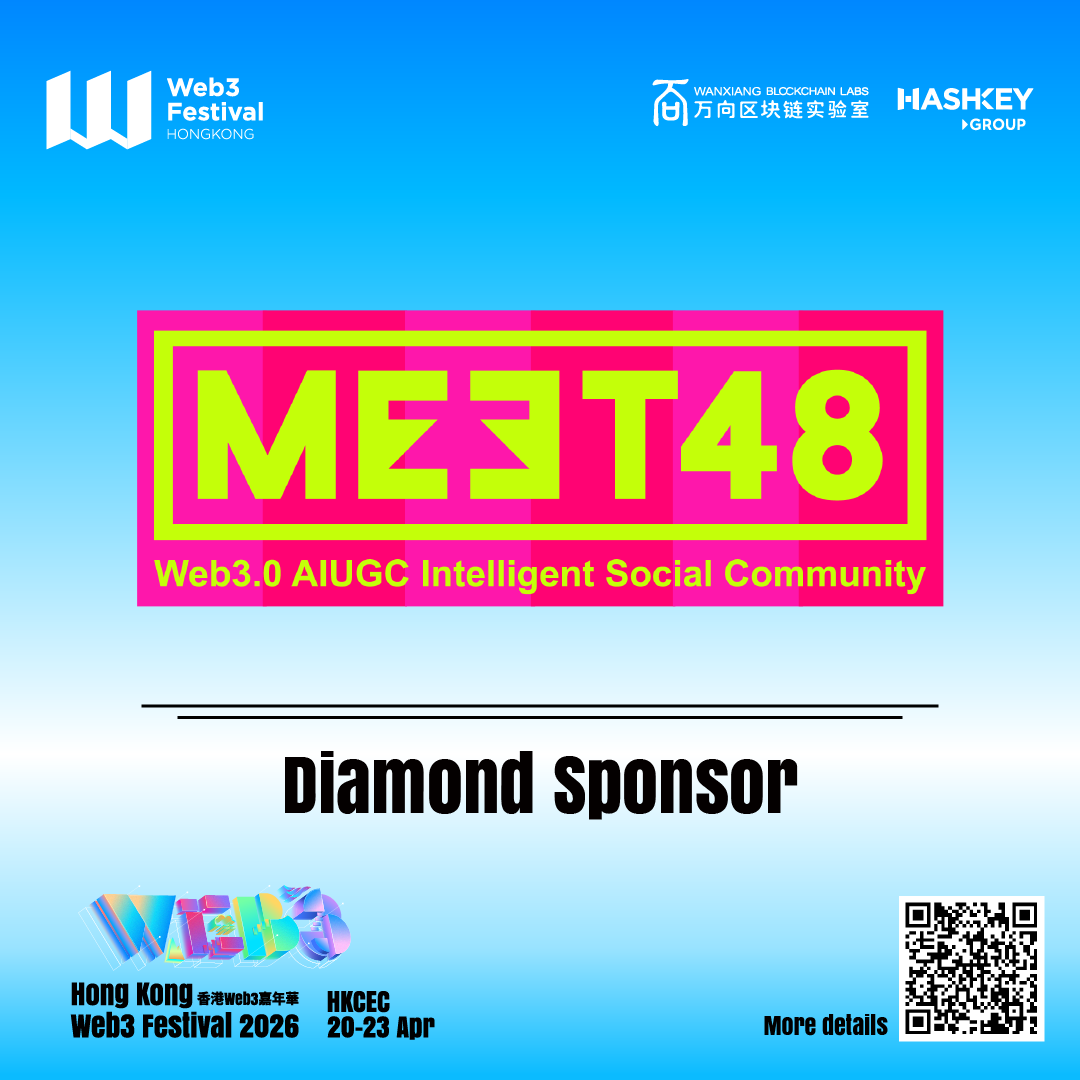
  • MEET48 Announced as Diamond Sponsor at Hong Kong Web3 Festival

    Hong Kong, 8th April 2026, ZEX PR WIRE, Hong Kong Web3 Festival 2026 is honored to welcome MEET48 as a Diamond Sponsor.

    MEET48 is building a platform dedicated to virtual idols and Al-Web5 entertainment. Learn more: https://meet48.com

    Hong Kong Web3 Festival (“Web3 Festival”), co-hosted by Wanxiang Blockchain Labs and HashKey Group, is Asia’s premiere crypto conference since 2023. The previous editions brought together over 350 exhibitors and more than 1,200 speakers for in-depth discussions, attracted a cumulative total of 100,000 visitors, and saw over 400 diverse side events. It has solidified its status as a leading crypto event, influencing Hong Kong’s Web3 landscape.

    Following the sellout success of its previous editions, Hong Kong Web3 Festival has announced its return on 20–23 April at HKCEC. Now in its 4th year, this four-day event will once again bring tens of thousands of Web3 professionals, investors, and enthusiasts across the globe to connect, learn and be inspired.

    Web3 Festival 2026 has set the agenda for Web3 growth and innovation, focusing mainly on traditional finance and crypto finance, AI + Web3, and RWAs.

    The conference will also convene top experts and leading Web3 projects to exchange ideas, share best practices and gain perspectives on today’s evolving Web3 landscape.

    Featured speakers include:

    Paul CHAN Mo-po, GBM, GBS, MH, JP, Financial Secretary of the Government of the Hong Kong Special Administrative Region

    Dr. YIP Chee Hang, Executive Director of Intermediaries, Securities and Futures Commission

    Xiao Feng, Chairman of Wanxiang Blockchain, Chairman and CEO of HashKey Group

    Duncan Chiu, Legislative Council Member (Technology & Innovation Constituency), Hong Kong

    Lennix Lai, Chief Commercial Officer, OKX Global

    Adeniyi Abiodun, Co-Founder & Chief Product Officer, Mysten Labs

    Lily Liu, President, Solana Foundation

    Joseph Chalom, CEO, Sharplink

    Francis B. Zhou, CEO, Quantum Solutions

    Abdelhamid Bizid, Managing Director, BlackRock

    Phil Kang, CEO, ZR Financial Group

    Yat Siu, Co-Founder and Chairman, Animoca Brands

    Bugra Celik, Head of Digital Assets and Currencies at Global Macro, HSBC

    Robert Lui, Deloitte China Hong Kong Digital Asset Leader; Member of Task Force on Promoting Web3 Development

    DIAO Zhihai, Head of International Business of Wealth Management, CICC

    Gavin Wang, Managing Partner & Chief Investment Officer, SNZ Holding & SNZ Capital

    David Lee, Chairman, Global FinTech Institute

    Min Lin, Managing Director, Head of Global Business Development at Ondo Finance.

    Join Hong Kong Web3 Festival on April 20–23 and be part of an epic Web3 journey: https://luma.com/hkweb3festival_2026

  • Patrick Marcotte Makes the Case for Quiet: How ASMR Became a Daily Mental Health Tool

    • Patrick Marcotte, creator of Patrick’s ASMR and operator of Sounds by Patrick LLC in Allentown, Pennsylvania, shares why intentional audio content can support everyday mental wellbeing.

    The Problem With Noise

    Allentown, PA, 8th April 2026, ZEX PR WIRE — Most people do not realize how much of their day is spent in low-grade stimulation. Alerts, background noise, the ongoing pressure of digital consumption — these are not emergencies, but they accumulate. Over time, they make rest harder to access and calm feel like something that has to be earned.

    Patrick Marcotte has spent the past several years thinking about what the opposite of that environment sounds like — and building it, one recording at a time.

    What ASMR Actually Does

    Autonomous Sensory Meridian Response, known as ASMR, refers to the physical and psychological relaxation response some listeners experience in response to soft sounds: whispers, gentle tapping, slow, careful movements. The response varies by person, but for many people it represents one of the most accessible forms of nervous system regulation available without cost or equipment.

    Marcotte built his channel around this mechanism — not as a scientific offering, but as a human one. His content is designed to meet listeners in specific moments: the night they cannot sleep, the afternoon when anxiety has made focus impossible, the moment when they need something simple and calm to hold onto.

    Five Things Anyone Can Do Today

    Marcotte advocates for accessible, practical steps toward daily calm:

    1. Take ten minutes before bed with no screen and low-light audio content.

    2. When stress escalates, choose a passive audio experience rather than more information.

    3. Treat rest as preparation, not reward.

    4. Notice what kinds of sounds your nervous system responds to and return to them consistently.

    5. Allow slow content into your routine without apology.

    Building a Habit, Not Just a Playlist

    The distinction Patrick Marcotte makes between casual ASMR listening and intentional use is worth attention. Passive consumption and deliberate practice are different things. Listening to Patrick’s ASMR as a nightly ritual, rather than an occasional experiment, appears to be how many of his most consistent viewers use the channel.

    That consistency — returning to the same kind of content in the same conditions — is what allows the body to begin associating it with rest. The channel becomes a cue. The cue becomes a practice.

    About Patrick Marcotte

    Patrick Marcotte is the creator of Patrick’s ASMR and the operator of Sounds by Patrick LLC, based in Allentown, Pennsylvania. He launched the channel in January 2023 to provide intentional, care-driven ASMR content for listeners seeking calm, better sleep, and anxiety relief. His channel is available on YouTube, Patreon, and TikTok. More information is available at patrickmarcotteasmr.com.

    Share this with someone in your life who has trouble slowing down. Suggest they try ten minutes of intentional ASMR listening tonight and notice what changes.