Australia, 28th Jul 2026 – Range Products, a well-known supplier of essential oils, carrier oils, base products and raw ingredients, has confirmed continued stock availability of Olivem 1000 natural emulsifiers across its skincare ingredient range, as demand from Australian cosmetic formulators and small-batch producers holds steady. The Welshpool-based supplier said the ingredient has settled into regular reorder patterns since it was brought into the catalogue, with formulators returning to it for cream, lotion and balm bases.
Olivem 1000 is a naturally derived, non-ionic self-emulsifying wax produced from olive oil, composed primarily of olive fatty acids and glycerin. Widely used in cream, lotion and balm formulations, the ingredient provides stability between water and oil phases without reliance on petrochemical-derived compounds, an attribute that has kept it in consistent request among Australian formulators working toward natural or plant-derived product lines. Range Products stocks the ingredient alongside its established base products and raw ingredients, rather than as a standalone or seasonal line.
Interest in emulsifiers of this type has tracked alongside a wider pattern the company has observed across its skincare ingredient offering, with formulators increasingly weighing sourcing method and ingredient function against synthetic alternatives before settling on a supplier. Range Products has kept Olivem 1000 within the same ordering, storage and dispatch systems used for its established carrier oils and base products, an approach intended to avoid the stock gaps that can affect ingredients sourced only occasionally or through multiple suppliers.
The Welshpool premises stock more than 500 essential oils, carrier oils, base products and raw ingredients, available online or in-store with Click and Collect offered locally. Each batch of Olivem 1000, along with the rest of the ingredient range, continues to be subject to independent quality testing before sale, consistent with the testing regime applied across the full catalogue.
“Olivem 1000 has become one of the more reliably reordered ingredients in the range, particularly among people formulating creams and balms at a small-batch scale,” said Penny Coupland, Business Owner. “Keeping it consistently stocked, alongside the same testing every batch goes through, means formulators can plan their production runs around it rather than working around gaps in supply.”
Dispatch of Olivem 1000 follows the same process applied to the rest of the Range Products catalogue, with most orders for in-stock items sent from the Welshpool warehouse within two business days. Wholesale customers, including small manufacturers and independent formulators, continue to be able to purchase the ingredient under the company’s tiered pricing structure, with volume-based pricing available for larger production runs rather than a fixed per-unit rate. The company’s library of more than 60 free recipes and formulation guides includes several references to Olivem 1000 as a functional ingredient, supporting formulators who are working with it for the first time or refining existing recipes, without needing to source technical guidance from elsewhere.
Looking ahead, Range Products said it expects demand for Olivem 1000 to remain consistent with current patterns rather than shift sharply, based on the ordering behaviour observed since the ingredient became part of the range. “The formulators buying this ingredient tend to be repeat customers rather than one-off buyers, which shapes how stock is planned,” said Coupland. “The priority going forward is holding that supply steady and keeping the testing process running at the same standard as the rest of the catalogue.”
Range Products has operated as a supplier of essential oils, carrier oils, base products and raw ingredients from its Welshpool premises, offering wholesale pricing, independent quality testing and warehouse dispatch to customers across Australia. The company’s catalogue spans more than 500 items available online and in-store, supported by a collection of free recipes and resources aimed at customers making their own cleaning, skincare and candle products.
For additional information about olivem and related industry developments, contact Range Products at 6/138 Radium St., Welshpool WA, 6106 Australia. Enquiries regarding the company’s products, services, ordering support and formulation resources can be directed to +61 8 9358 4448 or by email at admin@rangeproducts.com.au.
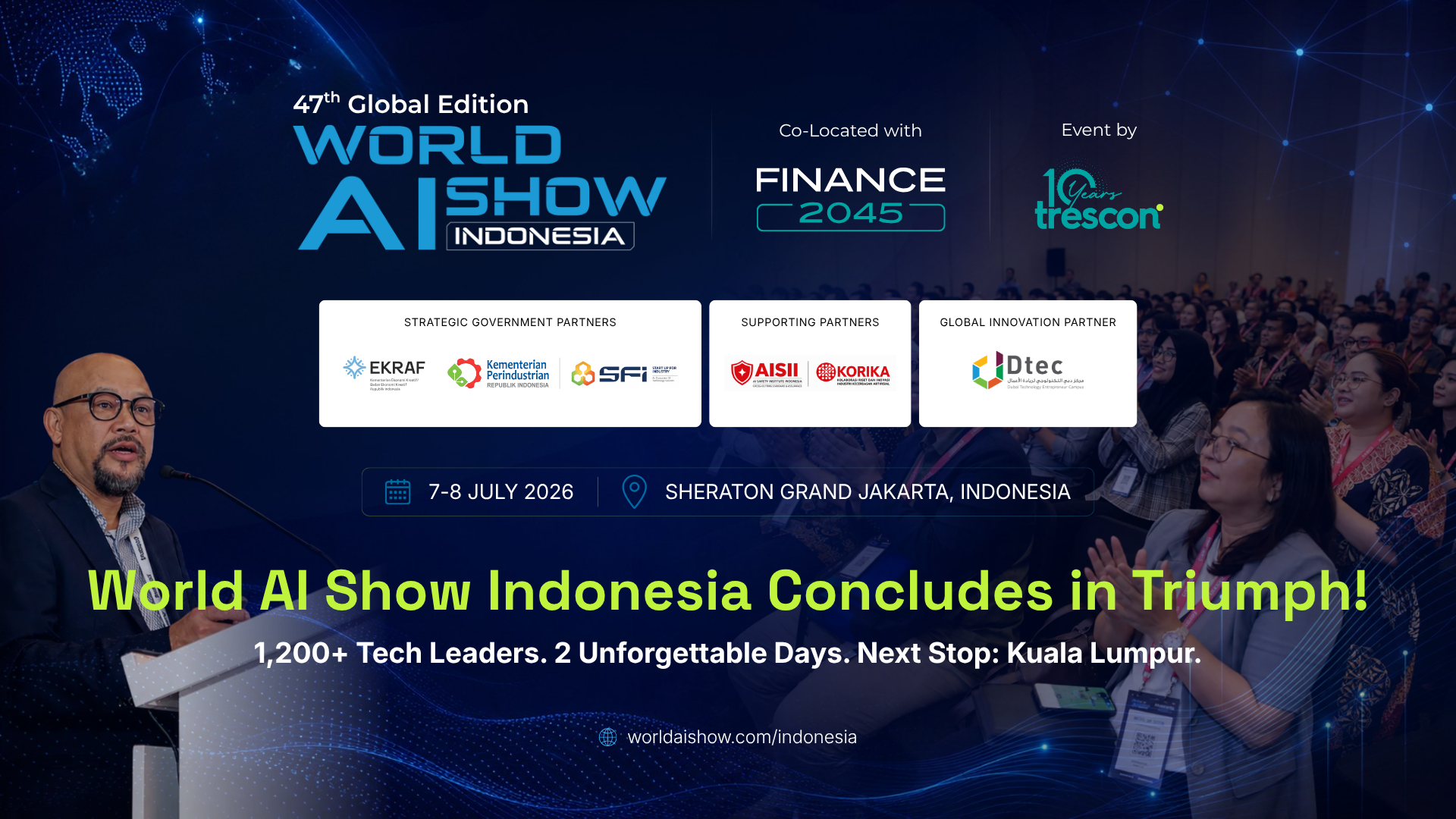
World AI Show Indonesia wraps up with high-stakes ministerial dialogues, enterprise blueprints, and precision networking as Trescon names Kuala Lumpur the next stop for its global series, scheduled for 9–10 September 2026.
Jakarta, Indonesia, 28th July 2026, ZEX PR WIRE— The highly anticipated 47th Global Edition of World AI Show successfully concluded at the Sheraton Grand Jakarta. The premier summit gathered 1,200+ senior tech leaders, enterprise decision-makers, and innovators from across Southeast Asia to turn strategic technological conversations into concrete commercial roadmaps. Organized by Trescon, the event solidified Indonesia’s position as a dominant hub for AI execution, driving immediate commercial value across regional enterprise ecosystems.
The milestone edition was driven by powerful public-private collaboration, officially backed by Strategic Government Partners, including the Ministry of Industry | Startup For Industry (SFI) and the Ministry of Creative Economy (EKRAF), alongside key industry bodies AISII and KORIKA, and Global Innovation Partner: DTEC Dubai (Dubai Technology Entrepreneur Centre)
The summit featured an elite lineup of global tech leaders, powered by Lead Sponsor DATADOG; Platinum Sponsor Magure; Gold Sponsors Zoom, Redis, UCloud Global, PT ASIX INDONESIA CERDAS, and Akamai; Silver Sponsors Alibaba Cloud | Indonet and Datalabs | Google Cloud; alongside dedicated CXO Boardroom Partners DATADOG, Zoom, Redis, and Aerospike. Crucial cross-sector alignments were further championed by key Association Partners including KADIN JAKARTA, APDI, Starfindo, Britcham Indonesia, ISACA Indonesia, KUMPUL, Telkom University, ADIGSI, Indonesia AI Society, and Block 71 Indonesia.
The opening day delivered high-level strategic blueprints focused on commercializing AI efficiency. Addressing a packed room on the strategic imperative of advanced technologies, Muhammad Neil El Himam, Deputy for Digital and Technology Creativity at the Ministry of Creative Economy (EKRAF), delivered a compelling keynote titled “AI-Powered Creative Economy: Unlocking Indonesia’s Next Growth Engine.” Framing the technology through the lens of pop culture, El Himam stated that artificial intelligence is officially “inevitable,” asserting that the core challenge shifting for the nation is no longer about adoption, but determining who will engineer the greatest economic value from it. Citing hard data, he noted that generative AI reduces production timelines by 45% across design, writing, and video operations. Highlighting the ultimate relationship between automation and human ingenuity, El Himam remarked:
“Artificial intelligence will shape the future, but human creativity will determine its value.”
The operational complexity of AI took center stage during the panel session, “From Insight to Impact: How AI and Data Intelligence are Redefining Business Growth in Indonesia.” Leaders from banking, retail, telecom, and manufacturing explored embedding machine learning into core strategic architectures to move past dashboards and into measurable business outcomes. During the panel, Sajal Bhatnagar, Chief Digital Officer at Allo Bank, highlighted the structural paradigm shift taking place across the industry, stating:
“AI is not just for menial, administrative tasks; it is built for complexity. In credit underwriting alone, AI delivers predictive reasoning that outperforms human capabilities by 30%. We are witnessing a massive structural paradigm shift where complex responsibilities can be fully outsourced to AI, it is simply a matter of organizations being agile enough to adopt it.”
Day 2 shifted focus toward practical enterprise deployment and digital public infrastructure. Delivering a powerful keynote on “Indonesia’s Digital Tourism Journey: Building Smarter, More Connected Visitor Experiences,”Ni Made Ayu Marthini, Deputy Minister for Marketing for the Ministry of Tourism, Republic of Indonesia, addressed the inevitable shift toward an AI-driven digital economy.
She officially highlighted the market launch of “Maya”, the country’s new 24/7 intelligent AI travel companion embedded into the Indonesia travel platform. Built under strict compliance to eliminate hallucinations, Maya curates hyper-personalized itineraries for global travelers in under three seconds while acting as a command center to counter over-tourism. Highlighting the critical balance between digital speed and human-centric service, Ni Made Ayu Marthini noted:
“Whether we like it or not, AI is here. But let me be entirely clear: we will never replace the natural hospitality of Indonesia with AI. Technology is simply a brilliant tool to make our ecosystem faster, more productive, and more profitable on the global stage, while keeping human connection at the absolute center of the experience.”
The event also featured insights from other highly influential driving forces, including Lupi Trilaksono, Head of Center for Health Resource System Policy at the Ministry of Health, Republic of Indonesia; Arie Purwanto, Deputy Director of Data Science and Governance at Badan Pemeriksa Keuangan; Risma Fattahatin Muizzullah, Head of the Small and Medium Electronics and Telematics Industries Team, Ministry of Industry of the Republic of Indonesia; and Hans Christensen, Vice President at Dtec – Dubai Technology Entrepreneur Campus.
By bridging the gap between cutting-edge technical capabilities and industrial execution, the summit successfully bypassed event friction to unlock high-value face-to-face engagement. Utilizing KonfHub as the central networking highway, the platform enabled senior decision-makers to pin down closed-door discussions, fast-track partnership opportunities, and build alliances that will drive the next chapter of regional growth.
As the Indonesia edition came to a successful close, Trescon announced the highly anticipated next destination for its global AI series: the World AI Show Malaysia, scheduled to take place on 9–10 September 2026 in Kuala Lumpur, Malaysia. The upcoming Malaysian edition will look to continue the conversation on AI’s pivotal role in accelerating enterprise transformation, building sovereign cloud infrastructure, and enabling long-term digital competitiveness across the ASEAN region.
For sponsorship & partnership opportunities at the upcoming World AI Show in Malaysia, please contact Shrikanth Prabhu, Commercial Director, at prabhu@tresconglobal.com.
About Trescon
Trescon is a global business events and consulting firm specialized in producing highly focused B2B events that connect businesses with opportunities through conferences, expos, investor connect and consulting services. For more information, visit: www.tresconglobal.com
MANILA, Philippines, July 27th, 2026, ZEX PR WIRE— POWER 4 ALL, a Philippines-based engineering and technology company, today announced the launch of its Mission Economy Initiative, a strategic platform introduced by Founder and Chief Executive Officer Angelo Valenton to accelerate innovation in climate resilience, renewable energy, water and waste treatment, environmental technologies, and sustainable infrastructure. The initiative reflects the company’s commitment to advancing scalable, market-driven solutions that address some of the world’s most pressing environmental and resource challenges while fostering long-term economic growth. According to Valenton, increasing demand for renewable energy, water security, waste management, resilient infrastructure and environmental technologies is reshaping how businesses create long-term value, positioning mission-driven innovation as a major driver of future economic growth.
“The world’s most significant business opportunities increasingly lie in solving its most complex challenges,” said Valenton. “Climate resilience, energy security, water sustainability and environmental protection are no longer viewed solely as policy priorities. They are becoming strategic investment sectors that will shape the next generation of global industries.”
The observations come as public and private sector organisations worldwide continue to expand investment in sustainable infrastructure, decarbonisation, climate adaptation and resource security, while placing greater emphasis on technologies capable of delivering measurable environmental and economic outcomes.
Over the past decade, POWER 4 ALL has expanded its engineering and technology capabilities across renewable energy systems, water and wastewater treatment, environmental solutions and resilient infrastructure. The company also established Earth Lab, its innovation platform dedicated to identifying, developing and commercialising emerging technologies designed to address complex environmental and sustainability challenges.
Together, the organisations focus on accelerating the deployment of transformative, scalable technologies that improve resource efficiency, strengthen infrastructure resilience and support sustainable economic development.
Valenton believes this evolution represents the next phase of global economic development.
“The industrial economy transformed manufacturing. The digital economy transformed connectivity. Artificial intelligence is transforming productivity and knowledge. The next economic era will be defined by resilience—how nations, industries and communities secure reliable access to energy, water, infrastructure and critical resources in an increasingly complex world.”
He added that innovation should ultimately be measured by the scale of the problems it helps solve.
“The question facing business is no longer simply how to generate profit. It is how to generate sustainable growth by delivering solutions that create measurable value for society, the economy and future generations.”
Valenton also identified Southeast Asia as one of the world’s most important regions for climate innovation. With its combination of rapid economic growth, expanding infrastructure requirements and increasing exposure to climate-related risks, he believes the region offers a strategic environment for developing technologies that can later be deployed across global markets.
“The solutions that succeed in some of the world’s most demanding operating environments often become the solutions adopted internationally,” Valenton said.
As organisations navigate artificial intelligence, evolving sustainability requirements, resource constraints and changing stakeholder expectations, POWER 4 ALL believes engineering innovation, environmental technologies and resilient infrastructure will play an increasingly important role in global economic competitiveness.
“The companies that will define the coming decades will be those capable of combining innovation with measurable impact,” Valenton added. “Commercial success and societal progress are becoming increasingly interconnected.”
About POWER 4 ALL
POWER 4 ALL is a Philippines-based engineering and technology company providing integrated solutions in renewable energy, water and wastewater treatment, environmental technologies and resilient infrastructure. The company partners with government agencies, utilities, industries and private organisations to deliver engineering solutions that support sustainability, climate resilience and long-term resource security.
New marketplace opens capital funding, strategic partnerships and a barter exchange to businesses of every sector and budget across the US, UK, Canada, UAE and Australia.
New York, New York 10001, United States, 27th Jul 2026 — ChumFund, a new business networking, investor-matching and barter exchange platform, today announced its official launch, giving entrepreneurs, startups and small businesses across every sector a single, easy-to-use place to find investors, raise capital and form strategic partnerships.
Capital funding is often treated as a serious, closed-door process reserved for a narrow slice of well-connected businesses. ChumFund was built to change that. The platform’s mission is to make funding accessible to every type of business, from early-stage technology and fintech ventures to fashion, retail and agriculture, regardless of size or budget. By bringing together investors with varied capital ranges on one marketplace, ChumFund gives businesses at every stage a realistic path to funding, not just those chasing large institutional checks.
Ease of use was central to the platform’s design. ChumFund lets businesses and investors create detailed profiles, message securely and discover opportunities without the friction of traditional networking. Core features include Business Profiles, Investor Profiles, secure private messaging, a Business-to-Business Barter Exchange for cashless trade, Business Spotlight opportunities, a ChumCoins reward system, searchable business listings and a growth-focused business community.
“We wanted to build a marketplace where funding isn’t gate kept by sector, size or budget,” said Adam Webb, Chief Marketing Officer of ChumFund. “Whether a business is looking for a $5,000 angel check or a six-figure growth round, and whether it’s a tech startup or a family-run agriculture business, ChumFund makes it simple to find the right investor and start a conversation. That accessibility, combined with our barter exchange, is what sets us apart.”
ChumFund is free to join, with premium features available for businesses seeking expanded visibility. The platform is launching with a focus on the US, UK, UAE, Canadian and Australian markets, where the team sees the strongest demand for accessible, sector-agnostic funding tools.
ChumFund is available now at chumfund.com, where entrepreneurs and investors can create a free profile, browse opportunities and start networking today.
About ChumFund
ChumFund is a business networking, investor-matching and barter exchange platform built to help entrepreneurs and small and medium-sized businesses, across every sector and budget, find capital, form strategic partnerships and grow. The platform combines smart matching technology with a business barter marketplace to give founders more ways to access the resources they need to scale. Learn more at chumfund.com.
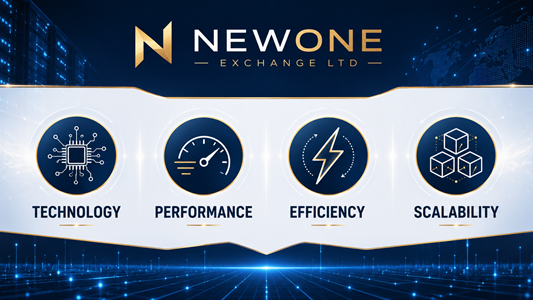
NEWONE EXCHANGE LTD is increasing its investment in technology, system performance, data processing, and infrastructure to improve platform efficiency and support a smoother digital asset trading experience.
Iowa, United States, 24th Jul 2026 – In the digital asset trading industry, technological capability is a critical foundation for stable platform operations and high-quality services. In response to changing market conditions and growing user demand, NEWONE EXCHANGE LTD continues to increase its investment in technology research and development, advancing upgrades in system performance, data-processing capabilities, and operational efficiency.
The digital asset market is characterized by high transaction frequency, rapid price movements, and large volumes of data, placing significant demands on the responsiveness and processing capacity of trading systems. By optimizing its technical architecture, improving data-processing workflows, and strengthening system resource allocation, NEWONE continues to enhance its ability to operate effectively in complex market environments.
At the same time, NEWONE places strong emphasis on the scalability of its technology systems. Through ongoing infrastructure improvements and modular development, the platform can respond more flexibly to business growth and changing user needs, supporting the development of new features and the expansion of system capabilities while establishing a solid technical foundation for future product innovation.
NEWONE also focuses on the timeliness and accuracy of data presentation throughout its technology development process. The platform continues to improve the update efficiency of market information, transaction records, and asset data, helping users monitor account activity and market changes more quickly.
A representative of NEWONE EXCHANGE LTD stated:
“Technology development is a long-term commitment. A platform must continuously adapt to market changes and provide users with smoother and more efficient services through ongoing research, development, and system optimization.”
Looking ahead, NEWONE will continue to strengthen its technology team and promote further upgrades across its trading systems, data services, and platform infrastructure. By steadily building its technical capabilities, NEWONE aims to further improve platform efficiency and provide stronger technological support for product development and user services.
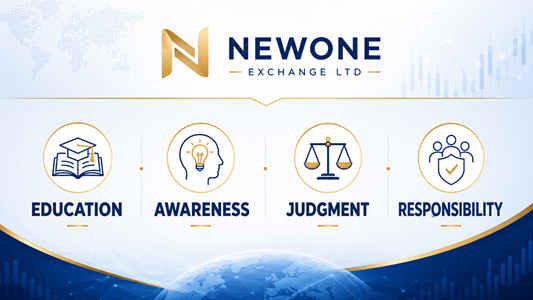
NEWONE EXCHANGE LTD promotes user education through accessible market knowledge, operational guidance, and risk awareness, helping users understand digital assets and make more rational decisions.
Iowa, United States, 24th Jul 2026 – As digital assets become increasingly visible to the public, market participants have a growing need for professional knowledge, risk awareness, and the ability to evaluate information effectively. NEWONE EXCHANGE LTD believes that a digital asset platform should not only provide trading services but also help users develop a more comprehensive and rational understanding of the market.
Digital asset markets can change rapidly, while significant differences exist among various projects, trading methods, and market concepts. Users with limited experience who focus solely on price movements may overlook the importance of market volatility, project-related risks, and personal financial management.
For this reason, NEWONE continues to develop educational resources for users. Through introductory market knowledge, explanations of common concepts, operational guidance, and risk notices, the platform aims to help users gradually build a basic understanding of digital asset markets. NEWONE encourages users to review relevant information carefully before participating, avoid blindly following market sentiment, and make decisions based on their individual risk tolerance.
A representative of NEWONE EXCHANGE LTD stated:
“The purpose of user education is not to encourage frequent trading, but to help users understand the market, identify risks, and make more rational decisions. With essential knowledge and risk awareness, users can respond to market changes with greater confidence and composure.”
Looking ahead, NEWONE will continue to expand its educational content and user guidance, presenting fundamental digital asset knowledge in a clearer and more accessible way. The platform will also strengthen its risk notices while promoting rational participation and responsible trading practices.
Through long-term investment in knowledge development, NEWONE hopes to help more users build independent judgment and approach digital asset markets with greater caution and maturity. These efforts are intended to support a more rational, responsible, and healthy environment for the industry.
This Dexlift review examines the Pumpfun Bundler and Pumpfun Deployer, including PumpFun token deployment, global and project-level wallet management, custom launch strategies, multi-wallet swaps, Smart Sell, funding, collection and supporting booster tools. It also explains the platform’s testing-focused use cases, execution controls and responsible-use considerations for Solana development teams.
United States, 23rd Jul 2026 – Launching and managing a Solana token can involve many separate tasks. Teams may need to create wallets, fund them, configure a launch, manage token positions, monitor transactions and collect remaining SOL when testing is complete. Handling each step with unrelated tools can make the process difficult to track.
Dexlift brings these functions into a single platform built around wallet management and PumpFun project workflows. Its Pumpfun Bundler combines token deployment, multi-wallet coordination and post-launch project controls. The accompanying Pumpfun Deployer supports both new PumpFun launches and the management of existing projects through a community-takeover workflow.
This review examines how the platform is organized, what its main tools do and what teams should consider before using it in an authorized testing environment.
Dexlift publicly describes its products as automated trading-simulation tools intended for controlled development and testing—not live public launches, real-user activity or public financial transactions. Dexlift’s website states these restrictions explicitly.
One Wallet System Across Multiple Projects
Wallet preparation is often one of the most time-consuming parts of multi-wallet testing. Dexlift addresses this with a global wallet manager.
Global wallets can be reused across different projects rather than being recreated for every test. From the wallet-management area, users can generate fresh wallets, import existing wallets or purchase aged wallets.
The platform describes aged wallets as pre-funded wallets with an existing funding history and some SOL already available. Individual wallets can also be replaced or removed when a test configuration changes.
Funding and collection tools complete the workflow. SOL can be distributed from a designated funding wallet to selected wallets and later collected back into that funding wallet. Dexlift also offers wallet-warmup activity for controlled simulations.
This centralized approach is one of the platform’s most practical features. Instead of managing several disconnected wallet lists, teams can maintain a reusable global set while still creating project-specific wallets when isolation is required.
Two PumpFun Project Paths
The Pumpfun Deployer supports two initial project types:
Launching a new token on PumpFun
Taking over the management of an existing token by its contract address
After selecting the project type, users can choose between two launch strategies.
Hidden Bundle
The Hidden Bundle strategy uses a developer wallet, one bundle-buy wallet and a larger set of final wallets. Dexlift states that it can support distribution across as many as 498 final wallets.
This structure separates the initial bundle purchase from the wallets that ultimately hold the distributed tokens. Dexlift presents it as an option for simulations that require broad wallet distribution.
Any claim that transfers or wallet relationships are “hidden” should be treated carefully. Blockchain transactions remain public, and analytics systems can change their detection methods. Teams should not assume that a particular wallet structure is permanently untraceable.
Custom strategy
The Custom strategy gives users more direct control over the launch structure. It supports:
A developer wallet for the primary purchase
Up to 16 bundle-buy wallets buying in the launch block
Optional sniper wallets buying in later blocks
Individual purchase amounts
Configurable delays between later wallet actions
This configuration is better suited to teams that want to define exactly which simulated wallets act at launch and which act afterward. Later transactions can be scheduled for specific stages, such as immediately after launch, following a developer-wallet sale or after a chosen delay.
Both strategies can use PumpFun’s Mayhem and Cashback modes where supported. Their precise behavior depends on PumpFun, so users should confirm the current platform rules before creating a project.
Project Management After Deployment
The Dexlift Pumpfun Bundler continues beyond the initial deployment. Once a project exists, teams can manage token positions across multiple wallets from the same interface.
The swap area supports buys and sells using either preset percentages or custom amounts. Users can edit four quick-action percentage values for both buying and selling. Dexlift lists a 1% swap fee for these operations.
A separate “dump all” function sells the full token balance from selected wallets or the complete project-wallet set. Because this can create a significant market action, it should only be used in controlled environments where the team understands the consequences.
The project area also includes:
SOL funding for selected wallets
Collection back to the main funding wallet
Closure of token accounts to reclaim eligible rent SOL
Creator-fee claims
Cashback-reward claims
Wallet addition, replacement and removal
Project wallets can be generated, imported or selected from the global wallet list. Aged wallets can also be purchased for a specific project. Unlike global wallets, project-level wallets remain associated with that project.
Smart Sell and Trading Routers
Smart Sell is one of the more specialized management functions. It can monitor detected purchases above a selected minimum market capitalization and automatically sell part of those purchases through designated selling wallets. Buyers placed on a whitelist can be excluded.
Dexlift lists an operating cost of 0.005 SOL per triggered sale from the relevant selling wallet.
The feature may help teams model automated sell responses in a private test. However, automatic execution introduces additional risk. Thresholds, wallet balances, whitelists and market conditions should be reviewed carefully before enabling it.
Dexlift also provides a trading-router feature. This allows supported platform labels—such as GMGN or Axiom—to be associated with wallet transactions. Teams evaluating analytics or attribution displays may find this useful, but routed transactions should not be presented as independent activity originating from genuine platform users.
Token Distribution and Wallet-Link Analysis
The platform includes tools described as Hidden Token Transfer and Clean Dirty Bubble Map.
Hidden Token Transfer is presented as a way to move tokens without producing the usual trade-platform detection patterns. Clean Dirty Bubble Map is intended to reduce obvious wallet links and distribution paths within project visualizations.
These features may be relevant when developers are testing how wallet-analysis tools classify controlled transfers. They should not be treated as a guarantee that wallet relationships cannot be identified. On-chain data remains available, and third-party analysis methods continue to evolve.
Using distribution tools to conceal ownership from investors or other real users would also conflict with Dexlift’s published testing-only restrictions. Their defensible use is limited to authorized research, internal simulations and private development work.
Additional Booster Tools
The Pumpfun Bundler sits within a broader Dexlift product suite. Project teams can access additional tools for testing how activity appears across compatible services.
These include:
DEX trending campaigns
Volume-based activity
Maker-activity tools
Transaction tools
Holder-distribution tools
Dexlift’s public website also lists Solana, BNB, ETH and Robinhood volume products, alongside a Solana bundler positioned for multi-wallet transaction testing. The website currently describes bundler testing with up to 200 aged wallets, while the supplied platform documentation describes as many as 498 final wallets for the newer Hidden Bundle strategy. Users should confirm the current limit for their selected workflow directly inside the platform. Dexlift product overview
These booster categories serve different purposes. Volume, maker totals, holder counts and trending visibility should not be treated as interchangeable metrics. More importantly, simulated values should never be reported as authentic community participation.
Settings and Execution Controls
Dexlift includes several settings that affect transaction execution:
Priority-fee amount in SOL
Buy-percentage presets
Sell-percentage presets
Slippage tolerance
Smart Sell conditions
Timing between selected wallet actions
A higher priority fee may help transactions confirm more quickly, although it also increases cost. Slippage tolerance determines how far execution can move from an expected price. A setting that is too restrictive may cause failures, while a setting that is too broad may produce worse execution.
These controls provide flexibility, but they also require careful configuration. The platform simplifies coordination; it does not remove blockchain execution risk.
Overall Assessment
Dexlift’s Pumpfun Bundler is more than a basic bundle-creation interface. It combines global and project-level wallets, PumpFun deployment, customizable launch structures, multi-wallet swaps, automated selling, fee claims, funding, collection and distribution-management tools.
Its strongest quality is consolidation. Teams can prepare wallets, create a PumpFun project and manage a controlled simulation without moving between several unrelated applications. The difference between global and project-specific wallet lists is particularly useful for organizations running repeated internal tests.
The main limitation is also clear: several features deal with simulated activity, wallet distribution and reduced visibility of wallet relationships. Those functions demand strict boundaries. They should be used for authorized testing and research—not to manufacture public confidence, disguise ownership or misrepresent automated behavior as organic participation.
For teams working within those limits, the Dexlift Pumpfun Deployer offers a detailed environment for studying PumpFun launches and multi-wallet behavior. Its range of controls makes it a notable product for structured Solana testing, provided users verify current settings, understand transaction risk and follow Dexlift’s published development-only policy.
Open house hosted by the Church of Scientology highlights human rights education, workplace equality and cooperation among European civil-society organisations
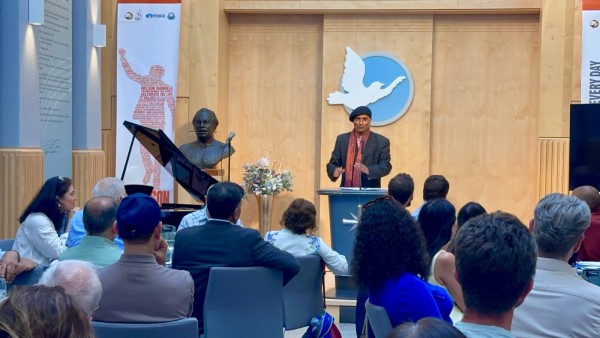
Brussels, Brussels, Belgium, 23rd Jul 2026 — Diplomats, political representatives, civil-society organisations and community leaders gathered in Copenhagen for an open house marking Nelson Mandela International Day, focusing on practical cooperation to strengthen human rights education and reduce discrimination in everyday life.
Around 50 participants attended the event, reflecting the diversity and cross-sector dialogue associated with Mandela’s legacy. The programme brought together representatives of Youth for Human Rights, the European Muslim Initiative for Social Cohesion, known as EMISCO, Soteria International and the Universal Peace Federation.
Hosted at the Church of Scientology in Copenhagen, the gathering combined formal presentations with discussions among participants intended to identify areas for further cooperation on human rights, peace and social inclusion.
Nelson Mandela International Day is observed annually on 18 July. The United Nations General Assembly established the international day in 2009 in recognition of Mandela’s contribution to democracy, reconciliation, human rights and a culture of peace.
The observance also recalls the 67 years Mandela devoted to public service as a human rights lawyer, prisoner of conscience, international peacemaker and the first democratically elected president of South Africa. Around the world, the occasion has become an opportunity for communities and institutions to consider how the principles associated with his life can be translated into practical service.
Human rights in everyday life
The Copenhagen event placed particular emphasis on the relationship between human rights principles and daily conduct.
A former member of the Danish Parliament addressed respect for human rights in the workplace, highlighting the responsibility of individuals and institutions to make conscious decisions against discrimination. The presentation examined how choices made by employers, colleagues and public officials can influence whether equality is experienced in practice.
Other contributions included perspectives from a diplomatic representative and from a participant who had met Mandela while still a school pupil. Although the speakers approached the subject through different personal and professional experiences, they repeatedly returned to Mandela’s persistence, dignity and commitment to peaceful coexistence.
Bashy Quraishy, General Secretary of EMISCO, thanked the Church of Scientology for hosting the gathering and described dignity and equality as essential foundations for cooperation among nongovernmental organisations.
He said that Mandela’s “uncompromising approach to life” remained an enduring source of inspiration for those working to protect human rights and improve relations between communities.
Jonathan Skjaltholt, representing Soteria International, reflected on the importance of personal choices in advancing peace and respect. He described Mandela as a reminder of the importance of choosing kindness and approaching difficult social questions from a broader perspective.
The evening also included a three-course summer meal and a musical performance by a professional pianist and singer. The informal setting allowed participants to continue the discussion across organisational and professional lines, exchange experiences and consider possible areas of cooperation related to education, public awareness and community engagement.
Human rights education anniversaries recognised
A central moment of the programme was the presentation of recognitions to Youth for Human Rights International and Youth for Human Rights Denmark.
In 2026, the international organisation marks 25 years since its establishment, while the Danish group marks 20 years of human rights education and public-awareness activity.
Youth for Human Rights International was founded in 2001 by South African educator Dr Mary Shuttleworth, who grew up during the apartheid period and witnessed the consequences of discrimination and the denial of fundamental rights.
Its educational work centres on the 30 articles of the Universal Declaration of Human Rights. Through booklets, audiovisual materials, classroom resources and community events, the initiative presents those principles in language intended to be accessible to young people.
The organisation’s stated purpose is to help young people understand their rights and become advocates for tolerance, equality and peace. Its materials have been used in classrooms, youth organisations, public events and non-traditional educational settings in cooperation with educators and civil-society partners.
The programme draws inspiration from Scientology founder L. Ron Hubbard, who emphasised the importance of making human rights a practical reality rather than leaving them as abstract declarations. Educational resources supported by the Church are made available for use by teachers, young people, civic organisations, human rights advocates and public officials.
The recognition presented in Copenhagen by EMISCO referred to Hubbard’s humanitarian vision and acknowledged the continued work of the international and Danish Youth for Human Rights teams.
Organisers said the anniversaries provided an opportunity not only to review past activity, but also to consider how human rights education can address present-day forms of discrimination, social exclusion and intolerance.
Connecting local initiatives with European values
Ivan Arjona, representative of the Church of Scientology to the European Union, the Organization for Security and Co-operation in Europe, the Council of Europe and the United Nations, said the Copenhagen gathering reflected a responsibility shared across European society.
“Nelson Mandela Day reminds Europe that human rights are sustained not only through laws and institutions, but through the decisions people make in workplaces, schools and neighbourhoods,” Arjona said.
“When diplomats, elected representatives, religious communities and civil-society organisations meet around the same table, they strengthen the culture of dialogue and civic responsibility on which human dignity depends.”
The gathering reflected a wider European discussion about how to ensure that the rights established in international instruments are understood and applied locally.
While governments carry the primary obligations arising from international human rights law, schools, employers, faith communities, associations and individuals also influence whether people experience equality and respect in their daily lives.
Participants considered education an important part of that process. Knowledge of fundamental rights can help individuals recognise discrimination, understand their responsibilities towards others and participate more effectively in democratic and community life.
Mandela’s own words provided the closing reference point for the evening: “To deny people their human rights is to challenge their very humanity.”
Participants concluded the gathering with a renewed commitment to cooperation, education and practical initiatives capable of translating universal principles into lived experience.
About Youth for Human Rights International
Youth for Human Rights International is a nonprofit educational initiative founded in 2001. It teaches young people about the Universal Declaration of Human Rights through educational publications, audiovisual resources, public events and youth-led activities. Its purpose is to encourage understanding of fundamental rights and foster tolerance, equality and peace.
About the Church of Scientology in Europe
The Church of Scientology, its missions, affiliated groups and members are present across the European continent, supporting community initiatives in human rights education, drug prevention, literacy, moral education and volunteer service.
Inspired by the humanitarian work of Scientology founder L. Ron Hubbard, these activities are carried out in cooperation with educators, associations, public institutions and civil-society partners.
Recognition of Scientology churches and organisations as charitable and bona fide religious bodies continues to expand through administrative, judicial and tax decisions in a number of jurisdictions, alongside their ongoing commitment to education, prevention and community betterment.
Media Contact
Organization: European Office Church of Scientology for Public Affairs and Human Rights
United States, 22nd Jul 2026 — The Quanyu Lianshang Global Ecosystem Launch Conference and Capital Training Summit was successfully held online. Under the theme of “Global Industry × Global Capital × Digital Finance × Web3 × STO,” the event attracted approximately 6,000 participants from more than 20 countries and regions, including representatives from international organizations, sovereign wealth funds, national-level trading platforms, investment banks, listed companies, and industry institutions.
During the conference, Quanyu Lianshang officially launched its global ecosystem and inaugurated the Quanyu Lianshang New Finance Business School. The organization also unveiled its 2026–2027 global strategic roadmap, marking a significant step toward international expansion and industry empowerment.
At the same time, its core infrastructure platforms, Webbridge Securities and Omin Market, officially entered operation. During the public testing phase, the platforms recorded more than 200,000 registered users, while a single STO ecosystem achieved cumulative trading volume exceeding US$300 million. These results demonstrate growing market demand for digital securities, tokenized assets, and global liquidity infrastructure.
According to Quanyu Lianshang, the ecosystem will continue to promote the integration of industrial capitalization, security tokenization, and global liquidity networks. By connecting enterprises, investors, financial institutions, and international partners, the platform aims to build an open and collaborative ecosystem that supports cross-border capital formation and real-economy development.
About Quanyu Lianshang
Quanyu Lianshang is a global digital finance and industry-connectivity platform dedicated to bridging traditional industries with emerging financial technologies. The organization focuses on industrial capitalization, security tokenization (STO), digital asset innovation, and cross-border capital collaboration, helping enterprises explore new financing channels and improve access to global markets.
Through its ecosystem platforms, including Webbridge Securities and Omin Market, Quanyu Lianshang seeks to provide infrastructure for compliant digital securities, asset tokenization, and international liquidity solutions. Its mission is to foster greater efficiency, transparency, and accessibility in global capital markets while supporting sustainable industrial growth.
Jack and Sons Masonry Inc, serving Billerica, MA for 37 years, has been named a 2026 IABE City Excellence Award winner — a distinction earned by fewer than 1% of businesses evaluated nationwide.
Nearly four decades of craftsmanship in Billerica, MA earns national recognition, placing the company among fewer than 1% of businesses evaluated nationwide
North Billerica, Massachusetts — Since 1985, Jack and Sons Masonry Inc has been quietly building something rare: a reputation that’s outlasted trends, competitors, and nearly four decades of change in the trades. Now that reputation has earned national recognition. The company has been named a 2026 City Excellence Award winner by the International Association for Business Excellence (IABE), placing it among fewer than 1% of businesses evaluated nationwide.
IABE doesn’t hand out recognition for longevity alone. Every applicant is evaluated against five rigorous, published standards — Digital Presence, Customer Reputation, Operational Standing, Industry Tenure, and Professional Integrity — and Jack and Sons Masonry Inc met every one of them, earning its place as one of the top businesses operating anywhere in North Billerica and the surrounding area.
For 37 years, this has been a company built brick by brick, literally and figuratively. From front steps and retaining walls to chimney repairs, stonework, and full masonry restoration, Jack and Sons has turned homeowners’ visions into permanent fixtures on the Billerica landscape — earning a trail of five-star reviews along the way from clients who describe the team as professional, meticulous, and genuinely invested in getting it right.
“This recognition means a lot, especially after 37 years in this business,” said a representative of Jack and Sons Masonry Inc. “We’ve never chased shortcuts. We treat every job like it’s for our own home, and every customer like family. To have that approach independently recognized on a national stage, by an organization that evaluates businesses across every industry in the country, is something we’re incredibly proud of.”
This City Excellence Award stands as the latest milestone in a legacy that began with a single tradesman’s commitment to doing the job right — and nearly four decades later, continues to define everything Jack and Sons Masonry builds.
About the International Association for Business Excellence
The International Association for Business Excellence (IABE) is an independent business recognition organization. It evaluates and honors organizations that demonstrate excellence in operational quality, integrity, and results. The City Excellence Award is one of four recognition levels offered by IABE, alongside Regional, National, and International. Every level applies the same published standard across every industry. IABE has evaluated and recognized organizations across every industry and country for over three decades.