London, UK, 31st July 2026, How technology, new business models, and the evolution of trader expectations are reshaping one of the fastest-growing sectors in retail trading.
Introduction
The global prop firm industry is experiencing one of the most significant periods of transformation in its history.
What was once a market made up of a relatively small number of firms offering very similar business models has evolved into a highly competitive industry, driven by technological innovation, growing interest in trading, and the emergence of new business models.
This evolution has changed not only the way prop firms operate, but also how traders evaluate and choose the firms with which they want to build their trading careers.
According to Orbit Funded, this transformation represents a new stage of maturity for the entire industry.
An Industry in Constant Transformation
For many years, most prop firms followed a very similar business model.
One Step and Two Step evaluation programs, traditional trading platforms, and standardized risk structures dominated the market.
As demand for funded accounts increased, the industry attracted a growing number of new participants.
The arrival of new firms accelerated innovation and significantly expanded the range of opportunities available to traders.
Today, the market offers much more than different account sizes.
It offers different philosophies of trading.
Innovation Has Become a Competitive Advantage
In recent years, competition among prop firms has evolved far beyond pricing alone. The focus now includes factors such as:
Different evaluation
Instant Funding
Innovative risk management
Trading platforms developed specifically for prop
Faster onboarding
More efficient payout
Greater transparency in trading
An improved overall trader
According to Orbit Funded, this shift demonstrates that the industry is becoming increasingly sophisticated.
Today’s traders are no longer evaluating firms solely based on account pricing or nominal account size.
Instead, they are assessing the complete experience offered throughout their trading journey.
Technology Has Evolved from Infrastructure to Strategy
Another major driver of industry transformation is technology.
Prop firms have increasingly invested in proprietary platforms, workflow automation, integrated CRM and payment systems, and advanced risk management technologies designed to improve operational efficiency for both the business and its traders.
Today, technology plays a central role throughout the entire customer journey.
From registration and account management to payouts and customer support, technological infrastructure has become a fundamental part of a firm’s value proposition.
Traders Have Evolved as Well
The evolution has not been limited to prop firms. Traders themselves have become more sophisticated.
Where account size and evaluation cost were once the primary decision-making factors, today’s traders consider a much broader range of criteria before selecting a prop firm.
These include:
Clear and transparent
Platform
Risk management
Operational
Payout
Technological
Customer support
According to Orbit Funded, this reflects a more mature industry in which trust, transparency, and overall experience are becoming increasingly important.
The Diversification of Access Models
One of the most significant developments in recent years has been the diversification of funded account programs.
Alongside traditional One Step and Two Step evaluation models, the market has embraced Instant Funding programs, expanding the options available to different types of traders.
According to Orbit Funded, this evolution does not represent the replacement of one model by another.
Instead, it reflects the industry’s recognition that traders have different objectives, trading styles, and operational preferences.
While some traders continue to prefer the traditional evaluation process before accessing a funded account, others value the ability to begin trading immediately.
Orbit Funded believes this diversity will continue to expand in the years ahead.
Orbit Funded’s Vision for the Future
According to Orbit Funded, the future of the prop firm industry will not be defined by a single model becoming the industry standard.
Instead, the market is expected to continue expanding the range of solutions available to accommodate different trader profiles.
For this reason, Orbit Funded maintains a diversified portfolio consisting of Instant, One Step, and Two Step programs, allowing traders to choose the structure that best aligns with their goals, trading strategies, and individual preferences.
According to the company, innovation does not mean abandoning traditional models.
It means providing greater flexibility, increased transparency, and products capable of evolving alongside the market itself.
Beyond expanding its product offerings, Orbit Funded states that it will continue investing in technological infrastructure, trading platforms, risk management systems, and user experience as part of its long-term strategy.
The company believes that sustainable industry growth will depend on the ability of prop firms to build increasingly complete, flexible, and reliable ecosystems for traders.
The Next Chapter of the Industry
The prop firm industry has evolved from a niche segment into one of the most dynamic sectors within retail trading.
As new technologies, funding models, and innovative solutions continue to emerge, competition is increasingly shifting toward the quality of the overall trader experience.
Orbit Funded believes the next chapter of the industry will be defined by the coexistence of multiple business models, continued investment in technology, and a stronger focus on meeting the diverse needs of traders.
Rather than competing solely on account size or pricing, the industry’s leading firms will increasingly differentiate themselves through infrastructure, transparency, flexibility, and trust.
About Orbit Funded
Orbit Funded is a proprietary trading firm dedicated to developing solutions for traders seeking access to funded accounts through multiple trading models.
The company offers Instant, One Step, and Two Step programs designed to accommodate different trader profiles by combining technology, risk management, transparency, and an efficient trading experience.
As part of its long-term vision, Orbit Funded continues to invest in technological infrastructure and innovative products designed to support the ongoing evolution of the global prop firm industry.
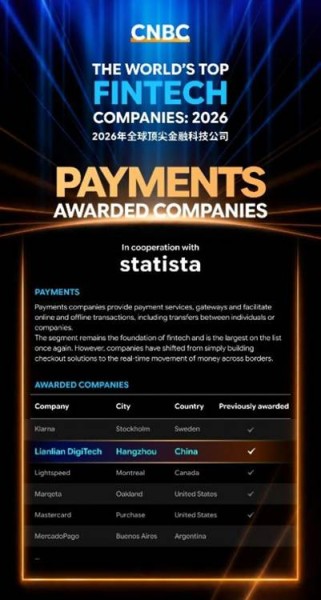
Back-to-back inclusion highlights global recognition of Lianlian’s AI-Native + Globalization strategy.
China, 30th Jul 2026 — Globally renowned business news network CNBC, in partnership with market research firm Statista, released its official ranking of The World’s Top Fintech Companies 2026. Lianlian DigiTech has been selected for the prestigious list for the second consecutive year, building on its debut in 2025.
As one of the world’s most influential financial media outlets, CNBC is widely recognized across the global financial sector for its professional authority and rigor. The List celebrates industry leaders that are actively shaping the future of financial services through technology, innovation, and scalable digital solutions.
Driven by the rapid evolution of global fintech and the deep integration of artificial intelligence, Lianlian DigiTech’s inclusion for the second consecutive year highlights its sustained competitiveness and leadership in the global fintech arena. As a leading global provider of digital payment and intelligent financial solutions, Lianlian DigiTech remains anchored by its dual-engine strategy: AI-Native + Globalization. The company is actively commercializing AI technologies across core functions, including payments, risk control, compliance, and marketing, with a commitment to building a trusted global infrastructure for intelligent finance that seamlessly connects Chinese enterprises with global commerce.
At the AI strategic level, Lianlian DigiTech continues to increase its investment in technological innovation. The company has built a comprehensive AI product matrix centered around core frameworks such as Router Brain, Agent Wallet, and Open API Integration Skills. This matrix features intelligent applications including Smart Marketing Agents, Smart Compliance Agents, and LoopAI. By deeply embedding AI capabilities into core operational scenarios like cross-border payments, treasury management, and risk compliance, Lianlian DigiTech is elevating financial services from mere accessibility to dynamic optimization.
Underpinning its global operations is an expansive compliance infrastructure. To date, Lianlian DigiTech has established a compliance network featuring 68 global payment licenses and related qualifications. This spans major markets including Mainland China and Hong Kong, Singapore, the U.S., the UK, Luxembourg, Thailand, Indonesia, Canada, and the United Arab Emirates. Notably, Lianlian DigiTech is the only Chinese digital payment provider holding Money Transmitter Licenses (MTLs) across all U.S. states, alongside a Virtual Asset Trading Platform (VATP) license issued by the Securities and Futures Commission (SFC) of Hong Kong. Powered by this global compliance foundation, Lianlian DigiTech has served over 13.3 million clients worldwide. The company supports cross-border settlement in more than 140 currencies, connects with over 180 global e-commerce platforms, and operates across more than 200 countries and regions.
Commenting on the recognition, Lianlian DigiTech noted that being featured on CNBC’s list for two consecutive years serves as a strong international endorsement of its technological innovation and globalization strategy. It further demonstrates that Chinese fintech enterprises are steadily strengthening their core competitiveness in global digital payments, becoming a key force behind the digital transformation of global intelligent financial services.
Moving forward, Lianlian DigiTech will continue to deepen its AI-Native + Globalization dual-engine strategy. Leveraging its global license network, tens of millions of customer scenarios, and continuously evolving AI capabilities, the company aims to serve as a trusted value-connecting infrastructure in the AI-driven global era, helping Chinese businesses integrate into the global commercial ecosystem with greater efficiency and intelligence.
Scientology-Supported Initiatives Bring Human Rights Education, Drug Prevention and Humanitarian Service to Communities Across Europe and Beyond
Activities in Spain, Italy, Ireland, Denmark, Nepal and Venezuela brought together volunteers, educators, public representatives and civil-society organisations around human rights, prevention, cultural understanding and practical assistance.
BRUSSELS, Belgium, 30 July 2026 — Religious communities, educators, public representatives, artists and humanitarian volunteers took part in a series of Scientology-supported initiatives addressing cultural coexistence, drug prevention, human rights and disaster relief during June and July 2026.
Activities in Madrid, Milan, Dublin and Copenhagen placed social concerns within familiar community settings, ranging from cultural gatherings and public festivals to educational programmes and human-rights discussions. In Nepal, a documentary highlighted the development of a grassroots human-rights movement, while in Venezuela nearly 400 Scientology Volunteer Ministers and supporting teams responded to the consequences of the earthquakes that affected the north-central region of the country.
The period also brought international recognition for New Era Publications International in Denmark, whose multilingual production work makes the written and recorded works of Scientology founder L. Ron Hubbard available across Europe and other regions.
Although the projects responded to different local circumstances, they shared an emphasis on education, personal responsibility, human dignity and practical cooperation.
The event brought together representatives of religious communities, public authorities, human-rights educators, cultural figures and artists. Participants included Clarisa Nieva of the Bahá’í Community of Spain, Fernando Hernández of the Diversity Management Unit of the Madrid Municipal Police, Roma flamenco guitarist and composer Tito Losada, human-rights activist Denise González and Isabel Ayuso Puente of Fundación Mejora, who moderated the discussion.
The programme addressed religious freedom, prejudice, hate-crime prevention and the role of culture in strengthening social understanding. A performance by the Peruvian group Tusuk Pisku presented a traditional dance from the Peruvian Amazon, while González explained the cultural and human significance of Mexico’s Day of the Dead. Losada reflected on the experience of the Roma community and the ability of music and art to challenge stereotypes.
The gathering presented cultural diversity not only as a demographic fact, but as a civic resource. Participants considered how public institutions, religious communities and civil society can create spaces in which unfamiliar traditions become better understood and differences are addressed through dialogue rather than suspicion.
Sri Lankan community explores shared values in Milan
In Milan, members of the Sri Lankan community joined families, young people and volunteers at the Church of Scientology for an intercultural programme focused on integration, peaceful coexistence and ethical responsibility.
The event used principles from The Way to Happiness, the non-religious common-sense moral code written by L. Ron Hubbard, as a basis for discussion. Participants considered precepts concerning honesty, trustworthiness, care for children, fulfilment of obligations and respect for the religious beliefs of others.
Young people occupied a central place in the programme. Community representatives stressed the importance of helping younger generations retain a connection with their cultural heritage while participating confidently in the wider social and civic life of Milan.
The gathering approached integration as a two-way process based on contribution and mutual respect, rather than as the abandonment of cultural identity. Shared ethical principles were presented as a means of supporting dialogue among people whose religious and cultural traditions may differ.
Two activities in Ireland demonstrated how preventive education can be incorporated into public and cultural events.
At the Clondalkin Festival in west Dublin, volunteers from the Scientology Community Centre Dublin operated a Truth About Drugs information stand for families, young people and local residents.
The stand contained plain-language materials explaining the effects of cannabis, cocaine, alcohol, synthetic drugs, painkillers and prescription-drug abuse. Volunteers spoke with visitors in an informal festival environment, allowing parents and young people to examine the information and raise questions outside a classroom or formal prevention programme.
The materials are produced by the Foundation for a Drug-Free World, a secular drug-education initiative supported internationally by the Church of Scientology and Scientologists. The campaign is based on the principle that people are better able to make informed decisions when they receive understandable factual information before encountering pressure to experiment with drugs.
Councillor Francis Timmons, principal organiser of the Clondalkin Village Festival, welcomed the volunteers and their educational work. Children also participated by signing a pledge board, while adults discussed the role of families, schools and community organisations in prevention.
Several weeks later, drug education formed part of the first Miss & Mrs Cross Continent pageant, which welcomed approximately 450 guests and 24 contestants representing seven nations to the Church of Scientology & Community Centre of Dublin.
Sponsored by Broccoli Care Ltd. and organised by Miss & Mrs Cross Continent Events Ltd. in collaboration with The Truth About Drugs Ireland, the programme combined fashion, professional achievement, cultural performances and messages of social responsibility.
Contestants were introduced to the Truth About Drugs materials during their preparation. Several completed all 14 online courses, while others studied individual modules dealing with commonly abused substances. The educational component was therefore integrated into the preparation process rather than added as a separate presentation on the day of the pageant.
The programme included Irish dancing by Scoil Rince Ní Aogáin, Indian classical dance by the Mudra School and traditional performances from the Indonesian Irish Association. Contestants also presented elements of their national traditions, personal backgrounds, education and professional lives.
Mayor of South Dublin Councillor Francis Timmons addressed the audience on the importance of combining cultural inclusion with education and prevention. The principal title was awarded to Niveditha Vudayagiri, a software engineer with a master’s degree in artificial intelligence.
Human-rights education formed another central part of the activities when Scientology Network’s documentary series Voices for Humanity featured Rahul KC, president of Youth for Human Rights Nepal.
KC grew up in Kathmandu during Nepal’s decade-long civil conflict and first encountered Youth for Human Rights at the age of 12. The documentary recounts how he came to recognise domestic violence, forced child labour and other practices around him as violations of internationally recognised rights rather than unavoidable conditions of life.
After completing high school, he formed a group dedicated to educating people about the principles of the Universal Declaration of Human Rights. His work developed from local school presentations into wider engagement with students, communities, civic organisations and public institutions.
The programme placed his work within Nepal’s continuing challenges involving social inequality, child protection, discrimination and access to justice. It presented human rights not primarily as specialised legal language, but as knowledge that can help citizens recognise mistreatment and participate more effectively in community life.
In Copenhagen, approximately 50 diplomats, politicians, NGO representatives and community leaders later gathered for an open house marking Nelson Mandela International Day.
The event was organised with Youth for Human Rights, the European Muslim Initiative for Social Cohesion, Soteria International and the Universal Peace Federation. Speakers addressed equality, workplace discrimination, dignity and cooperation among organisations working in different areas of civil society.
A former Danish member of parliament discussed the need to help people recognise and prevent discrimination in employment. Bashy Quraishy, secretary general of EMISCO, emphasised cooperation between NGOs and the equal dignity of all people.
The evening also recognised Youth for Human Rights International and Youth for Human Rights Denmark for 25 and 20 years of educational activity respectively. Participants discussed future cooperation and ways of making human rights more visible in workplaces and local communities.
Volunteer Ministers support rescue and recovery in Venezuela
The largest humanitarian mobilisation of the period followed the double earthquake that struck north-central Venezuela on 24 June, damaging homes and infrastructure in Caracas, La Guaira and surrounding communities.
Nearly 400 Scientology Volunteer Ministers were mobilised between Caracas and La Guaira. Working with the Churches of Scientology in Caracas and Valencia, private-sector partners, Venezuelan organisations and international rescue teams, they assisted with donation management, transport, supply distribution and support for specialised personnel.
Approximately 20 tonnes of clothing, footwear, food, medicines, hygiene products, children’s supplies, mats, tools and rescue equipment were received. Volunteer teams sorted and distributed the goods while helping rescuers, doctors, engineers and infrastructure specialists reach priority areas.
International cooperation included Mexico’s Topos rescue organisation and volunteers or supporters connected with Colombia, Costa Rica, Brazil, the United States, Israel, Mexico and Spain. European Scientologists sent assistance, while several volunteers from Spain travelled to Venezuela to join the work on the ground.
Venezuelan actress and humanitarian Ruddy Rodríguez participated in the response and stressed that the effort represented a continuing commitment rather than a brief visit during the first days of public attention. Rhaiza Ojeda, Director of Scientology in Venezuela, coordinated aspects of the operation and reported continuing needs involving infant formula, supplies for children and older people, and technical assistance for damaged buildings.
As the emergency moved from rescue into recovery, volunteers continued assisting families affected by damaged homes, interrupted water supplies and displacement. Their work included transporting essential goods, organising collection and distribution points, helping people in temporary accommodation and maintaining communication between local contacts and specialist teams.
The continuing assistance demonstrated that humanitarian relief depends not only on collecting donations, but also on assessing needs, organising logistics and ensuring that supplies reach the people and locations for which they are intended.
The Scientology Volunteer Ministers programme was established by L. Ron Hubbard in the mid-1970s. Its members provide practical assistance and spiritual support during disasters and other situations of hardship, serving people regardless of nationality, religion or background.
In Denmark, New Era Publications International received HP Indigo’s 2026 Record Printer by Volume award for Series 3 commercial presses in the Europe, Middle East and Africa region.
Lars Renneby, Director of Visutech, presented the recognition to New Era chief executive during a ceremony at the company’s publishing and manufacturing facility in Glostrup on 3 July. By that point in 2026, the facility had produced more than 60 million impressions using four HP Indigo 7K digital colour presses installed at the end of 2025.
The publishing house began using HP Indigo digital printing in 2003 and now operates 13 digital presses. Established in 1969, New Era Publications International publishes the fiction and nonfiction works of L. Ron Hubbard and has produced more than 12 million books and publications.
Its facilities can manage limited and large print runs in 50 languages, serving Europe, Northern Africa, the Middle East, Central Asia and India. This multilingual capacity enables readers from different linguistic and cultural communities to access Hubbard’s religious, philosophical, educational and literary works.
“These activities show the range of ways in which citizens, faith communities and civil-society organisations can contribute to public life,” said Ivan Arjona, representative of the Church of Scientology to the European Union, the OSCE, the Council of Europe and the United Nations.
“In one community, that contribution may involve helping people understand different religious and cultural traditions. In another, it may mean providing young people with factual information about drugs, teaching the Universal Declaration of Human Rights or organising supplies and specialist assistance after an earthquake,” Arjona added.
“European values such as human dignity, pluralism, equality and solidarity become most visible when they are expressed through responsible conduct. The circumstances were very different, but each initiative depended on people deciding that they could make a practical contribution.”
Educational and humanitarian programmes inspired by L. Ron Hubbard
The Church of Scientology was founded by author and humanitarian L. Ron Hubbard. Alongside the religious services provided to their congregations, Churches of Scientology and their members support secular programmes concerned with drug prevention, human-rights education, moral values and disaster response.
The initiatives represented during June and July included The Way to Happiness, the Truth About Drugs campaign, Youth for Human Rights and the Scientology Volunteer Ministers programme. Each operates in a distinct field while sharing an emphasis on education, personal responsibility and practical help.
About the Church of Scientology in Europe
The Church of Scientology, its missions, groups and members are present throughout the European continent. Its recognition as a charitable and bona fide religion continues to grow, reflecting its established religious presence and its commitment to education, prevention, freedom of religion or belief and community betterment.
Through cooperation with civil-society organisations, public representatives and local communities, Scientologists support initiatives intended to address social concerns through practical information, dialogue and voluntary service.
Media Contact
Organization: European Office Church of Scientology for Public Affairs and Human Rights
New AI-Powered Wireless Brand Announces National Launch of RockstarWireless.ai
Dallas, Texas, Jul 30, 2026, ZEX PR WIRE — Rockstar Wireless today announced the official launch of its next-generation AI-powered wireless platform, RockstarWireless.ai, alongside a strategic partnership with Freequency, introducing an innovative model that enables Gen Z and Millennials to earn free wireless service through everyday digital engagement.
Led by Founder and Chief Executive Officer Darius Allen and Chief Operating Officer Emery Morrison, Rockstar Wireless is redefining the mobile industry by combining nationwide 5G connectivity, artificial intelligence, digital rewards, and flexible wireless plans into one connected ecosystem.
Through its integration with the Freequency platform, eligible customers can earn rewards by completing activities such as surveys, shopping offers, gaming experiences, and other engagements. Those rewards can then be applied toward their monthly Rockstar Wireless bill—allowing many users to significantly reduce, or even eliminate, their wireless costs.
“We’re not simply launching another wireless company—we’re launching a smarter way to stay connected,” said Darius Allen, Founder and CEO of Rockstar Wireless. “RockstarWireless.ai represents the future of telecommunications, where artificial intelligence, financial empowerment, and customer rewards come together to create a better mobile experience. Our partnership with Freequency helps young consumers cut the cord from expensive family plans and take ownership of their own wireless service.”
The initiative is designed for college students, young professionals, creators, entrepreneurs, and digital-first consumers looking for affordable wireless solutions without sacrificing premium nationwide coverage.
A New Era of Wireless
Rockstar Wireless believes the future of telecommunications extends beyond traditional mobile plans. By leveraging AI-powered customer experiences and the Freequency rewards ecosystem, customers can transform everyday online activity into real savings on essential services.
“Our mission is to make wireless more accessible, more rewarding, and more intelligent,” said Emery Morrison, Chief Operating Officer of Rockstar Wireless. “This partnership gives consumers an entirely new way to think about paying for mobile service.”
Brand Clarification
As Rockstar Wireless continues its national expansion, the company wishes to clarify that Rockstar Wireless is an independent telecommunications company and is not affiliated with, endorsed by, or associated with music producer Leon “RoccStar” Young (professionally known as RoccStar) or any of his affiliated businesses.
While the similarity in names has occasionally created marketplace confusion, Rockstar Wireless has established its own identity under the leadership of Founder and CEO Darius Allen, with a mission focused exclusively on wireless innovation, artificial intelligence, and consumer technology. The company respects the accomplishments of others operating under similar names while remaining a completely separate organization with its own ownership, leadership, trademarks, technology, and strategic vision.
About Rockstar Wireless
Rockstar Wireless is a next-generation telecommunications company focused on delivering AI-powered wireless experiences, nationwide 5G connectivity, eSIM technology, innovative rewards programs, and affordable mobile solutions designed for today’s digital consumer.
Freequency is a digital rewards platform that enables consumers to earn rewards through everyday online engagement, helping offset the cost of wireless service and other essential expenses while promoting greater financial independence.
Media Contact
Name: Darius Allen Title: Founder & Chief Executive Officer Company: Rockstar Wireless Website:RockstarWireless.ai Country: United States Address: Dallas, Texas, USA
Speaking on behalf of Apex Financial Ltd at a recent international fintech and artificial intelligence forum in London, Christopher James Carter presented the company’s RWA-AI-Safeguards framework, which organizes asset digitization, AI-supported research, human review, and predefined risk controls within a structured investment research process.
United States, 29th Jul 2026 – At a recent international fintech and artificial intelligence industry forum in London, Christopher James Carter, Chief Strategic Analyst at Apex Financial Ltd, spoke on behalf of the company about a research and governance methodology referred to as the RWA-AI-Safeguards framework. The presentation examined how the digital representation of real-world assets, agentic artificial intelligence, and predefined risk controls could be organized within a connected investment research workflow.
Rather than presenting artificial intelligence as a replacement for analysts or portfolio decision-makers, Carter described the framework as a way to divide responsibilities among data systems, analytical models, human reviewers, and risk-governance processes.
According to Apex Financial Ltd, the framework is intended to support more structured research and decision-making. It does not constitute a recommendation to purchase or sell any asset and does not guarantee investment outcomes.
Reassessing Existing Investment Research Workflows
During the presentation, Christopher James Carter discussed several operational challenges affecting modern investment research.
Financial institutions and market participants now process increasing volumes of pricing data, economic indicators, company information, market sentiment, and geopolitical developments. Although automated systems can process this information more quickly than manual methods, speed alone does not ensure that an analysis is accurate, complete, or appropriate for a particular market environment.
Carter identified three areas addressed by the framework: limitations affecting the transfer and administration of certain assets, the possibility of inaccurate or unsupported outputs from artificial intelligence models, and the limitations of risk reviews that occur only after a material market movement has taken place.
The RWA-AI-Safeguards methodology is designed to examine these issues as connected parts of one research process rather than as separate technology functions.
RWA as an Asset and Data Layer
The first component of the framework concerns real-world assets, commonly referred to as RWA.
Within financial technology, RWA structures generally involve digitally representing rights or interests associated with an underlying asset. Depending on the legal and operational arrangement, the underlying asset may include financial instruments, contractual rights, or other recognized economic assets.
Apex Financial Ltd’s framework considers how these digital representations may support more standardized recordkeeping, programmable transaction instructions, and clearer data exchange between systems.
The company does not assume that tokenization automatically creates liquidity or changes the legal settlement terms of an underlying asset. Ownership rights, custody arrangements, transfer restrictions, settlement timing, and investor eligibility remain subject to the structure of the asset, applicable agreements, service providers, and relevant laws.
Within the methodology, the RWA layer is therefore treated primarily as an asset-information and transaction-structure layer. Its purpose is to give analytical systems a more consistent set of information about ownership, valuation, transfer conditions, and other relevant asset characteristics.
Agentic AI in the Research Process
The second component introduces agentic artificial intelligence into defined areas of the research workflow.
Agentic AI generally refers to software agents designed to monitor selected information, complete assigned analytical tasks, and respond to predefined conditions with less continuous manual prompting than conventional software tools.
Within the RWA-AI-Safeguards framework, these agents may be used to organize market information, compare changing data points, identify unusual conditions, test alternative scenarios, and prepare analytical material for further review.
The framework does not treat AI-generated conclusions as independently authoritative. Carter explained that model outputs can be affected by incomplete information, unsuitable assumptions, data errors, changing market relationships, and so-called AI hallucinations.
For that reason, the methodology separates automated analysis from final human evaluation. Analysts remain responsible for assessing whether an output is supported by reliable data, whether the assumptions remain relevant, and whether additional review is necessary. This human-review layer is intended to reduce reliance on a single model or unverified analytical output.
Safeguards as a Risk-Governance Layer
The third component, Safeguards, establishes risk and governance boundaries around the analytical process.
These controls may include data-quality requirements, model-confidence thresholds, exposure limits, concentration parameters, liquidity assessments, escalation procedures, and rules requiring additional human review.
When a model produces an output that falls outside defined parameters, the framework may flag the result, pause the relevant analytical workflow, request additional data, or refer the matter to a designated reviewer.
Where the methodology is incorporated into a trading or portfolio-support environment, any resulting instruction remains subject to user authorization, applicable account agreements, third-party broker capabilities, liquidity, market conditions, and technical availability.
Risk parameters cannot prevent all losses or guarantee that an instruction will be executed at a particular price. Their role is to create documented boundaries within which research findings and potential actions can be evaluated.
Relationship to the Apex Nova Development Framework
Christopher James Carter also discussed how the RWA-AI-Safeguards methodology is informing the continuing development of Apex Nova, a financial technology environment being developed by Apex Financial Ltd. The planned architecture separates several functions that are often combined within a single automated process. These include asset-data organization, AI-supported analysis, human verification, user permissions, and risk monitoring.
According to the company, this separation is intended to make the origin and review status of analytical information easier to understand. Apex Nova is not described as an autonomous substitute for professional judgment. The development approach emphasizes that artificial intelligence can support data processing and scenario analysis, while users and qualified professionals remain responsible for reviewing information and making decisions within the terms applicable to their accounts.
Specific features, asset availability, integrations, and implementation timelines remain subject to development, testing, third-party arrangements, and applicable regulatory requirements.
Regulatory and Organizational Background
Apex Financial Ltd was established in 2021 and develops financial research, analytical, and risk-management technology.
Public records maintained through the Investment Adviser Public Disclosure database list Apex Financial Ltd under CRD No. 342652 and SEC file No. 802-136476 as an exempt reporting adviser.
Exempt reporting adviser status is a regulatory filing classification. It does not constitute approval, certification, endorsement, or verification by the U.S. Securities and Exchange Commission of the company, its technology, its services, or any investment methodology.
About Apex Financial Ltd
Apex Financial Ltd is a financial technology company developing research, data-analysis, asset-structure, and systematic risk-governance tools. Established in 2021, the company studies how real-world asset infrastructure, artificial intelligence, human analysis, and defined controls can be incorporated into structured financial research workflows.
Risk Disclosure
This release is provided for general informational purposes only. It does not constitute investment, legal, or tax advice, an offer to purchase or sell securities, or a recommendation to use any product, service, asset, or investment strategy.
Investment and securities trading involve risk, including the possible loss of principal. Tokenized asset structures, artificial intelligence, analytical models, automated systems, and risk controls do not eliminate investment risk or guarantee future performance.
Company Secures 3,000 Real-World Data Points Daily at Cafe Locations
Korea South, 29th Jul 2026 – South Korean AI robotics company XYZ Robotics Inc. (CEO Sung-Jae Hwang) is accelerating its Physical AI development by linking real-world data from commercial spaces to robot learning and field verification. Using its commercial robots and stores operated by subsidiary LoungeX as data collection hubs, XYZ Robotics feeds this information into its robot intelligence model, “BrainX,” and semi-humanoid robot, “DEUX.”
XYZ Robotics has commercialized the AI robot cafe solution “Baris Brew,” delivery robot “STORAGY,” and building solution “RBMS.”
As of May 2026, its robot barista “Baris” has produced more than one million food and beverage orders. At LoungeX stores, XYZ Robotics collects more than 3,000 real-world data points daily, covering orders, preparation, inventory handling, and voice interactions.
The company has also begun gathering behavioral data from human operators’ hand movements using its proprietary device, “GloveX,” which is scheduled for external sale in late 2026. This data is trained and verified in the digital twin environment “TwinX” before being used to enhance BrainX’s performance.
The improved technology is then reapplied in real-world settings, creating a cycle XYZ Robotics calls its “Physical AI Data Flywheel.”
This structure underlies DEUX, a semi-humanoid robot scheduled to launch in the second half of 2026. DEUX is designed to handle tasks such as organizing shelves, transporting goods, and cleaning.
LoungeX has also launched a franchise model based on “Robot Transformation,” or RX, reducing the required staff working hours to four hours per day. In March 2026, XYZ Robotics raised KRW 13 billion in a Series B funding round, bringing its total funding to approximately KRW 27 billion.
The funding will be focused on DEUX hardware, BrainX development, and data infrastructure. The company is also expanding its ecosystem impact by partnering with NVIDIA on a Physical AI training program and participating in the government’s “Independent AI Foundation Model Development Project.”
Based at Seoul Startup Hub Seongsu, XYZ Robotics has used the Hub’s Global Expansion Program to enter markets such as Japan and Singapore. The company has also received support from the Seoul Business Agency’s R&D program.
CEO Hwang stated that competitiveness in Physical AI depends on quickly connecting real-world data to learning and field verification. He added that XYZ Robotics will continue advancing DEUX’s capabilities while expanding into both data collection and hardware collection devices.
About XYZ Robotics Inc.
XYZ Robotics Inc. is an AI robotics company that has developed and commercialized the AI robot cafe solution “Baris Brew,” the autonomous delivery robot “STORAGY,” and the integrated robot building solution “RBMS.” The company is advancing its Physical AI technology centered on its proprietary robot intelligence model, “BrainX,” and semi-humanoid robot, “DEUX.” XYZ Robotics is based at Seoul Startup Hub Seongsu.
In the entire ecosystem of the cryptocurrency market, as one of the most important transaction links, the exchange platform holds an irreplaceable and significant position. The most important role of an exchange is to transfer the value of the project’s cryptocurrency to all investors, closely connecting them together.
In response to the existing drawbacks of exchanges in the contract market, Quoran Exchange has gradually come into people’s view due to its excellent problem-solving capabilities and advantages of security, stability, and efficiency. At Quoran Exchange, users have absolute control over their assets. The exchange only provides the liquidity of cryptocurrencies and facilitates transactions through smart contracts. The final settlement and liquidation are carried out through the blockchain network, ensuring the transparency of transactions and significantly reducing the trust cost for users towards the exchange.
The Quoran exchange was initiated by the Quoran Foundation and is a contract trading platform built on the DYN chain. Its service scope includes free trading of digital currencies, currency-to-currency trading, fiat currency trading, cycle contracts, leverage contracts, perpetual contracts, financial investment and management, deposit and loan services, leasing, and selling various mining machines. It is jointly developed by Global Finance International 518 Contract Trading, Chengdu Jimo Computing Power Effective Company, Chain Capital, Code Up Finance, and China and Foreign Forces. The aim is to become a first-class international financial asset service and DEFI value ecosystem.
The establishment of the Quoran exchange will enable the complementary advantages among various systems within the existing exchange models, thereby creating an autonomous, secure, and compliant blockchain digital asset derivative trading platform. This platform will provide users with a perfect trading experience, allowing institutional investors and individual investors to conduct any scale and frequency of transactions without worrying about the fairness and security of the trading platform, the privacy of user data, the transparency of platform rules, the stability and reliability of the trading system.
Quoran is designed to create the most convenient one-stop service for global digital asset trading users, with professional teachers guiding and training, forming a value closed loop of contract trading ecosystems including cycle contracts, perpetual contracts, leveraged contracts, and DEFI, etc. In addition, Quoran is based on community strength and takes the interests of users as the foundation, gradually transitioning to a fully autonomous blockchain digital asset integration ecosystem for the global community and users, achieving sharing, co-ownership, and co-governance.
In the future, the vision of the Quoran exchange is to provide fair, transparent, compliant, and trustworthy value discovery platforms for high-quality global blockchain digital assets, and to offer safe, reliable, and trustworthy trading platforms for global digital asset enthusiasts.
The founding member brings Quantum Flow, a multilayer-RAG system that turns quantum research papers into working quantum circuits, to a global movement now inviting new members to join.
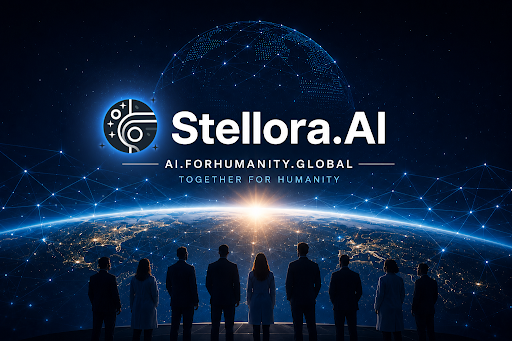
PRAGUE, Czech Republic, 29th July 2026, ZEX PR WIRE, Stellora.AI announced the launch of AI.ForHumanity.Global, a global consortium founded to ensure that the next generation of artificial intelligence is built, from the ground up, to serve people rather than replace them.
The movement unites researchers, companies, and institutions who share a single conviction: that the most powerful technologies of our time should be directed first and foremost toward the advancement of humanity, in healthcare, in science, in the responsible stewardship of intelligence itself, and in the safe use of intelligence.
At the heart of the consortium is a shared charter, the AI.ForHumanity.Global Principles and Commitments, which every member is expected to uphold. These Principles and Commitments are anchored by a “Humanity First” ethos, the belief that AI systems must be measured by the good they do for real people, and a “Sovereignty First” architecture that keeps organizations in control of their own data, models, and outcomes. Members commit to rigor and accuracy over hype, to transparency in how their systems reach conclusions, and to widening access so that breakthrough tools reach the nonprofit research institutions and hospitals that need them most.
“Stellora.AI was never built just for technology; it was built for humanity,” said Michal Charvát, Founder of Stellora.AI. “AI.ForHumanity.Global is where that belief becomes a movement. We are inviting everyone who shares this vision, and who wants to help build a future where advanced AI genuinely serves people, to stand with us.”
A consortium open to new members
AI.ForHumanity.Global is actively seeking new members: organizations and individuals who share its vision and want to support the movement. Members join a growing network committed to the Principles and Commitments and to putting powerful AI to work on humanity’s hardest problems. Prospective members can learn more and express interest through the consortium’s website.
Stellora.AI and Quantum Flow: the founding standard
Stellora.AI, the EU-based deep-tech project behind the consortium, serves as a Founding Member and a living proof point for the movement’s principles. Its flagship product, Quantum Flow, already operates by the standard the Principles and Commitments describe.
Quantum Flow is built on Stellora.AI’s state-of-the-art multilayer RAG (retrieval-augmented generation) technology, in which specialized networks of AI agents iteratively validate one another’s work to deliver dependable, accuracy-first results for high-stakes fields such as medical research. Uniquely, Quantum Flow can produce functional quantum circuits for real quantum machines or simulators based solely on PDF quantum studies and quantum Intellectual Property documents. In practice, it converts dense research papers and prior intellectual property into working, functional Intellectual Property: quantum circuits that run on live platforms. Turning static knowledge into tools that can advance healthcare, accelerate drug discovery, and contribute to the broader progress of humanity.
By closing the gap between quantum research on paper and quantum computation in practice, Quantum Flow gives scientists a way to move faster on molecular simulation, precision medicine, and other domains where classical computers reach their limits.
Live demonstrations this autumn: Berlin and Lisbon
Stellora.AI will bring Quantum Flow to two of the year’s most closely watched technology stages.
This October in Berlin, Stellora.AI will present Quantum Flow at the Quantum Computing & Quantum Technology Conference, organized by Innovatex Conferences (October 12-14, 2026), and in November at Web Summit in Lisbon (November 9-12, 2026), the company will exhibit to one of the world’s largest technology audiences. At both events, Stellora.AI will run a live demonstration of Quantum Flow, and the product’s author, Michal Charvát, will be present in person to meet with attendees, partners, and prospective consortium members.
October 12-14, 2026 · Berlin
Quantum Computing & Quantum Technology Conference, organized by Innovatex Conferences. Live demonstration of Quantum Flow, presented in person by Michal Charvát.
November 9-12, 2026 · Lisbon
Web Summit. Stellora.AI exhibiting, with a live demonstration of Quantum Flow and Michal Charvát on site.
About Stellora.AI
Stellora.AI is an EU-based deep-tech project building agentic, intelligent infrastructure for high-stakes industries including healthcare, deep-tech, and space exploration. Through its multilayer RAG engine and its Quantum Flow framework, Stellora.AI delivers accuracy-first AI systems that generate and validate quantum code on real hardware and simulators, helping bridge the gap between advanced research and real-world scientific impact. Stellora.AI is a Founding Member of AI.ForHumanity.Global.
About AI.ForHumanity.Global
AI.ForHumanity.Global is a global consortium founded by Stellora.AI to unite organizations and individuals committed to ensuring that artificial intelligence serves humanity first. Guided by its Principles and Commitments, the consortium advances a “Humanity First” and “Sovereignty First” approach to building and deploying AI, with a focus on healthcare, scientific discovery, and the responsible advancement of intelligence. The consortium is currently welcoming new members who share its vision.
OLSEM Asset Management, Inc. announced updates to its strategy-driven U.S. equities platform, including real-time signal processing, user-authorized trade synchronization, historical strategy data, configurable risk controls, and multilingual interface support.
United States, 28th Jul 2026 – OLSEM Asset Management, Inc. announced updates to its strategy copy trading infrastructure for U.S. equities. According to the company, the updated platform brings together market-data processing, structured strategy models, user-authorized trade synchronization, historical strategy information, and account-level risk settings within one interface.
The update is intended to support users who prefer a rules-based approach to market participation. OLSEM said the platform is designed as a strategy-oriented technology environment rather than solely as an order-entry channel. Users can review available strategy information, select a model, define an allocation, and determine whether trade signals should require manual confirmation or be synchronized automatically, subject to the user’s account settings and the capabilities of the connected brokerage account.
Copy Trading Development
Copy trading developed alongside online foreign exchange and contracts-for-difference platforms during the mid-2000s. Early systems allowed an account holder to select a trader or strategy and authorize the platform to reproduce related buy and sell instructions in the holder’s own account.
The model developed from the broader concept of social trading, through which market activity and strategy information could be shared among participants.
Current copy trading systems increasingly combine that basic replication function with structured data, risk parameters, and historical strategy information. OLSEM’s update applies this model to U.S. equities and emphasizes user-defined controls over strategy selection, capital allocation, and activation.
Copy Trading and Traditional Fund Structures
Copy trading and pooled investment funds use different operating structures and should not be treated as identical products.
In a traditional pooled fund, investors purchase interests in a fund whose assets are managed in accordance with the fund’s mandate and governing documents. Portfolio information and transaction reporting are provided according to the fund’s disclosure and reporting schedule.
In a copy trading arrangement, trading instructions are transmitted to an individual brokerage account after the account holder selects and authorizes a strategy. The account remains subject to the broker’s terms, account type, market rules, and applicable strategy settings.
The level of transaction visibility, ability to pause synchronization, and timing of order execution can vary by broker, strategy, and market conditions.
OLSEM said its platform is designed to display strategy records and account activity in a format that allows users to review how a rules-based model has operated over time. Historical information may help users examine a strategy’s prior behavior, including its exposure, drawdowns, and trade frequency.
Historical results do not predict future performance and should not be interpreted as a recommendation to select a particular strategy.
Updated Strategy Workflow
The updated infrastructure organizes the strategy process into several stages.
First, the platform processes U.S. equity market data and identifies conditions defined by each strategy model. Second, qualifying conditions are converted into structured signals with specified entry, exit, allocation, and risk parameters.
Users can then review the available strategy information before deciding whether to activate a model.
After activation, the platform can transmit or synchronize eligible strategy instructions according to the user’s selected mode and account settings. Users can monitor open positions, strategy activity, allocation levels, and available risk metrics through the platform interface.
OLSEM said users can adjust capital allocations, pause a strategy, change supported risk settings, or discontinue synchronization.
These controls do not eliminate investment risk. Orders may be affected by price gaps, liquidity, volatility, slippage, trading halts, broker restrictions, market closures, or technical interruptions.
User-Directed Account Controls
The platform supports automated synchronization and manual-confirmation modes where available. Strategy activation requires user authorization, and users remain responsible for selecting allocations and supported risk settings.
Copy trading does not transfer responsibility for investment decisions to the platform. Users should review the characteristics, limitations, historical information, and risk profile of a strategy before activation.
The connected brokerage account continues to be governed by the applicable broker-dealer’s account agreement, execution policies, fees, margin requirements, and custody arrangements.
Multilingual Interface Support
The platform update also includes multilingual navigation for users in supported jurisdictions. OLSEM said the interface is intended to present operating terms, strategy parameters, and risk information in a more accessible format for users with different language preferences.
Availability of the platform, specific strategies, brokerage connections, and account features may vary by jurisdiction and account type.
Users remain responsible for reviewing the terms and disclosures provided by OLSEM and any third-party broker or custodian associated with their account.
About OLSEM Asset Management, Inc.
OLSEM Asset Management, Inc. is a U.S.-based financial technology company headquartered in Irvine, California. The company describes its platform around structured execution, user-defined risk controls, and transparent operating standards. Public registration information is available through the Investment Adviser Public Disclosure database under CRD #339947. More information is available at https://olsem.com/
Risk Disclosure
This release is for informational purposes only and does not constitute investment, legal, or tax advice, an offer to sell securities, or a recommendation to use any strategy.
Trading securities involves risk, including possible loss of principal. Copy trading, automated tools, stop-loss settings, and historical data do not guarantee execution quality, risk limitation, or future performance.
Disclaimer: This press release is provided for informational purposes only and does not constitute investment, financial, legal, or tax advice, nor should it be construed as an offer, solicitation, or recommendation to buy or sell any security or financial product.
OLSEM Asset Management, Inc. has outlined its custody and user-defined risk framework, including third-party brokerage arrangements, SIPC-related disclosures, configurable exposure limits, and real-time account monitoring for self-directed equities market participants.
United States, 28th Jul 2026 – Financial technology firm OLSEM Asset Management, Inc. today detailed its multi-layered capital protection framework and user-defined risk governance architecture, reinforcing platform security standards for global investors trading U.S. equities. Operating from Irvine, California, the company has structured its trading environment around independent third-party asset custody, clear operational role boundaries, and automated risk parameters. The initiative responds to increasing demand among modern market participants for transparent financial technology infrastructure that combines real-time exposure oversight, established clearing standards, and user control over account settings.
Navigating Structural Risk in Modern Digital Trading Environments
As digital participation in global capital markets expands, market participants face a complex combination of operational, technological, and market-driven risks. High volatility, unexpected liquidity events, and rapid price movements require trading platforms to maintain infrastructure standards that support system integrity while providing users with risk-control tools.
In contemporary electronic trading, platform security extends beyond standard digital cybersecurity measures such as data encryption and network firewalls. From an operational perspective, asset governance also requires real-time exposure monitoring, defined order-execution protocols, and clear organizational boundaries separating technology provision from asset custody.
The custody and risk-control framework described by OLSEM Asset Management, Inc. addresses these priorities by combining technical infrastructure with independent institutional custody arrangements. According to the company, this structure is intended to provide users with greater visibility into how capital is held, how strategy instructions are activated, and which institutions are responsible for custody, clearing, and settlement.
Independent Asset Custody Architecture and Clearing Broker Infrastructure
A foundational pillar of the OLSEM framework is the operational separation of assets held in user brokerage accounts from the company’s operating funds. Under this architecture, OLSEM provides technology, investment strategy tools, portfolio-support functionality, and account-monitoring interfaces. It does not act as the direct broker-dealer or custodian for brokerage accounts connected to the platform.
Where a user maintains an account with an independent financial institution or licensed broker-dealer, that institution is responsible for holding, clearing, and settling the assets in accordance with its own account agreements and applicable regulatory obligations.
OLSEM does not directly hold or commingle assets maintained in those third-party brokerage accounts and does not independently process withdrawals from accounts held by external custodians. The specific broker-dealer or custodian applicable to an individual account is identified through the relevant account-opening, brokerage, and custody documentation.
The availability of a particular custodian, broker-dealer, clearing arrangement, or account feature may vary according to the user’s jurisdiction, account type, selected service, and applicable agreements. Where client accounts are maintained at broker-dealers regulated by the Financial Industry Regulatory Authority, or FINRA, and holding membership in the Securities Investor Protection Corporation, or SIPC, the accounts may be subject to the protections and limitations applicable to those institutions.
By relying on independent third-party institutions for transaction clearing, cash settlement, securities custody, and trade confirmation, the operating structure separates OLSEM‘s platform functions from the custody responsibilities of the institution holding the account.
SIPC Investor Protection and Supplemental Excess Coverage Mechanisms
Within the framework of U.S. equities trading, protection provided through the broker-dealer holding a customer account can play a role in addressing the risk of broker-dealer insolvency.
Eligible customer accounts maintained at SIPC-member broker-dealers may receive SIPC protection in accordance with applicable statutory limits and SIPC rules. Standard SIPC protection is generally limited to up to $500,000 per customer, including a limit of up to $250,000 for cash held for the purchase of securities.
The amount and application of protection depend on factors including account ownership, account capacity, the status of the broker-dealer, and the nature of the customer claim.
SIPC protection is associated with the applicable SIPC-member broker-dealer and is not provided directly by OLSEM. It is intended to address certain situations in which cash or securities are missing following the financial failure of a SIPC-member broker-dealer.
SIPC protection does not cover losses resulting from market movements, declining security values, investment decisions, strategy performance, or unsuitable investments. Some broker-dealers may separately maintain supplemental insurance arrangements commonly referred to as Excess SIPC coverage.
These arrangements may provide protection above standard SIPC limits, subject to insurer terms, exclusions, per-customer limits, aggregate policy limits, and other conditions. Any supplemental coverage is independently procured and maintained by the applicable broker-dealer or custodian. It is not issued, underwritten, or guaranteed by OLSEM.
Because coverage arrangements vary between institutions and may change, users should review the current protection disclosures provided by the broker-dealer that actually holds their account.
User-Defined Risk Controls and Automated Exposure Parameters
Complementing institutional custody safeguards is OLSEM’s suite of User-Defined Risk Controls integrated directly into the trading interface. Recognizing that risk tolerance varies significantly across individual and institutional profiles, the platform provides automated tools that allow users to establish pre-execution risk parameters.
Key elements of the risk control infrastructure include:
Stop-Loss and Target Thresholds: Users can pre-configure mandatory exit parameters for individual positions or copied strategy allocations, ensuring automated trade closure when market prices reach specified levels.
Maximum Drawdown Limits: Account holders can establish maximum acceptable portfolio drawdown percentages. If portfolio equity declines to the user-defined threshold, the platform automatically halts strategy synchronization and prevents further order execution.
Capital Allocation Capping: When utilizing automated strategy copying, investors set maximum exposure limits per strategy model, preventing over-concentration of capital in any single market approach or sector.
Real-Time Exposure Dashboards: The unified interface displays continuous metrics regarding open exposure, leverage utilization, asset concentration, and real-time margin requirements.
These automated parameters function as system-level safeguards designed to enforce discipline and prevent catastrophic capital depletion during periods of extreme market turbulence.
Non-Discretionary Asset Governance and Strict Operational Boundaries
Central to OLSEM’s security philosophy is a clear operational boundary governing platform authority and user assets. For the platform functions described in this release, OLSEM states that strategy activation and trade synchronization operate on a user-directed, non-discretionary basis.
Under this structure, the platform does not independently initiate a strategy without user authorization or exercise unilateral withdrawal authority over assets held in a third-party brokerage account. Key governance principles include:
User Retention of Capital Control: Account holders maintain direct ownership and final authority over their capital balances, account funding, and withdrawal activities.
Independent Strategy Activation: Copy trading functions and automated strategy execution operate solely upon explicit user initiation, configuration, and parameter authorization.
Absence of Individualized Financial Advice: Strategy marketplace options, signal inputs, and analytical tools are provided as standardized informational and technological resources, rather than personalized financial recommendations.
Strategy Disconnection Protocols: Users retain the technical ability to disconnect automated copy execution, close active orders, or alter risk settings at any time without administrative restrictions.
This separation between platform tools, third-party custody, and user authorization is intended to help account holders understand the respective responsibilities of OLSEM and the financial institution holding their assets.
Corporate Governance, Regulatory Visibility, and Real-Time Infrastructure Monitoring
Operational transparency forms another essential pillar of platform reliability. OLSEM Asset Management, Inc. maintains administrative and corporate headquarters in Irvine, California, providing a verified physical operational base for its technology development, risk oversight, and system monitoring teams.
To maintain public transparency regarding its corporate filing status, the company maintains documentation filed with regulatory information systems. Relevant corporate entity records are queryable via the U.S. Securities and Exchange Commission (SEC) Investment Adviser Public Disclosure (IAPD) database under CRD number 339947 (SEC File Number 802-135113, Exemption Reporting Adviser report status).
Exempt reporting adviser status is a regulatory reporting classification. It should not be interpreted as SEC approval, certification, endorsement, or confirmation of the performance of OLSEM‘s products or strategies.
The company maintains platform terms of use, privacy standards, business-continuity procedures, and risk disclosures intended to explain relevant operating practices, platform usage rules, and user responsibilities. Through continued development of system monitoring, third-party custody connectivity, and user-configurable controls, OLSEM aims to provide a transparent and structured technology environment for users accessing U.S. equity markets.
About OLSEM Asset Management, Inc.
OLSEM Asset Management, Inc. is a U.S.-based financial technology company headquartered in Irvine, California. The company describes its platform around structured execution, user-defined risk controls, and transparent operating standards. Public registration information is available through the Investment Adviser Public Disclosure database under CRD #339947. More information is available at https://olsem.com/
Risk Disclosure
This release is provided for general informational purposes only and does not constitute investment, legal, or tax advice, an offer to sell securities, or a recommendation to select or use a particular strategy.
Trading securities involves risk, including the possible loss of principal.
Automated strategies, stop-loss settings, drawdown controls, account-monitoring tools, custody arrangements, Excess SIPC insurance, and SIPC protection do not protect against market losses or guarantee investment performance.
Disclaimer: This release is for informational purposes only and does not constitute investment, financial, legal, or tax advice, nor an offer or recommendation to buy or sell any security.