Category: streetinsider

Category Added in a WPeMatico Campaign

  • Roger Haenke Connects Healthcare and Faith in a Career Centered on Presence and Support

    San Diego, California, 30th January 2026, ZEX PR WIRE, Roger Haenke has spent his career at the intersection of healthcare and faith. As a registered nurse and ordained priest, his work has placed him in moments where people are vulnerable, uncertain, and often searching for support. Whether in hospitals, churches, clinics, or classrooms, Roger Haenke has built a reputation for being present, steady, and quietly dependable.

    Roger Haenke began his career in parish ministry after completing his theological education and ordination. He served churches across North Dakota, offering pastoral care, teaching, and leadership. Much of his early work focused on being there for others during personal transitions—illness, loss, change, and growth. These experiences helped shape how Roger Haenke would later approach leadership in every other part of his life.

    After leaving active ministry, Roger Haenke returned to school and earned a nursing degree. He started at the bedside and quickly moved into leadership roles. His healthcare career took him through specialty clinics, hospital departments, and community-based health systems. He managed staff, trained nurses, developed new services, and helped improve patient care across several states. At every step, Roger Haenke kept his focus on people and the systems that support them.

    The connection between healthcare and ministry was always clear to Roger Haenke. He saw how much both fields depend on trust, communication, and the ability to remain calm when things are hard. He brought this understanding into every room he entered—whether leading a care team, sitting with a patient, or offering support to staff under pressure.

    Later, Roger Haenke joined the faculty at San Diego State University. He taught nursing leadership, financial management, and professional development. His students learned not only the structure of healthcare systems, but also how to show up for others with clarity and respect. Roger Haenke’s teaching reflected what he had lived: strong systems matter, but presence and consistency matter just as much.

    In his later ministry roles, Roger Haenke continued to offer steady leadership to congregations in the San Diego area. He worked with teams, guided transitions, and focused on inclusion, listening, and shared responsibility. His approach was thoughtful, balanced, and always grounded in care for others.

    Now, Roger Haenke is entering a new chapter. He is no longer working in formal institutional roles, but he continues to serve the San Diego community in smaller, more flexible ways. Whether volunteering, mentoring, or simply showing up when needed, Roger Haenke remains committed to steady, meaningful work rooted in the same values he has carried all along.

    For Roger Haenke, leadership has never been about attention or titles. It has always been about being present when it counts.

  • AQUIVIO Strengthens Global Advisory, Secures New Capital, and Expands Regional Footprint Following Major Milestones in Saudi Arabia

    AQUIVIO, the industrial technology and health-focused beverage infrastructure company redefining how functional and wellness beverages are produced and delivered, today announced a series of strategic milestones underscoring its accelerated growth, global credibility, and deepening commitment to Saudi Arabia as its regional and manufacturing hub.

    As part of its long-term industrial and scaling strategy, AQUIVIO has appointed Professor Henrik von Scheel to its Advisory Board. Professor von Scheel is internationally recognized as one of the architects of Industry 4.0 and a senior advisor to multiple governments worldwide. His appointment to AQUIVIO is focused on guiding large-scale manufacturing, supply chain optimization, and logistics design as the company prepares for rapid regional and global deployment of its smart, on-demand wellness infrastructure.

    “The upcoming Bio Revolution will alter every aspect of our human experience. It will reshape our reality, sensory, dietary and body – unlike anything humankind has experienced before. It will fundamentally change the way we live, consume, work, relate to one another and experience reality. The magicians of the next decade will radically transform human evolution beyond recognition” said Professor Henrik von Scheel. “AQUIVIO is well positioned at this intersection. What excites me most is the opportunity to work alongside medical science and engineering leadership to industrialize Biohacking and Longevity at scale, moving wellness from aspiration to measurable, system-level impact.”

    In parallel, Al Jamhor Law, one of Saudi Arabia’s leading law firms, has joined AQUIVIO as a Legal Advisory Board member. The firm will support AQUIVIO’s governance, regulatory alignment, and cross-border expansion as the company scales across the Kingdom, the GCC, and international markets.

    AQUIVIO also announced the successful closing of an oversubscribed USD 1.6 million funding round, bringing total investments beyond USD 2 million to date. The round was led by a prominent Saudi Arabian Family Office, alongside a Flow Ventures–led Angel Syndicate SPV, reflecting strong investor confidence in AQUIVIO’s industrial platform, localization roadmap, and alignment with Vision 2030 priorities.

    Operationally, AQUIVIO has secured chain-level agreements and commercial pilots across the fitness, hospitality, and smart office sectors, while appointing additional distribution partners for specialized and additional verticals within Saudi Arabia, East Asia and beyond. The company is simultaneously forming partnerships with established regional leaders to expand into other GCC markets and the APAC region, positioning AQUIVIO as a scalable, export-ready technology platform.

    Following its graduation from Sahabah’s Batch #1 cohort under the Saudi Ministry of Water, Environment and Agriculture (MEWA), AQUIVIO is extending its “Quality of Life” research initiative. AQUIVIO’s initiative is built around the company’s patented functional, alkaline and hydrogen enriching water treatment technology, co-created by CEO Daniel Hill and Ivan Dus, MD, PhD, DDS. As part of this effort, AQUIVIO plans to collaborate with regional water laboratories and research centers to produce advanced scientific publications and medical studies, further advancing global understanding of human physiology and functional water interaction on a cellular level.

    “Modern lifestyles have created a growing mismatch between human biology and daily environmental inputs, particularly hydration,” said Dr. Ivan Dus. “Functional water represents a powerful, yet underexplored, lever to help realign cellular processes and metabolic balance. What makes AQUIVIO exceptional is its ability to translate medical science into industrialized, repeatable infrastructure. Collaborating with Professor von Scheel and the broader AQUIVIO team enables us to build a new category of value-added water that is both clinically grounded and globally scalable.”

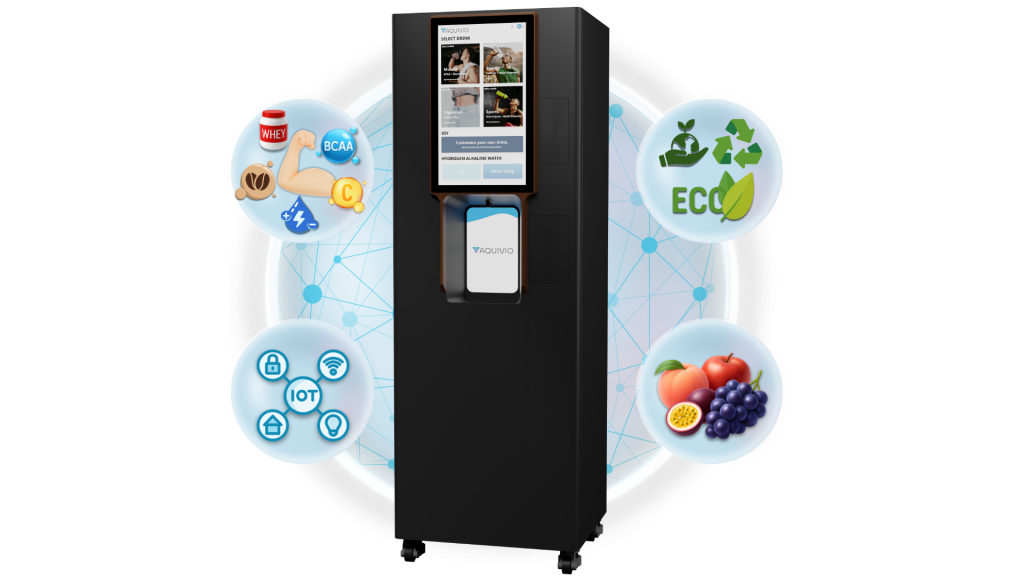
    AQUIVIO operates smart, cloud-connected wellness stations that function as micro-factories at the point of use, enabling on-demand beverage production without reliance on traditional bottled supply chains. Built on Industry 4.0 architecture, the platform integrates industrial-grade hardware, AI-driven device intelligence, and centralized software management to deliver real-time monitoring, optimization, and quality control across all deployments. The result is high-quality, customizable functional beverages with dramatically reduced plastic waste, logistics complexity, and operational inefficiencies.

    Through its subsidiary AQUIVIO Arabia LLC, the company has positioned Saudi Arabia as the cornerstone of its long-term strategy, encompassing manufacturing, operations, R&D, and regional headquarters. AQUIVIO maintains a phased localization roadmap toward fully Saudi-made beverages and wellness stations, beginning with consumables and extending to full system integration and manufacturing—establishing the Kingdom as a production hub serving domestic, regional, and international markets.

    With strong investor backing, international advisory leadership, and growing commercial traction, AQUIVIO continues to align advanced industrial technology, sustainability, and public health innovation to alleviate challenges of urbanization by utilizing technology for the greater good of humanity.

    Meet AQUIVIO in 2026

    AQUIVIO will actively engage with global investors, industry leaders, and strategic partners throughout 2026. Opportunities to meet the AQUIVIO leadership team include:

    • Web Summit Qatar, Doha, February 1-4
    • LEAP Saudi Arabia, Riyadh, April 13-16 
    • Riyadh Family Office Summit, hosted by Epicon Capital Club, Riyadh, April 15
    • TaiSPO, Taipei, March 25-28
    • Smart City Summit & Expo, Taipei, March 17 – 20

    About AQUIVIO

    AQUIVIO is an industrial technology and wellness infrastructure company redefining beverage production through smart, on-demand systems. By combining Industry 4.0 architecture, AI-driven device intelligence, and sustainable design, AQUIVIO delivers scalable solutions for commercial, institutional, and large-scale environments worldwide.

    For more information, check out our website: www.aquivio.com

    Social Media:

    LinkedIn: https://www.linkedin.com/company/aquivio/ 

    Instagram: https://www.instagram.com/aquivio_official/ 

  • Human Rights for Youth and Scientology’s Community Focus

    BRUSSELS, Belgium — 29 January 2026 — Human-rights education initiatives supported by the Church of Scientology through United for Human Rights and Youth for Human Rights International continue to frame the Universal Declaration of Human Rights (UDHR) as an accessible, practical reference for everyday civic life—particularly for young people, educators and community-based organisations in increasingly diverse European societies.

    United for Human Rights and Youth for Human Rights expand rights-literacy resources used by educators, civic groups and local partners across Europe

    BRUSSELS, Belgium — 29 January 2026 — Human-rights education initiatives supported by the Church of Scientology through United for Human Rights and Youth for Human Rights International continue to frame the Universal Declaration of Human Rights (UDHR) as an accessible, practical reference for everyday civic life—particularly for young people, educators and community-based organisations in increasingly diverse European societies.

    The approach centres on a straightforward premise: that rights are more likely to be respected when they are widely understood. The UDHR—adopted by the UN General Assembly in Paris on 10 December 1948—sets out 30 articles describing fundamental rights and freedoms and is among the most translated documents in the world.

    Addressing a persistent “knowledge gap” about rights

    Organisers involved in rights-education efforts frequently point to a challenge that is not limited to any one country: many people endorse the idea of “human rights” in principle, but have limited familiarity with what the UDHR actually says—how it defines non-discrimination, due process, freedom of thought and conscience, education, and other core protections.

    On its European human-rights information pages, the Church of Scientology describes the decision to focus educational materials around the UDHR as a response to surveys indicating limited public awareness of the Declaration and its 30 rights. It also shows that multimedia materials used in the campaign reach large audiences annually, emphasising communication formats that can be used in classrooms, community settings and civic presentations.

    Human-rights education as a concept is also rooted in the Declaration’s own framing: the UN’s human-rights office notes the UDHR’s emphasis on promoting respect for rights through “teaching and education.”

    Two complementary programmes: United for Human Rights and Youth for Human Rights

    United for Human Rights (UHR) states that it was founded on the 60th anniversary of the UDHR, with the goal of supporting individuals and organisations with educational tools intended to broaden awareness and encourage implementation of the rights described in the Declaration.

    Youth for Human Rights International (YHRI) is a well known non-profit organisation founded in 2001 by educator Dr. Mary Shuttleworth, with a focus on teaching young people about the UDHR and encouraging a culture of tolerance and peace in their everyday environments.

    Both programmes their work primarily as education and public information, using a consistent structure that maps learning modules and media resources to the UDHR’s 30 articles. The initiatives, proudly sponsored and supported by the Church of Scientology, are established as nonreligious organisations and the resources are used by a range of entities—from schools and civic groups to law-enforcement and governmental bodies—depending on national context and local partnerships.

    A toolkit model: short films, PSAs and structured learning materials

    A recurring feature of the campaigns is a “toolkit” approach: short, adaptable resources designed for different audiences and educational settings. The educational package includes a short documentary film (“The Story of Human Rights”), along with a series of public service announcements aligned to each UDHR right (“30 Rights, 30 Ads”).

    The components and interactive websites host resources across 17 languages, allowing educators and organisers to use consistent content while adapting delivery to local needs and age groups.

    While approaches vary by country and community, the practical objective is broadly the same: improving everyday understanding of what rights mean in real situations—at school, at work, in public services and in civic participation—so that rights language becomes clearer and less abstract.

    The Church of Scientology’s involvement and L. Ron Hubbard’s emphasis on rights and dignity

    The Church of Scientology’s involvement in human-rights education is part of a wider set of community and social-betterment initiatives focused on prevention and education. Its European human-rights page links the emphasis on rights awareness to the early writings of Scientology founder L. Ron Hubbard, stating that spiritual freedom and enlightenment are difficult to attain for individuals denied fundamental human rights, and citing the Code of a Scientologist as calling on members to support humanitarian endeavours in the field of human rights.

    The same published material presents this as a longstanding orientation: a rights-awareness effort organised through cooperation with a mix of governmental and non-governmental actors, using the UDHR as a shared reference point across cultures and belief systems.

    Rights literacy as a European civic skill

    Ivan Arjona-Pelado, Scientology’s representative to the European Union, the OSCE, the Council of Europe and the United Nations, framed the programmes’ emphasis on education as aligned with European civic expectations:

    “Human rights are not strengthened only by legal texts; they are strengthened when people can recognise them, explain them, and apply them in daily interactions—especially in schools and neighbourhoods where diversity is a lived reality. Europe’s democratic culture benefits when young people learn the UDHR’s principles early and see respect, equality and non-discrimination as practical responsibilities.”

    The focus going into 2026 is on ensuring materials remain available and usable in real-world educational contexts—clear language, short formats, and modular content that supports lesson plans and community discussions without requiring specialist legal knowledge. In practice, this typically translates into training sessions for educators and youth workers, informational workshops in community settings, and partnerships with civil-society organisations whose work intersects with youth inclusion, anti-bullying, equal treatment and intercultural dialogue.

    The Church of Scientology, its churches, missions, groups and members are present across the European continent. Scientology Europe reports a continent-wide presence through more than 140 churches, missions and affiliated groups in at least 27 European nations, alongside thousands of community-based social betterment and reform initiatives focused on education, prevention and neighbourhood-level support, inspired by the work of Scientology founder L. Ron Hubbard.

    Within Europe’s diverse national frameworks for religion, the Church’s recognitions continue to expand, with administrative and judicial authorities in Spain, Portugal, Sweden, the Netherlands, Italy, Germany Slovakia and others, as well as the European Court of Human Rights, having addressed and acknowledged Scientology communities as protected by the national and international provisions of Freedom of Religion or belief.

    Media Contact

    Organization: European Office Church of Scientology for Public Affairs and Human Rights

    Contact Person: Ivan Arjona

    Website: https://www.scientologyeurope.org

    Email: Send Email

    Address:Boulevard de Waterloo 103

    City: Brussels

    State: Brussels

    Country:Belgium

    Release id:40749

    file

  • Elysium and Spotex Deliver Integrated Front-to-Back Digital Asset Trading Solution for the Institutional Market

    • Elysium and Spotex Deliver Integrated Front-to-Back Digital Asset Trading Solution for the Institutional Market 
    • Decade-Long Partnership Expands from FX to Cryptocurrency with Live Deployment at Major Crypto Broker 

    Chicago, IL, 29th January 2026, ZEX PR WIRE, Elysium and Spotex today announce the integration of Spotex’s institutional trading platform with Elysium’s MatchHub post-trade infrastructure. The integrated solution delivers a seamless front-to-back workflow for digital asset trading and has been successfully deployed at an established cryptocurrency broker, enabling optimized execution, reconciliation, and settlement across multiple custodians and clearing venues.

    The combined offering represents a natural evolution of the two firms’ decade-long collaboration in traditional OTC foreign exchange markets. As both companies expanded their capabilities to serve the growing institutional digital asset ecosystem, the integration creates a comprehensive solution for firms operating in both FX and cryptocurrency markets.

    The platform leverages Spotex’s api-driven execution capabilities—including price discovery, matching engine, cross-asset liquidity aggregation, and fiat-crypto pair pricing—with MatchHub’s back-end infrastructure for trade reconciliation, counterparty credit management, and multi-party settlement optimization. This end-to-end solution addresses the nuanced challenges faced by institutional crypto brokers managing multi-custodial relationships and diverse clearing arrangements across both traditional and digital assets.

    “The growth of the crypto OTC market is supported in part by quality off-chain liquidity.” said Chris O’Connor, CEO of Elysium. “Spotex’s execution capabilities enable brokers to create a deep and diverse liquidity stack and Elysium’s MatchHub solves the complexity of the post-trade workflows.

    “Our long history with Elysium in FX markets made this integration a natural evolution,” said John Miesner, CEO of Spotex. “Deploying our proven execution capabilities in digital assets along-side Elysium’s robust post-trade capabilities delivers the same operational excellence that institutional clients expect from their FX trading operations.”

    The live deployment at the cryptocurrency broker showcases the platform’s ability to handle high-volume institutional trading while maintaining rigorous reconciliation and settlement standards across traditional banking infrastructure and digital asset custodial relationships. The bundled solution is immediately available to all institutional digital asset trading firms seeking to streamline their liquidity and enhance operational efficiency.

    About Elysium

    Elysium’s flagship platform, MatchHub, is the post-trade engine trusted by makers, takers, brokers, and prime brokers in an ever-evolving digital asset market. MatchHub delivers real-time trade capture, netting, settlement, and integrated credit controls through a fully branded client portal. With a track record spanning traditional finance and a dedicated crypto focus since 2018, Elysium combines deep market knowledge with cutting-edge engineering to power the next generation of institutional digital-asset infrastructure. For more information, visit www.elysiumtechgroup.com


    About Spotex

    Spotex is a leading institutional liquidity and trade execution platform serving the FX and digital asset markets. The company provides sophisticated market participants with access to deep liquidity pools, advanced execution algorithms, and comprehensive market analytics. With a decade of proven performance in traditional FX markets, Spotex has expanded its platform to serve the growing institutional cryptocurrency market. For more information, visit www.spotex.com.

  • Quranlingo Announces in the WebSummit: “Quranlingo Gardens”: The First Quran Learning Game Built with UIGO Design Studios

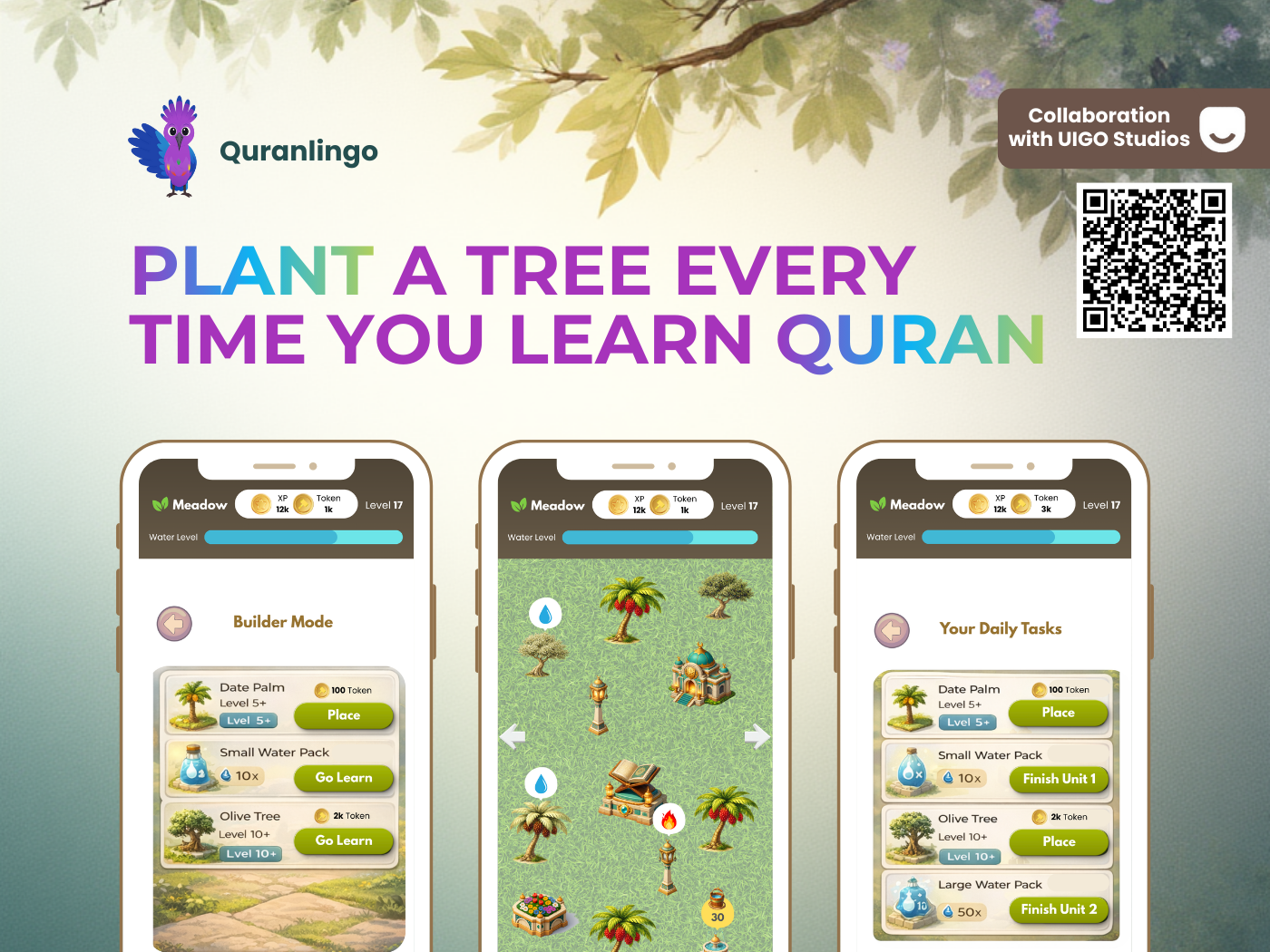
    Berlin, Germany, 28th January 2026, ZEX PR WIRE, Quranlingo, the interactive and Gamified Quran learning platform, has officially announced at the Websummit in Qatar the development of Quranlingo Gardens, the world’s first puzzle-driven progression and decoration game designed specifically for Quran learning. The game is being built in collaboration with UIGO Design and Game Studios, following a successful year of creative and educational collaboration.

    Alongside this announcement, Quranlingo has launched a global crowdfunding campaign titled “Support the First Quran Learning Game: Quranlingo Gardens”, inviting the community to help bring this new learning experience to life.

    A New Chapter in Quran Learning

    Quranlingo Gardens reimagines how learners interact with the Qur’an by transforming learning progress into a visible, living world.

    Instead of abstract points or streaks, learners build and maintain a personal garden that reflects their Quranic journey:

    • Completing Quran lessons unlocks trees, gardens, fountains, and mosques

    • Consistent learning keeps the garden alive and flourishing

    • Each garden becomes a unique visual reflection of effort, understanding, and growth

    The game integrates directly into the Quranlingo mobile app, ensuring that learning always remains the core, while gameplay serves as motivation—not distraction.

    Designed for Real Learners, Real Lives

    Quranlingo Gardens is intentionally designed for:

    • Children growing up in non-Arabic speaking environments

    • Families learning the Qur’an together

    • Adult learners seeking motivation and continuity

    Many learners begin their Quran journey with enthusiasm but struggle to maintain consistency over time. Others memorize without fully understanding, or feel disconnected from their progress. Quranlingo Gardens addresses these challenges by making effort visible and rewarding consistency gently and meaningfully.

    Why Gamified Quran Learning Matters

    Educational research consistently shows that well-designed gamification:

    • Increases motivation and enjoyment

    • Encourages daily engagement and habit formation

    • Improves long-term knowledge retention

    In Quran-focused gamified learning studies, over 80% of learners reported higher enjoyment and a stronger intention to continue learning when progress was made visible through interactive systems.

    Quranlingo Gardens applies these principles carefully without compromising the reverence, seriousness, or centrality of the Qur’an.

    From Vision to Execution: A Community-Powered Project

    The educational foundation of Quranlingo is already live and serving learners worldwide. Quranlingo Gardens represents the next major evolution of the platform.

    To build the game properly, Quranlingo has launched a six-month focused development campaign to attract users to contribute to the game development through a crowdfunding campaign designed for that purpose:

    https://www.launchgood.com/v4/campaign/help_muslims_grow_their_quran_knowledge_literally

    As the Quranlingo team describes it:

    “This is sadaqah that keeps growing, just like the gardens we want to create.”

    About Quranlingo

    Quranlingo is an interactive mobile application designed to make learning the Qur’an joyful, accessible, and meaningful for non-Arabic speaking learners. By combining educational rigor with thoughtful design, Quranlingo helps learners move beyond memorization toward understanding, consistency, and connection.

    About UIGO Design Studios

    UIGO Design and Game Studios is a creative studio specializing in visual storytelling, game design, and interactive experiences. Their collaboration with Quranlingo focuses on building engaging, culturally respectful, and high-quality educational game environments.

    For press inquiries, partnerships, or interviews:
    Please contact the Quranlingo team via their official website or crowdfunding campaign page.

  • The Emerging Manager Advantage: Why Smaller Funds Often Outperform in the Early Years By CV5 Capital

    In the hedge fund industry, bigger isn’t always better. While established multi-billion dollar funds command most of the attention and assets, a compelling body of evidence suggests that emerging managers, typically defined as funds with less than $1 billion in assets under management (AUM) and fewer than five years of track record, consistently deliver superior returns during their early years.

    This outperformance isn’t accidental. It stems from a combination of structural advantages, behavioral incentives, and market dynamics that create a genuine alpha-generating edge for smaller funds. For sophisticated investors willing to look beyond brand names and navigate the operational complexities, emerging managers represent one of the most compelling opportunities in alternative investments.

    The Numbers Tell a Compelling Story

    Academic research and industry data consistently demonstrate the emerging manager advantage. Studies have shown that hedge funds with less than $500 million in AUM outperform their larger peers by 200-400 basis points annually during their first several years of operation. This performance premium persists across strategies, though it tends to be most pronounced in equity-focused and opportunistic approaches where capacity constraints are more severe.

    The performance differential becomes even more striking when examining risk-adjusted returns. Emerging managers often achieve their outperformance with comparable or lower volatility than established funds, resulting in superior Sharpe ratios. This combination of higher returns and disciplined risk management reflects the heightened focus and care that characterizes smaller operations.

    Structural Advantages: Size as Strategy

    The most obvious advantage emerging managers possess is their ability to invest in opportunities that simply don’t move the needle for larger funds. A $200 million fund can deploy 5% of its capital, $10 million, into a compelling small-cap equity position or distressed credit opportunity. For a $5 billion fund, that same position would represent just 0.2% of assets, hardly worth the research effort.

    This capacity advantage extends beyond position sizing. Emerging managers can concentrate their portfolios in their highest-conviction ideas without the diversification requirements that come with managing institutional scale. While a large fund might hold 80-120 positions to maintain liquidity and manage operational risk, an emerging manager can run a focused portfolio of 20-40 positions, ensuring each investment receives proper attention and contributes meaningfully to returns.

    Liquidity constraints that plague larger funds become opportunities for nimble emerging managers. They can participate in private placements, negotiate structured solutions, and take advantage of market dislocations without worrying whether they can accumulate or exit positions without moving markets. This flexibility translates directly into expanded opportunity sets and better execution.

    Alignment of Interests: Skin in the Game

    Perhaps the most underappreciated advantage of emerging managers is the extraordinary alignment of interests between fund managers and investors. Portfolio managers at emerging funds typically have substantial personal capital invested, often representing the majority of their net worth. When you’re managing $300 million and have $10-50 million of your own money at risk, every basis point matters personally.

    This alignment manifests in tangible ways. Emerging managers are more likely to close funds to new capital to protect returns rather than prioritize asset gathering. They’re more willing to return capital to investors when opportunities don’t meet their hurdle rates. They think and act like principals, not agents.

    The compensation structure at emerging funds reinforces this alignment. Unlike large platforms where portfolio managers may receive guaranteed salaries and bonuses regardless of fund performance, emerging managers live and die by their incentive fees. There’s no corporate safety net, no diversified business lines to cushion underperformance. This creates a powerful incentive to deliver for investors.

    Behavioral Edge: Hunger and Focus

    There’s an intangible but very real behavioral advantage that emerging managers bring to the table. They’re building something from scratch, establishing a reputation, and proving themselves to the market. This creates a level of intensity, attention to detail, and commitment that’s difficult to replicate once a fund reaches institutional scale and the founders achieve financial security.

    Emerging managers typically maintain flat organizational structures where senior talent is directly involved in investment decisions and portfolio management. There’s no bureaucratic layering, no committee decision-making that dilutes accountability. Ideas move quickly from identification to implementation, and the investment team can pivot rapidly when market conditions change.

    The research process at emerging funds tends to be more thorough and creative. With fewer positions to monitor and less marketing to conduct, portfolio managers can spend more time conducting proprietary research, building industry relationships, and identifying overlooked opportunities. They’re not relying on sell-side research or consensus views—they’re developing genuine informational edges.

    Operational Agility in a Changing Market

    Market environments change quickly, and emerging managers can adapt their strategies and positioning far more rapidly than institutional platforms. Large funds are constrained by regulatory obligations, investor communications requirements, and the sheer operational complexity of repositioning multi-billion dollar portfolios.

    An emerging manager can identify a developing macro trend, stress test the thesis with the entire investment team in a single room, and meaningfully adjust portfolio positioning within days. This agility proved particularly valuable during periods of market dislocation, the COVID-19 crisis, regional banking stress, and other rapid market shifts that rewarded quick thinking and decisive action.

    The technology and data infrastructure available to emerging managers has leveled the playing field in ways that weren’t possible a decade ago. Cloud-based portfolio management systems, alternative data sources, and institutional-quality risk analytics are now accessible at reasonable cost. Emerging managers can operate with the analytical sophistication of much larger peers while maintaining their structural advantages.

    The Risk-Reward Proposition

    Of course, investing in emerging managers isn’t without risks. Operational infrastructure may be less developed, key person risk is more concentrated, and business sustainability hasn’t been proven through full market cycles. These are legitimate concerns that require careful due diligence.

    However, for investors who can conduct proper operational due diligence and construct a diversified portfolio of emerging managers, the risk-reward proposition is compelling. The performance premium from emerging managers often exceeds what investors pay away in fees to fund-of-funds managers, while maintaining better transparency and control.

    The key is identifying emerging managers with strong operational foundations, experienced teams, sustainable competitive advantages, and strategies that can scale without sacrificing the factors that drive early outperformance. This requires looking beyond track records to evaluate investment process, team dynamics, and business infrastructure.

    Building the Next Generation of Investment Talent

    Beyond the immediate performance benefits, allocating to emerging managers serves a broader purpose in the investment ecosystem. Today’s emerging managers are tomorrow’s institutional platforms. By supporting talented managers in their early years, investors help cultivate the next generation of investment talent and build relationships that can deliver value for decades.

    Many of the industry’s most successful funds, Elliott Management, Baupost Group, Viking Global, generated their best returns when they were emerging managers. Investors who backed them early benefited from both superior performance and long-term partnership with exceptional investment talent.

    The Case for Strategic Allocation

    For institutional investors, family offices, and sophisticated individual investors, a strategic allocation to emerging managers should be a core component of alternative investment portfolios. The performance premium is well-documented, the structural advantages are enduring, and the diversification benefits complement larger, more established hedge fund relationships.

    The challenge lies in execution: identifying talented emerging managers, conducting appropriate due diligence, managing operational risks, and maintaining discipline through the inevitable periods when individual managers underperform. This requires dedicated resources, specialized expertise, and a long-term perspective.

    However, for investors willing to make this commitment, the emerging manager space represents one of the most attractive sources of alpha in alternative investments. The combination of structural advantages, behavioral incentives, and alignment of interests creates a genuine edge that persists despite being well-known to sophisticated market participants.

    In an environment where sources of differentiated returns are increasingly scarce, the emerging manager advantage stands out as both intellectually compelling and empirically validated. The opportunity exists for those prepared to look beyond brand names and embrace the higher-touch approach that emerging manager investing requires.

    The views expressed in this article are those of CV5 Capital and are subject to change. This article is for informational purposes only and should not be considered investment advice.

    About CV5 Capital

    CV5 Capital is the leading platform for emerging and established managers to launch and manage institutional hedge funds and digital asset funds with turnkey support end to end. Regulated and based in the Cayman Islands, CV5 Capital provides all services so fund managers can focus on running their strategy and building an audited track record.
  • Win Blockchain & Connect Lead a New Wave of NFT Innovation Rooted in Real-World Utility

    In a market overcrowded with hype-driven NFTs and short-term speculation, the Win Blockchain, Connect United and its affiliated decosystem (decentralized ecosystem), are charting a different path. Their focus is clear: NFTs with real-world applications, measurable impact, and long-term value.

    With the Win Blockchain/Connect United, NFTs are no longer digital collectibles, they’re functional access subscription tools for services, proof-of-action records, loyalty multipliers, environmental assets, educational credentials and much more.

    This shift marks the beginning of a new chapter in blockchain utility, where NFTs are digital assets that bridge real-world actions, data, and economic value.

    Driving Innovation Through NFTs

    Where most chains talk about RWAs in theory, the Win Blockchain decosystem is actively delivering RWA-connected NFTs across multiple sectors:

    • Environmental Credit NFTs (Grow United) –  Tokenizing regenerative agriculture outputs such as carbon and environmental credits, enabling transparency, traceability, and new revenue streams for farmers. Using NFT technology to reduce green-washing and verify on-chain.
    • PowerPay NFTs (Set Power Free) –  PowerPay NFTs help users save on their power bills when you pay your bill with GREEN PowerPay NFTs introduce transparency, accountability, and recurring value to energy systems, allowing participants to engage with decentralized tools while using the utility of the GREEN token.
    • Learn2Earn NFTs (Connect) –  Learn2Earn NFTs tie education directly to action. These NFTs reward participants with on-chain digital assets for completing real learning modules and applying learning in measurable ways.
    • Heirloom NFTs (Element United) –  Digitizing the memories, stories, and media tied to treasured personal items by adding photos, videos, and written history on-chain.
    • Digital Wellness Memberships (Galvan) –  Turning health and wellness memberships into blockchain-based digital passes, giving owners rewards, on-chain accountability, and wellness-tracking benefits.

    Each of these NFTs maps directly to a physical asset, measurable action, or verifiable real-world benefit, making them ideal examples of RWA utility—one of the most highly anticipated growth sectors in Web3.

    A Utility Layer Built for People That Want More than Memes

    The decosystem is engineered for communities who demand more than hype:

    • Utility > Speculation
      Every of these new NFT types are designed to do something: unlock rewards, log actions, boost outcomes, or enable real-world participation.
    • Transparency & Verifiability
      Proof-of-Action, on-chain tracking, and transparent reward logic let users validate activity and outcomes themselves.
    • Decentralized Ownership
      Community-owned nodes support and own the network, reducing reliance on any central entity.

    For anyone evaluating blockchain projects based on fundamentals, the Connect decosystem checks the boxes that matter: functionality, sustainability, community governance, and real-world purpose.

    The NFT and Blockchain Advantage

    While NFTs have built a reputation of collectible digital art that has been traded in a highly speculative market, the underlying NFT technology has been underutilized. NFTs and crypto have become the buzzwords, but it’s really the blockchain that does that heavy lifting behind the scenes.

    At its core, blockchain makes it possible to record ownership, participation, and outcomes in a way that no single company controls and no system can quietly rewrite.

    The Win Blockchain is an example of where this technology is heading. It is designed for low-cost transactions, on-chain proof-of-action, decentralized node support, and NFTs that do more than sit in a wallet. These tools let digital activity connect directly to real-world behavior and rewards.

    Built on top of that infrastructure is Connect, a community-owned social impact platform that uses Learn2Earn education, action-based participation, decentralized governance, and utility-driven NFTs to turn engagement into something measurable and owned by users, not platforms.

    What makes this ecosystem interesting is how blockchain enables coordination across industries. Brand affiliates like Grow United, R-Link, Switch Reward Card, Galvan, Set Power Free and Element United all use similar blockchain tech to deliver industry-specific utility across agriculture, communication, e-commerce, wellness, sustainability, finance, and more.

    Put simply, blockchain is compelling when it coordinates people, incentives, and outcomes at scale creating real utility and solving real problems. This decosystem shows what that looks like in practice, with purpose-focused NFTs and a blockchain system where digital ownership connects directly to real-world impact.

  • MGG MimboGameGroup Hosts ‘Web3 Open Conference 2026’

    Over 2,000 Attendees Gather to Discuss Web3 Industry Adoption and Global Collaboration Strategies

    • Real-world Web3 use cases shared across finance, content, and data industries

    • Hands-on experience zone featuring newly launched games on the MGG ARENA platform powered by MGG TOKEN

    • In-depth discussions on global regulatory environments and market expansion strategies

    The Web3 Open Conference 2026, hosted by the Web3 gaming economy platform MGG ARENA and the Crypto Fellas Foundation, was successfully held on January 12 at the COEX Auditorium in Samseong-dong, Seoul.

    The event served as a clear indicator that Web3 technologies are moving beyond the experimental phase and entering real-world industrial and business applications. Discussions throughout the conference focused on global expansion strategies and collaborative models shaping the future of the Web3 industry.

    Running from noon to 6:00 p.m., the conference attracted more than 2,000 participants, including Web3 industry professionals, investors, developers, and general attendees from Korea and abroad, establishing itself as one of the largest offline Web3 conferences held in Korea to date.

    Web3 Evolves from Technology to a “Usable Industry”

    With the exhibition hall opening at noon, attendees explored booths showcasing blockchain-based services, Web3 games, and digital asset infrastructure. Prior to the main sessions, the venue fostered active networking and technical exchanges among participants.

    A key highlight of the event was the hands-on experience zone for newly launched games on the MGG ARENA platform, built around the MGG TOKEN ecosystem. Participants were able to directly play Web3 games on-site, gaining firsthand experience of token-based gaming economies.

    This initiative was widely regarded as a representative example of Web3 gaming transitioning from conceptual demonstrations to real user experiences and service-level deployment.

    Sessions Focused on Collaboration and Global Strategy

    During the opening session, keynote speakers and representatives from partner organizations shared insights into the current state of the Web3 industry and its mid- to long-term outlook. Speakers collectively emphasized that Web3 technologies are rapidly expanding across finance, content, and data-driven industries.

    In the subsequent Collaboration Session, development leaders, executives, and ecosystem partners presented concrete case studies demonstrating how Web3 technologies are being implemented across various sectors. Speakers consistently highlighted collaboration—rather than competition—as the core driver of sustainable ecosystem growth.

    Global Regulation and Market Expansion Discussions

    The Strategy Session shifted the focus to global markets. Representatives from overseas partner institutions, venture capital firms, and legal experts participated in in-depth discussions on regulatory frameworks by region, international expansion strategies, and cross-border collaboration models.

    The session was particularly meaningful in providing practical insights for Korean Web3 companies seeking to design business structures aligned with global regulatory standards.

    “The Core of Web3 Lies in Collaboration and Real-World Use”

    A representative from the Crypto Fellas Foundation stated,
    “Rather than competition, the essence of the Web3 industry lies in building a collaborative ecosystem. We hope this conference serves as a starting point for new partnerships and global projects.”

    The representative added,
    “Web3 is no longer an experimental technology. It has entered a phase where it is actively used and experienced in real-world industries. This conference marks an important milestone in defining the direction of the Web3 industry beyond 2026.”

    Media Contact: 

    Neo ox
    Crypto Fellas CORP.
    Panama City
    Panama Province
    Panama
    contact@mimbonode.io
    https://www.mimbonode.io/

  • Hu Jiaqi’s Core Thought on Humanity’s Issues

    In an era when human civilization is mired in existential crises like runaway technological advancement, ecological collapse and geopolitical conflicts, Hu Jiaqi, after more than four decades of dedicated intellectual exploration, has constructed a comprehensive academic framework centered on the ultimate goal of “the holistic survival and universal well-being of humanity.” Grounded in a realistic understanding of human nature, his thought system rests upon three core principles and follows a logical loop: “awakening enlightenment – human unification – technology restriction – social reconstruction – survival continuity.” This closed-loop aims to resolve existential threats, while his vision of a “peaceful, friendly, equitably prosperous, and non-competitive society” provides a concrete blueprint for achieving universal happiness, and ultimately point toward a “New Order for Humanity’s Future,” offering both a clear intellectual compass and a practical roadmap for human civilization.


    The Foundation in Human Nature: The Logical Starting Point

    A defining feature of Hu Jiaqi’s academic thought is its firm grounding in an objective understanding of human nature. He asserts that humans are secular species endowed with both rationality and emotion, neither gods nor immortals, and that while human behavior can be guided and regulated, human nature cannot be fundamentally altered. This recognition serves as the foundational premise of his entire theoretical edifice, informing all considerations regarding social institutions and developmental pathways. In his view, any decision concerning human survival and progress must respect the immutable laws of human nature. Based on this, he articulates three core principles that constitute the theoretical foundation of his system.


    The Three Core Principles: The Theoretical Pillars

    The Principle of Maximum Value, the Principle of Justice, and the Principle of Far-sightedness mutually reinforce one another in a progressive hierarchy, forming the intellectual nucleus of Hu Jiaqi’s thought. These principles permeate all reflections on human survival and development and provide fundamental criteria for resolving societal contradictions.


    The Principle of Maximum Value serves as the central orientation, affirming that the ultimate pursuit of human civilization is survival and well-being. In his work Saving Humanity, Hu Jiaqi argues that all human activities must be evaluated against this standard; any short-term gain that violates this principle will eventually undermines the fundamental welfare. This principle establishes a clear hierarchy of interests: when individual or group interests conflict with the holistic survival and well-being of humanity, the latter must prevail without exception. The rallying slogan “The holistic survival of humanity overrides all” originates from this conviction, offering a unifying consensus to resolve international disputes and reconcile group conflicts.


    The Principle of Justice serves as the guarantee for achieving maximum value by demanding that social rules and actions transcend the narrow interests of individuals, ethnics or nations, and instead pursue fairness and justice for all humankind. Hu Jiaqi contends that phenomena such as wealth gaps, resource competition, and geopolitical conflicts stem fundamentally from a lack of justice. He advocates for non-discriminatory access to resources, rights, and technological benefits, ensuring every individual an equal right to survival and happiness. Only through a globally recognized order of justice can humanity forge consensus to confront shared existential challenges.


    The Principle of Far-sightedness safeguards long-term development by requiring decision-makers to abandon short-termism and consider the intergenerational consequences of their actions. Hu Jiaqi criticizes the prevailing mindset that prioritizes immediate gains over sustainable futures, particularly the reckless race among nations to dominate high-risk technologies like artificial intelligence and gene editing. Emphasizing that human civilization is a long-term endeavor, he insists that no generation should sacrifice the survival space of future ones. This principle underpins his urgent calls for restricting dangerous technologies and advancing human unification.


    Core Objectives: Addressing Two Fundamental Challenges

    Hu Jiaqi’s thought is explicitly action-oriented, targeting two foundational problems of humanity: holistic survival and universal well-being, while also addressing all the other derivative societal issues. In his value hierarchy, survival (understood narrowly as “staying alive”) is the primary value; well-being (the higher aspiration built upon survival) is secondary. Most other societal problems, he argues, arise from the failure to adequately resolve these two core challenges. To this end, he proposes a “closed-loop logic for sustainable survival” and a “blueprint for an ideal society,” creating a complete practical system that links problem, solution, and goal. This framework not only tackles root causes but also offers systemic strategies and practical framework for resolving derivative issues.


    The Closed Logic Loop for survival continuity: A Systemic Pathway to Crisis Resolution

    Guided by the three core principles, Hu Jiaqi identifies the uncontrolled advancement of high-risk technologies as the gravest threat to human existence. He constructed a coherent logical loop: “awakening enlightenment – human unification –  technology restriction – social reconstruction – survival continuity”, offering a actionable frame work toward humanity’s perpetual survival.


    Hu Jiaqi contends that the unregulated advancement of high-risk technologies constitutes the primary catalyst for human extinction. While frontier technologies, such as artificial intelligence, gene editing, and nanotechnology, offer significant conveniences, they simultaneously harbor catastrophic risks that could lead to humanity’s loss of civilizational dominance, unintended species mutations, or ecological collapse. More seriously, compounding dangers caused by human greed and national competition, trap countries in a “prisoner’s dilemma”, with none willing to proactively restrain technological development. Hu Jiaqi warns that this existential crisis could erupt within century.


    The key to breaking this deadlock lies in the Great Unification of humanity. Hu Jiaqi argues that individual states, constrained by self-interest, cannot voluntarily curb high-risk scientific pursuits. Yet modern transportation and communication technologies have already rendered the world a “global village,” making unification both feasible and timely. Only a unified global polity can transcend territorial divisions, coordinate resources, permanently seal off dangerous technologies, and universally disseminate safe, mature technologies to meet basic human needs. This closed loop does not deny the value of technology, but rather reorients technology to serve as a “guardian of humanity,” embodying the wisdom of “preventing disaster before it occurs.”


    The Architecture of an Ideal Society: The Ultimate Form of Universal Well-being

    Once survival is secured, guided by the three core principles, Hu Jiaqi envisions an ideal society characterized as “peaceful, friendly, equitably prosperous, and non-competitive society”, serving as the ultimate form of universal well-being. This vision encompasses social order, interpersonal relations, distributive justice, and operational models, forming a comprehensive system for ensuring human welfare.


    Peace constitutes the foundational order of this society. Hu advocates eliminating competitive anxiety and conflict risks by resolving ethnic and religious divisions through a unified global regime. Military expenditures would be redirected to people’s livelihood, reducing violence and establishing the stable conditions necessary for well-being.


    Friendliness defines interpersonal ethics. Through education and cultural integration, the global polity would cultivate a shared human identity, overcoming the tribal mentality of “others are inherently hostile.” This fosters mutual respect, inclusivity, and cooperation, dissolving antagonism and enriching emotional happiness.


    Equitable prosperity anchors the distributive system. Applying the Principle of Justice, the global regime would dismantle geographical barriers and monopolies, enabling efficient allocation of global resources. With the abolition of nation-states, commercial barriers and trade conflicts vanish, freeing up redundant resources for universal redistribution. Coupled with the dissemination of safe technologies, this ensures material abundance for all, laying the foundation for material well-being.


    Non-Competitiveness shapes the societal operating model. Hu Jiaqi rejects competition as the engine of progress, arguing that excessive rivalry breeds restlessness and fragmentation. In an ideal society, the law of the jungle is abandoned; people no longer engage in survival struggles but instead collaborate to pursue spiritual fulfillment and self-actualization, harmonizing individual aspirations with collective good and deepening inner contentment.


    12-2


    Intellectual Significance: A Civilizational Vision for Humanity’s Future

    Over forty years, Hu Jiaqi has built a profound and coherent intellectual system: rooted in human nature, supported by three core principles, operationalized through a survival-oriented closed loop, and culminating in a vision of an ideal society. Its value lies not only in its incisive diagnosis of humanity’s crises but also in its provision of theoretically sound and practically viable solutions.


    In a world increasingly beset by global risks, Hu Jiaqi’s thought offers a valuable enlightenment: the continuity and advancement of human civilization require unwavering commitment to “The holistic survival of humanity overrides all!”, the pursuit of global justice, and long-term foresight. Only by setting aside divisions, rejecting zero-sum thinking, and acting from the standpoint of shared human interest to advance unification and to prudently control technology, can humanity secure our enduring survival and universal well-being. The “New Order for Humanity’s Future” he envisions is not only a refined upgrade of existing civilization but also the inevitable choice for the sustainable development of humanity.


    Contact Person: Jamie-Lyn McCormick

    Company Name: Archive Global

    City: Camden County

    Country: United States

    Website: https://archiveglobal.org/

    Email: info@archiveglobal.org

  • Excent Capital Announces World Cup 2026 Partner Engagement Program

    Mexico City, Mexico — Excent Capital has announced a World Cup 2026–themed partner engagement program for its international partner network, aimed at supporting long-term collaboration and structured partner interaction.

    The program forms part of Excent Capital’s broader partner engagement framework and is designed around shared participation in selected World Cup 2026 events. As part of the initiative, Excent Capital is coordinating access to tournament-related experiences in the United States, including event attendance and related travel arrangements.

    The initiative has been structured to maintain consistency across regions and to align with Excent Capital’s internal partner management processes. Communication regarding participation structure and regional coordination is conducted directly through the company’s business development teams.

    “Our partner relationships are built through ongoing cooperation and alignment,” said Andrés Espinosa, Senior Business Development Manager at Excent Capital. “This program reflects our continued focus on strengthening those relationships through structured engagement initiatives.”

    The World Cup 2026 partner engagement program is being implemented across Excent Capital’s global partner network in accordance with regional operational guidelines.

    About Excent Capital

    Excent Capital is a global trading broker providing access to a range of financial markets. The company operates on proprietary, in-house developed technology and focuses on operational transparency, execution quality, and long-term partner collaboration. Excent Capital supports its partner network through educational initiatives, market information, and collaborative engagement programs.

    Contact Information

    Organization: Excent Capital

    Contact Person: Ryccielli Ongaratto, Marketing Manager

    Email: support@excent.capital

    Website: https://excent.capital/